Crisis in the Kremlin similar games & best alternatives
Crisis in the Kremlin
2017
Related articles
Quick resume
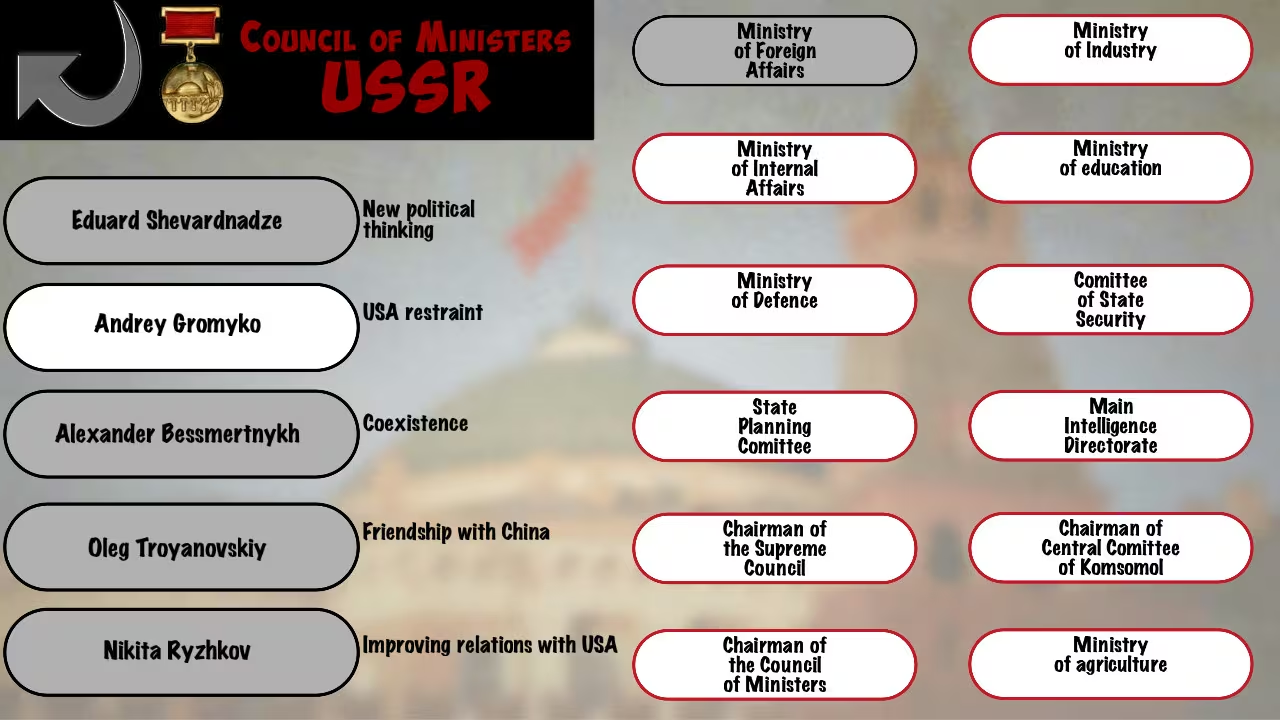
Don’t let the Soviet Union collapse, and fall in the darkness of history or lead the Union by a new path – democracy and free market! But before you decide something, think – wouldn’t it cause more harm than good?
Global score
84/100
Genres
Indie, Simulator, Strategy
Similar games
Pros
- Deep and challenging political simulation
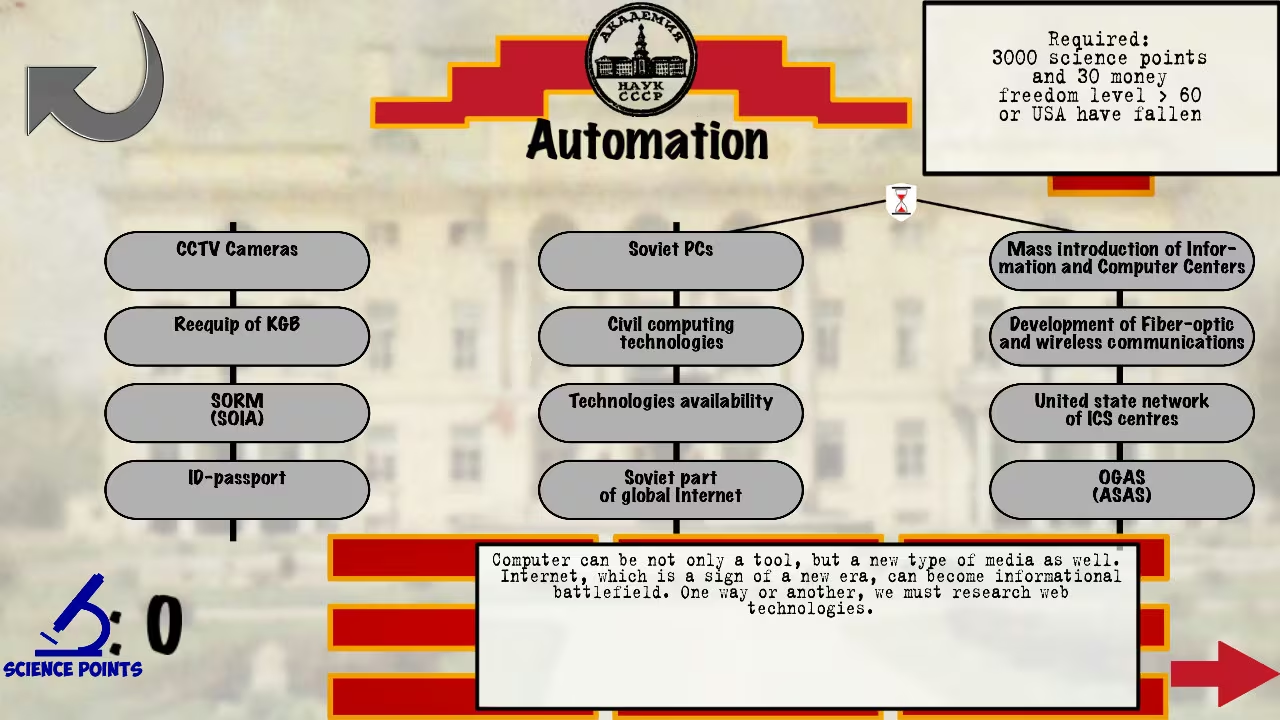
- High replayability with multiple alternate history paths
- Active developer support and frequent updates
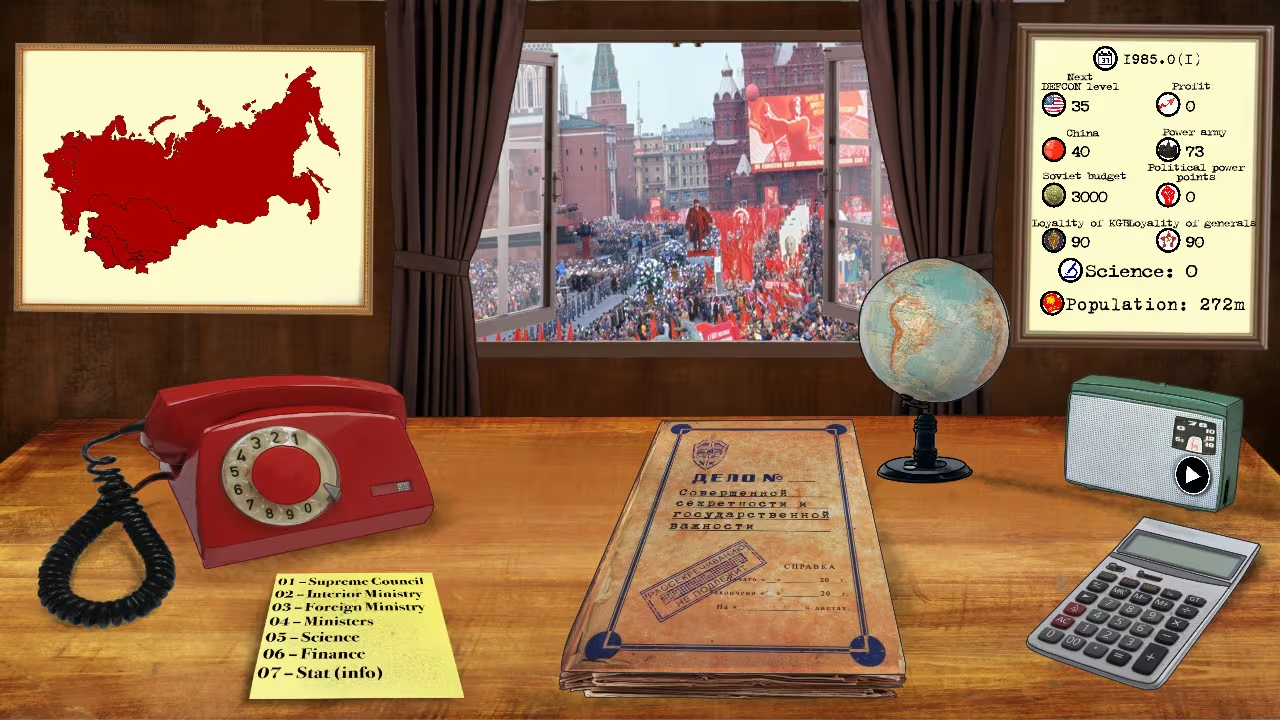
- Immersive soviet atmosphere and soundtrack
- Complex strategic and management mechanics
Cons
- Poor english translation and localization
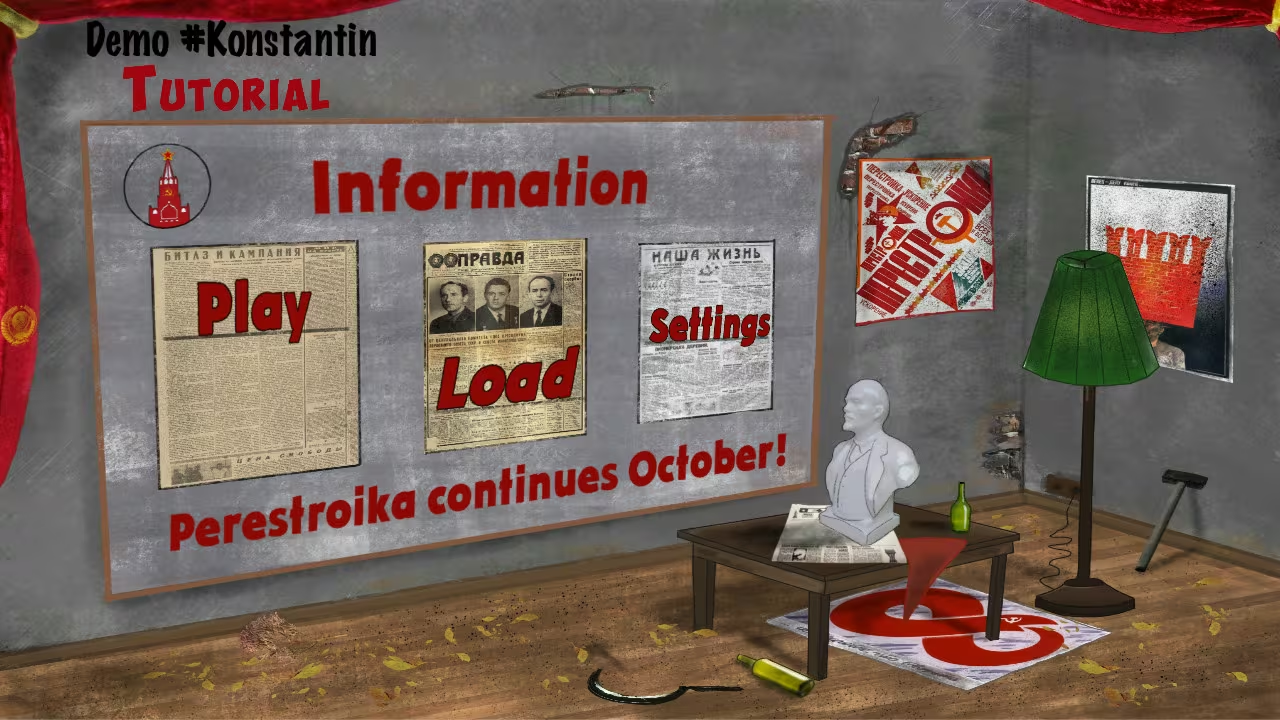
- Steep learning curve with minimal tutorial
- Clunky and unintuitive user interface
- Lack of clear feedback on decisions and consequences
- Limited social or multiplayer features
Analysis
Less representative of its motivational profile, with noticeable differences. Motivations that often define this kind of title include Leadership, Survival, Violence, Strategy. Here, the score leans higher than usual among comparable games on Domination. It leans lower than usual among comparable games on Sensation, Relaxation.
How to use the graph
Similar games map
Each dot is a game. They are arranged from the same motivation profile as in the “Motivations” section below. Closer dots usually mean more similar reasons to play (exploration, competition, relaxation, etc.)—not that one game is “better” than another.
- Larger dot with a light outline: the game you are viewing.
- Colour: groups of games with comparable motivation patterns (statistical clusters).
- Hover a dot to see the game name; click to open its page.
- Scroll or double-click the chart to zoom out and see more games.
Why don’t the axes read like a score? This view uses t-SNE: it only keeps who is close to whom. The scales are not “good to bad” or hours played—they separate groups on the map. Read distance between dots, not the axis numbers.
Motivations
-
Autonomy4
"Players have extensive freedom to direct political, economic, and diplomatic decisions shaping the USSR's fate."
-
Competence5
"The game is described as brutally difficult, requiring skillful management and strategic thinking to succeed."
-
Competition-3
"Focus is on managing the USSR and internal/external politics rather than competing against other players."
-
Continuation4
"High replayability and long play sessions are encouraged by complex mechanics and multiple paths."
-
Cooperation-4
"Gameplay centers on individual control of the Soviet Union with limited multiplayer or cooperative elements."
-
Creativity4
"Players can experiment with alternate histories, political ideologies, and economic reforms."
-
Domination2
"Some players enjoy exerting control over global politics and imposing Soviet influence worldwide."
-
Escapism3
"Players use the game to immerse themselves in a complex alternate history and political simulation."
-
Expectation-4
"Engagement is driven by intrinsic interest in history and politics rather than obligation or pressure."
-
Experimenting4
"The game encourages trying different political paths, reforms, and strategies to explore outcomes."
-
Exploration2
"Players explore alternate historical scenarios and political developments within a defined setting."
-
Expression3
"Players express themselves through political choices and shaping the USSR's ideology and policies."
-
Fantasy1
"While based on history, the game includes alternate history and speculative scenarios, blending realism and fantasy."
-
Fellowship-3
"The game is primarily a single-player experience with minimal social or community interaction."
-
Growth4
"Players learn complex political and economic systems and develop strategies over repeated playthroughs."
-
Health-5
"The game is a sedentary, text-heavy strategy experience with no physical activity."
-
Idle-4
"Requires constant attention and decision-making; not suited for passive or background play."
-
Intimacy-5
"No evidence of close social relationships or emotional sharing; focus is on solitary gameplay."
-
Leadership5
"Players assume the role of the USSR leader, making authoritative decisions and managing the state."
-
Progression4
"Players accumulate political power, scientific research, and influence over time to achieve goals."
-
Relaxation-3
"The game is described as stressful and challenging, requiring careful management under pressure."
-
Sensation-2
"Sensory stimulation is minimal; focus is on intellectual challenge rather than audiovisual excitement."
-
Status-3
"Achievements and recognition are limited; social status is not a core motivator."
-
Story4
"Strong narrative immersion through historical events, political crises, and alternate history outcomes."
-
Strategy5
"Heavy emphasis on strategic planning, problem solving, and managing complex political systems."
-
Thrill3
"Players experience suspense and tension from difficult decisions and risk of losing power."
-
Value4
"Players perceive good value for money due to depth, replayability, and ongoing developer support."
-
Violence1
"Some political violence and purges are part of gameplay, but combat is abstract and limited."
-
Survival5
"Core gameplay revolves around avoiding failure, staying in power, and managing crises."
Last update: 29/04/2026