Do No Harm similar games & best alternatives
Do No Harm
2025
Related articles
Quick resume
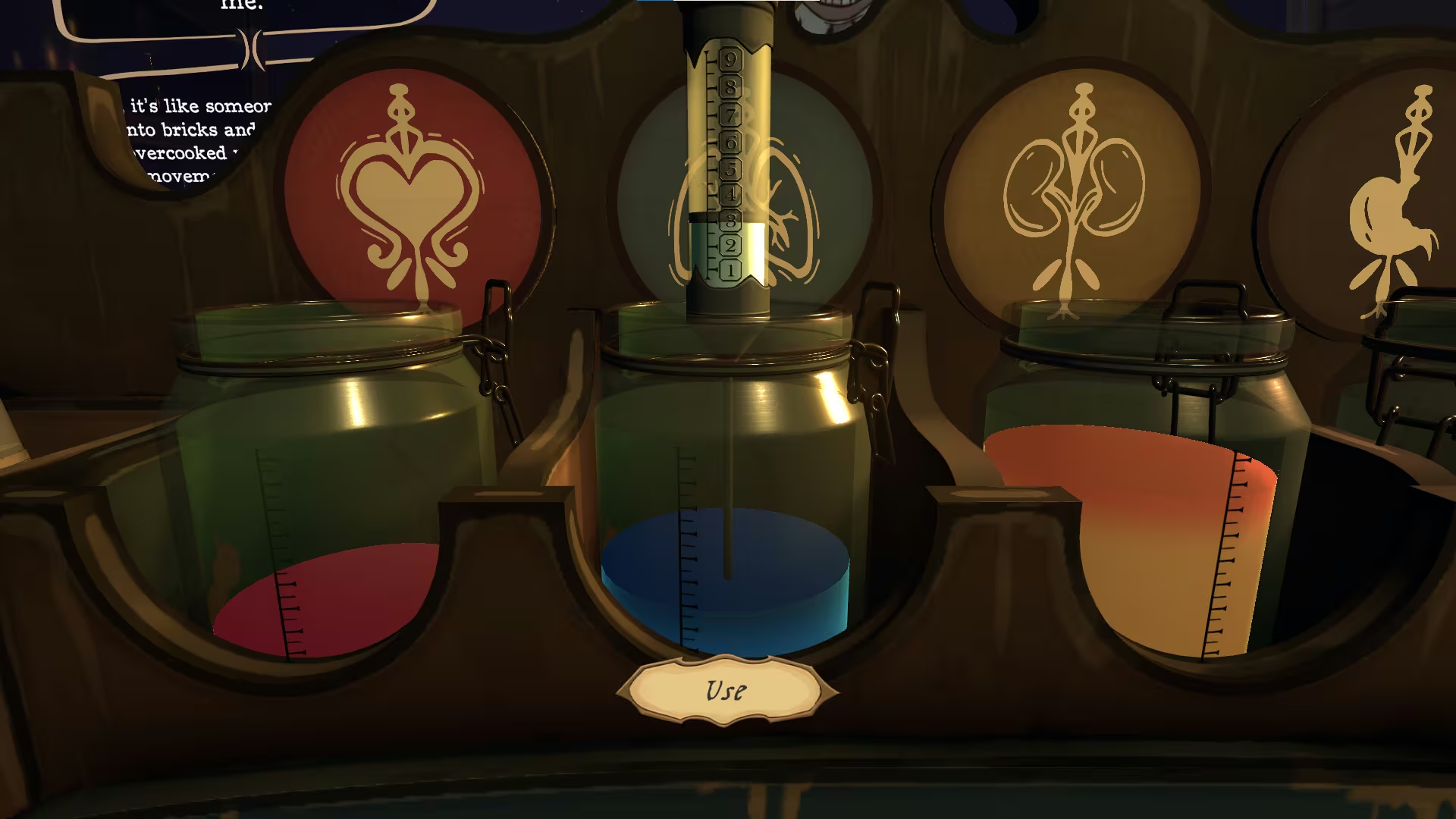
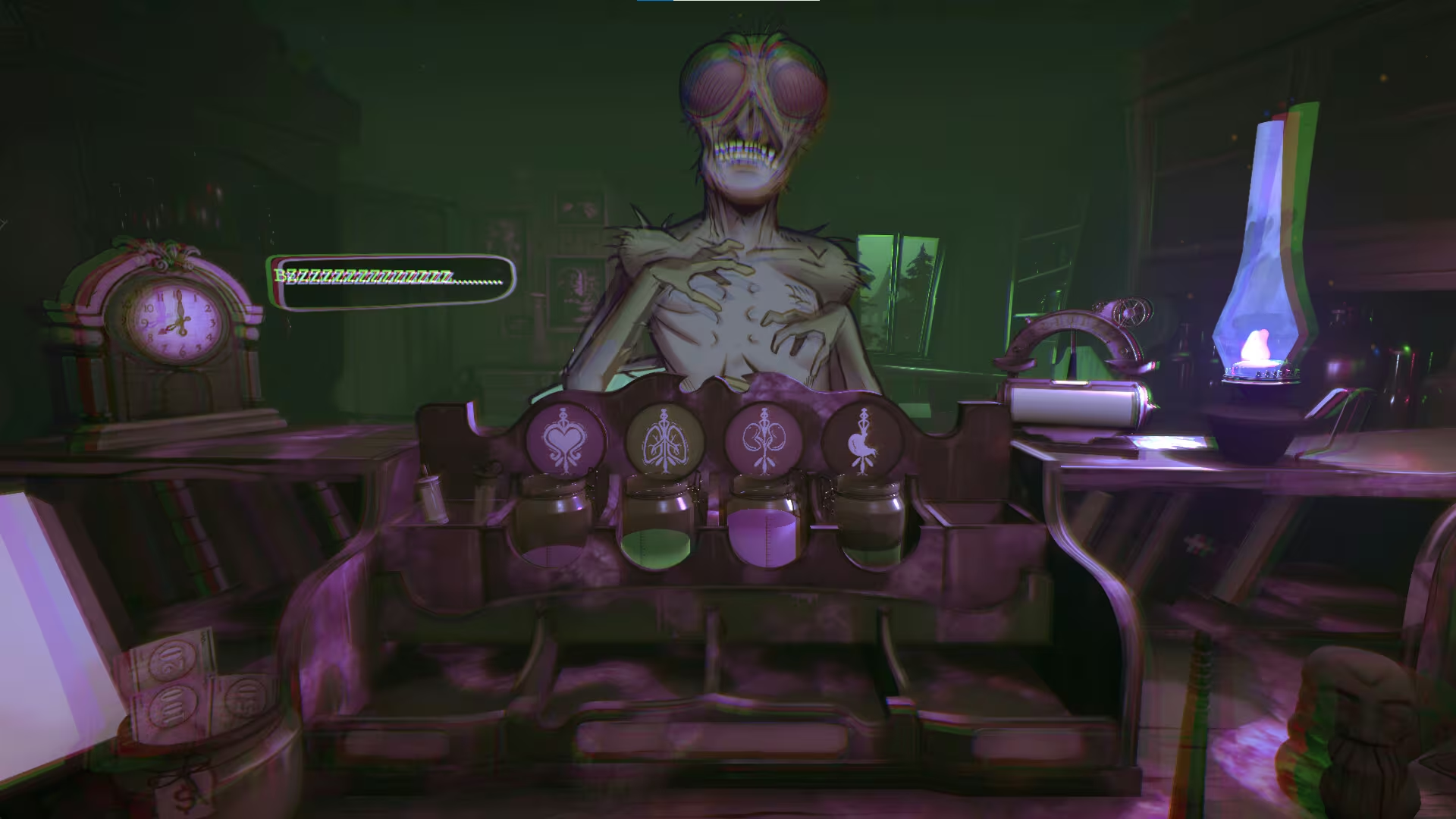
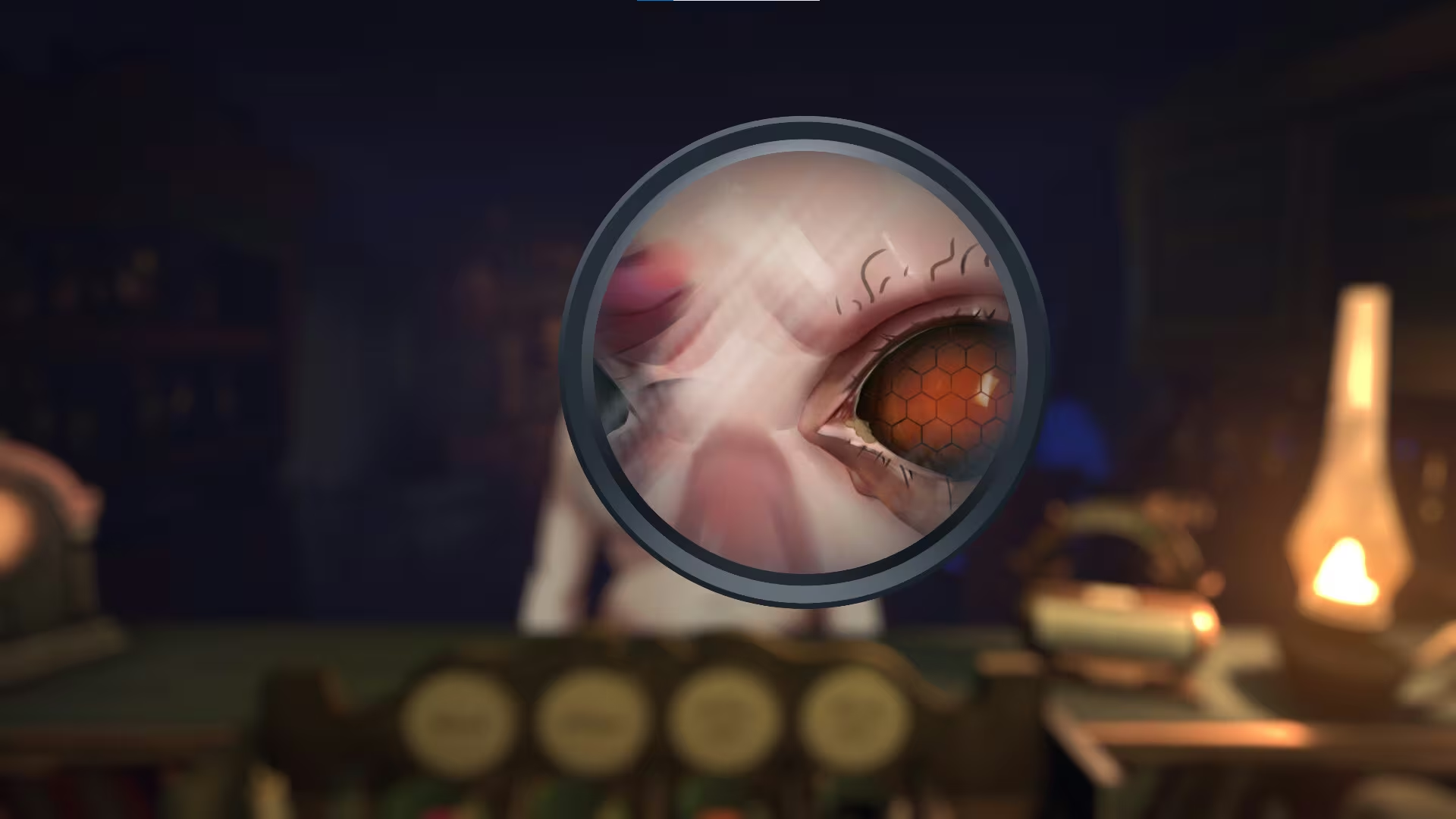
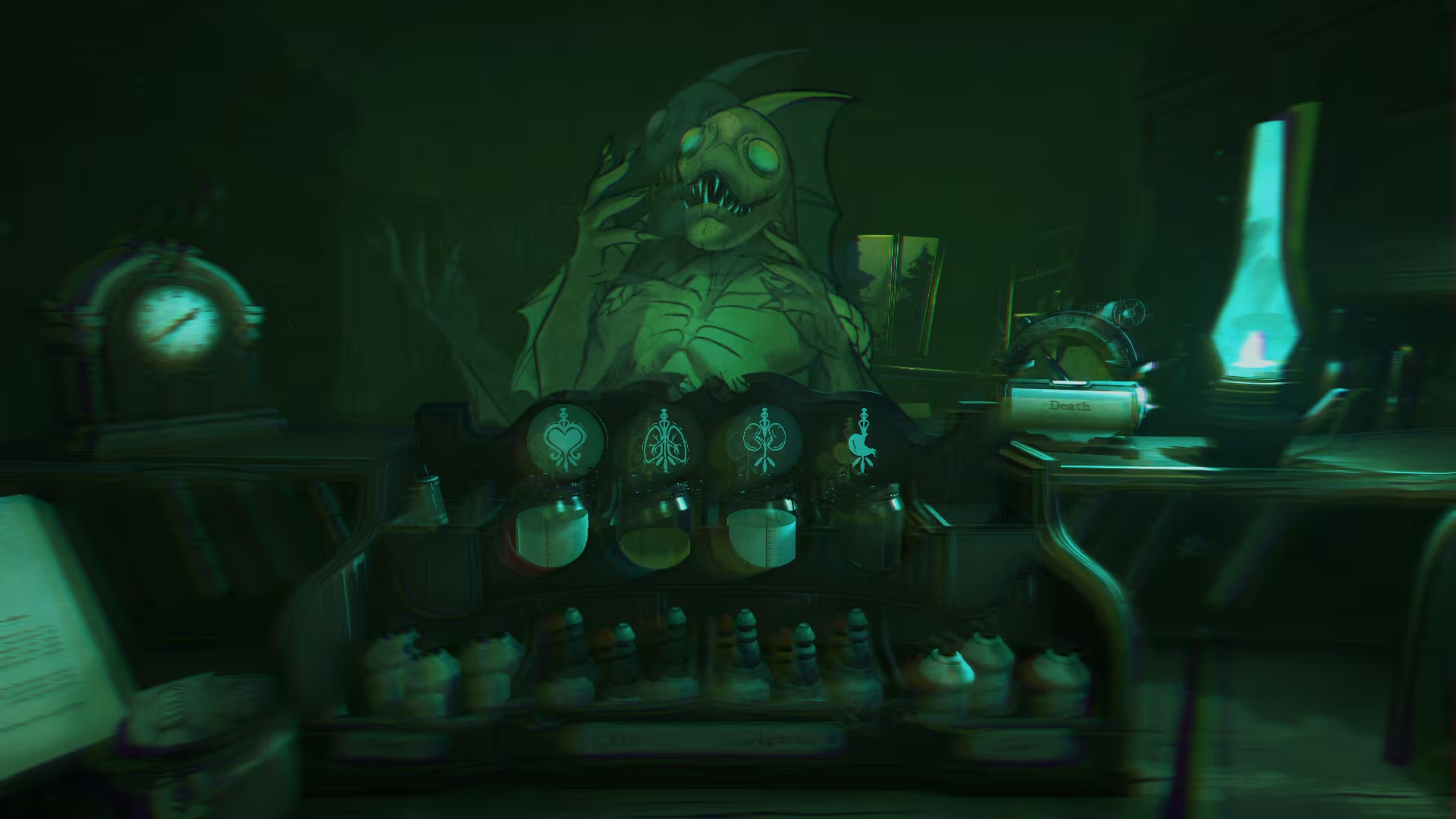
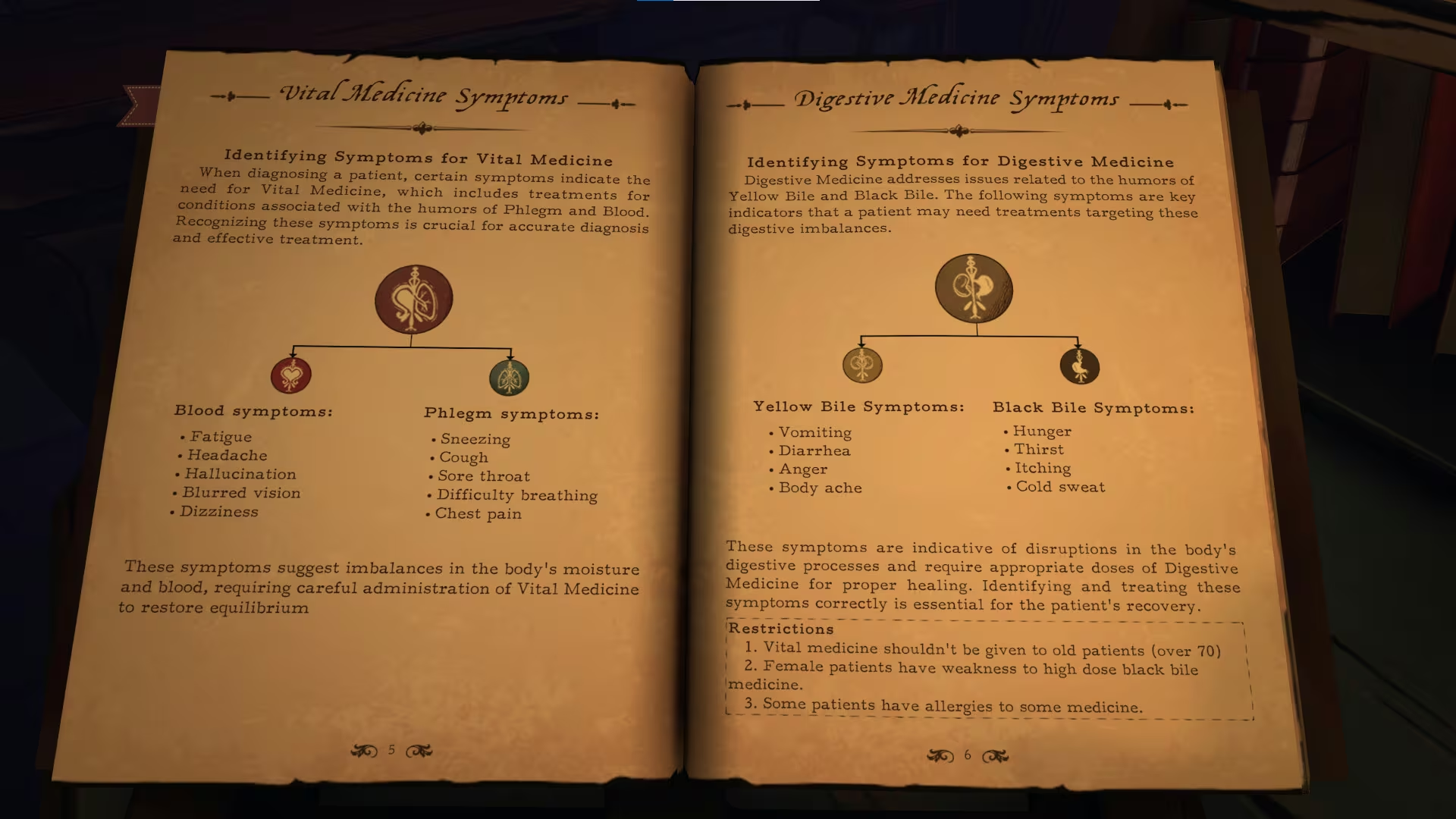
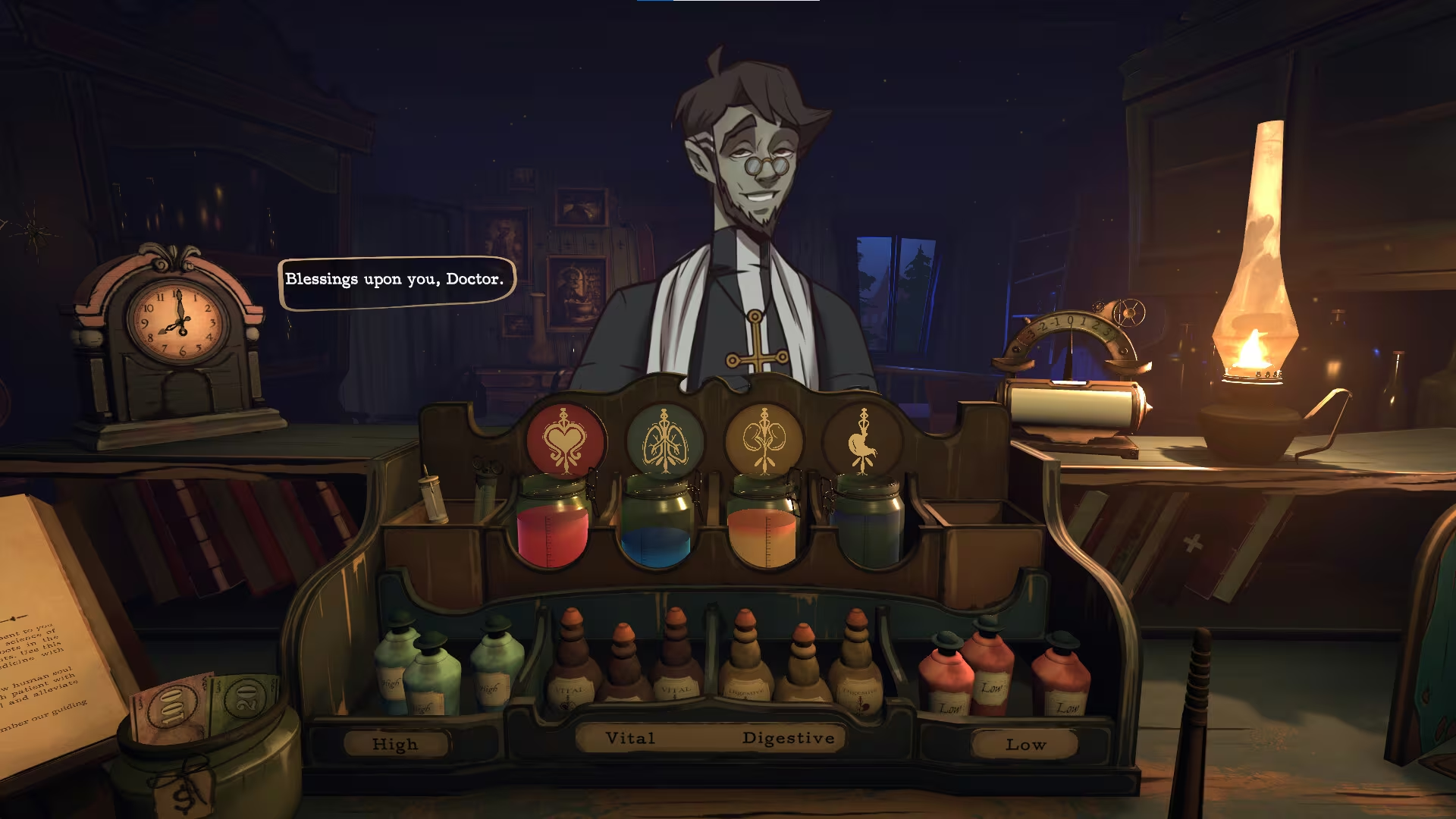
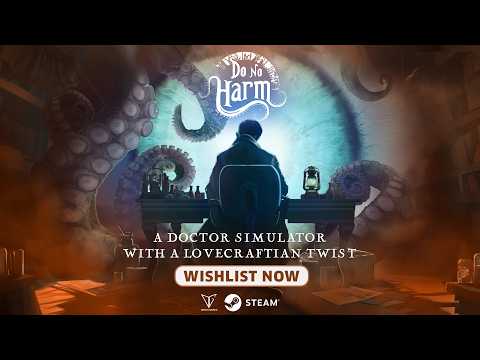
Lovecraftian Doctor Simulator. Diagnose patients by analyzing unsettling symptoms and treat them using your Book of Medicine. Make moral choices — decide who to save or kill, discover whom to trust, and unlock multiple endings! Can you endure 30 days of perilous decisions?
Global score
74/100
Genres
Simulator, Visual Novel
Similar games
Pros
- Engaging and challenging gameplay loop
- Strong lovecraftian atmosphere and story
- Multiple endings and replay value
- Unique medical diagnosis mechanics
- Immersive art style and sound design
Cons
- Steep learning curve and limited tutorials
- Some bugs and ui issues
- Repetitive gameplay over long sessions
- Limited character development and worldbuilding
- Resource management can feel punishing
Analysis
Less representative of its motivational profile, with noticeable differences. Motivations that often define this kind of title include Fellowship, Cooperation, Leadership, Violence. Here, the score leans higher than usual among comparable games on Story. It leans lower than usual among comparable games on Violence, Expression.
How to use the graph
Similar games map
Each dot is a game. They are arranged from the same motivation profile as in the “Motivations” section below. Closer dots usually mean more similar reasons to play (exploration, competition, relaxation, etc.)—not that one game is “better” than another.
- Larger dot with a light outline: the game you are viewing.
- Colour: groups of games with comparable motivation patterns (statistical clusters).
- Hover a dot to see the game name; click to open its page.
- Scroll or double-click the chart to zoom out and see more games.
Why don’t the axes read like a score? This view uses t-SNE: it only keeps who is close to whom. The scales are not “good to bad” or hours played—they separate groups on the map. Read distance between dots, not the axis numbers.
Motivations
-
Autonomy3
"Players have significant control over diagnosis and treatment decisions, including dosage and medicine mixing, with some trial and error."
-
Competence4
"The game challenges players to learn complex mechanics, solve puzzles, and manage resources effectively to succeed."
-
Competition-3
"Focus is on individual problem solving and personal progress without direct player-vs-player competition."
-
Continuation3
"Multiple endings and branching paths encourage replay and extended engagement, though some find the gameplay loop repetitive."
-
Cooperation-4
"Gameplay is primarily single-player and independent, with no cooperative multiplayer or teamwork elements."
-
Creativity2
"Players experiment with medicine dosages and mixing, but within a fixed system and predefined mechanics."
-
Domination-5
"Interactions are balanced and respectful; no evidence of exerting control or superiority over others."
-
Escapism4
"The Lovecraftian horror setting and immersive story provide a strong escape from real life."
-
Expectation-4
"Players engage voluntarily out of interest and curiosity, with no obligation or external pressure."
-
Experimenting4
"Trial and error, testing dosages, and exploring mechanics are core to gameplay and player learning."
-
Exploration2
"Players discover new mechanics and story elements over time, though the environment is mostly static."
-
Expression-3
"Limited customization; players use preset characters and environments without much personalization."
-
Fantasy4
"Strong Lovecraftian fantasy and horror themes with eldritch elements and supernatural anomalies."
-
Fellowship-4
"Minimal social interaction; focus is on solo play and individual experience."
-
Growth4
"Players develop skills in diagnosis, resource management, and puzzle solving through gameplay."
-
Health-4
"Sedentary gameplay with no physical activity or health-related benefits."
-
Idle-4
"Requires focused attention and active decision-making throughout play sessions."
-
Intimacy-4
"Limited emotional connection with characters; interactions are mostly functional and brief."
-
Leadership-4
"No leadership or group management roles; players act independently."
-
Progression3
"Players accumulate tools, unlock story branches, and improve skills over multiple playthroughs."
-
Relaxation1
"Some players find the gameplay calming, but others experience frustration and tension from difficulty."
-
Sensation2
"Atmospheric visuals and sound create an eerie mood, though sensory stimulation is moderate."
-
Status-4
"Achievements exist but social recognition or status seeking is not a major focus."
-
Story4
"Strong narrative immersion with multiple endings, character arcs, and unfolding mysteries."
-
Strategy4
"Players must use logic, deduction, and planning to diagnose and treat patients effectively."
-
Thrill2
"Tension arises from managing limited resources and sanity, but risk is controlled and predictable."
-
Value3
"Generally perceived as good value for price, with engaging gameplay and replayability."
-
Violence-4
"Focus on healing and diagnosis rather than combat or destruction."
-
Survival3
"Players manage resources and sanity to avoid failure and progress through the story."
Last update: 29/04/2026