Do Not Feed the Monkeys Thumbnail

Do Not Feed the Monkeys similar games & best alternatives

Do Not Feed the Monkeys

PC (Microsoft Windows), Mac, iOS, PlayStation 4, Xbox One, Android, Nintendo Switch, Linux • 2018

Related articles

Quick resume

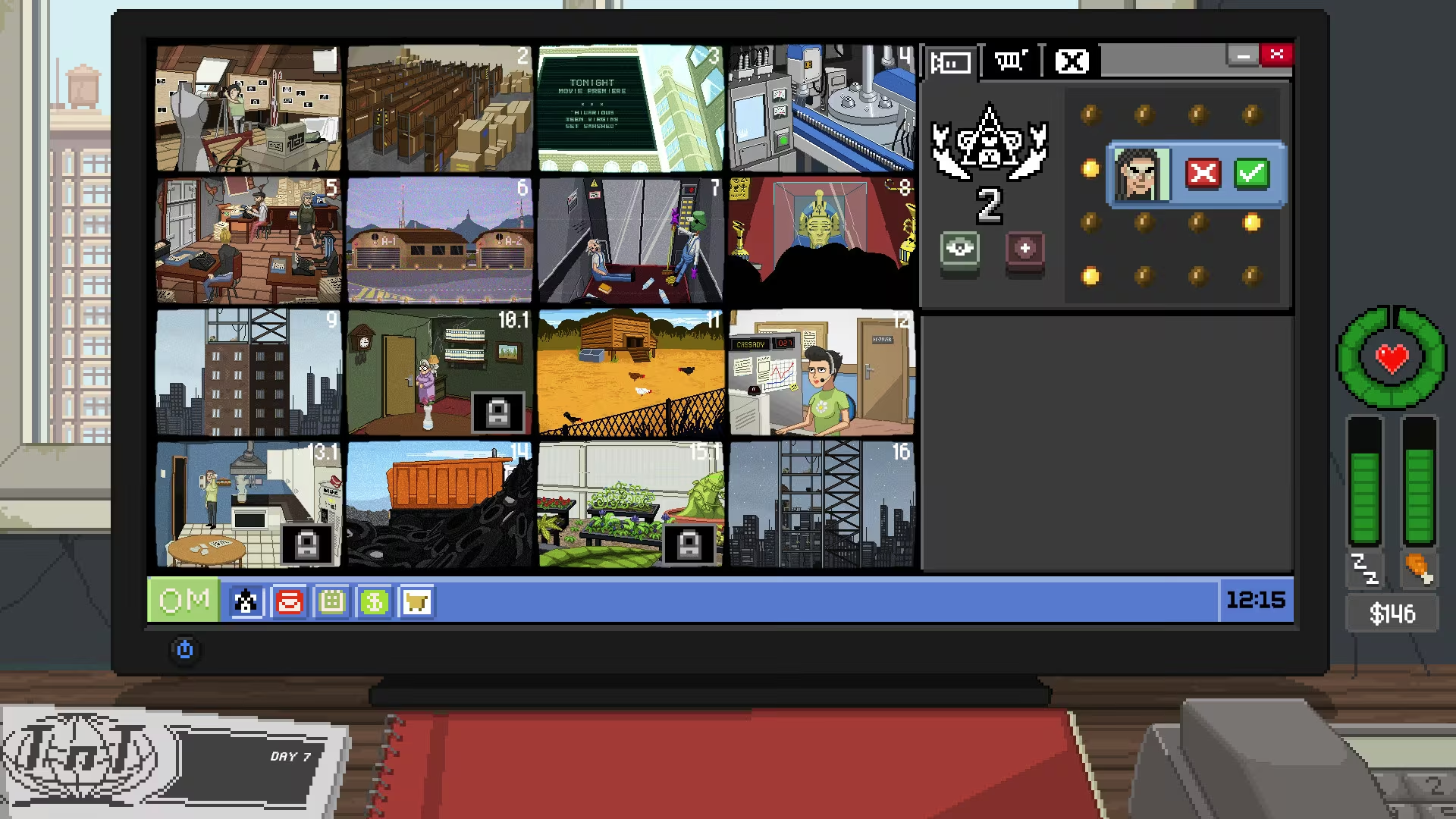
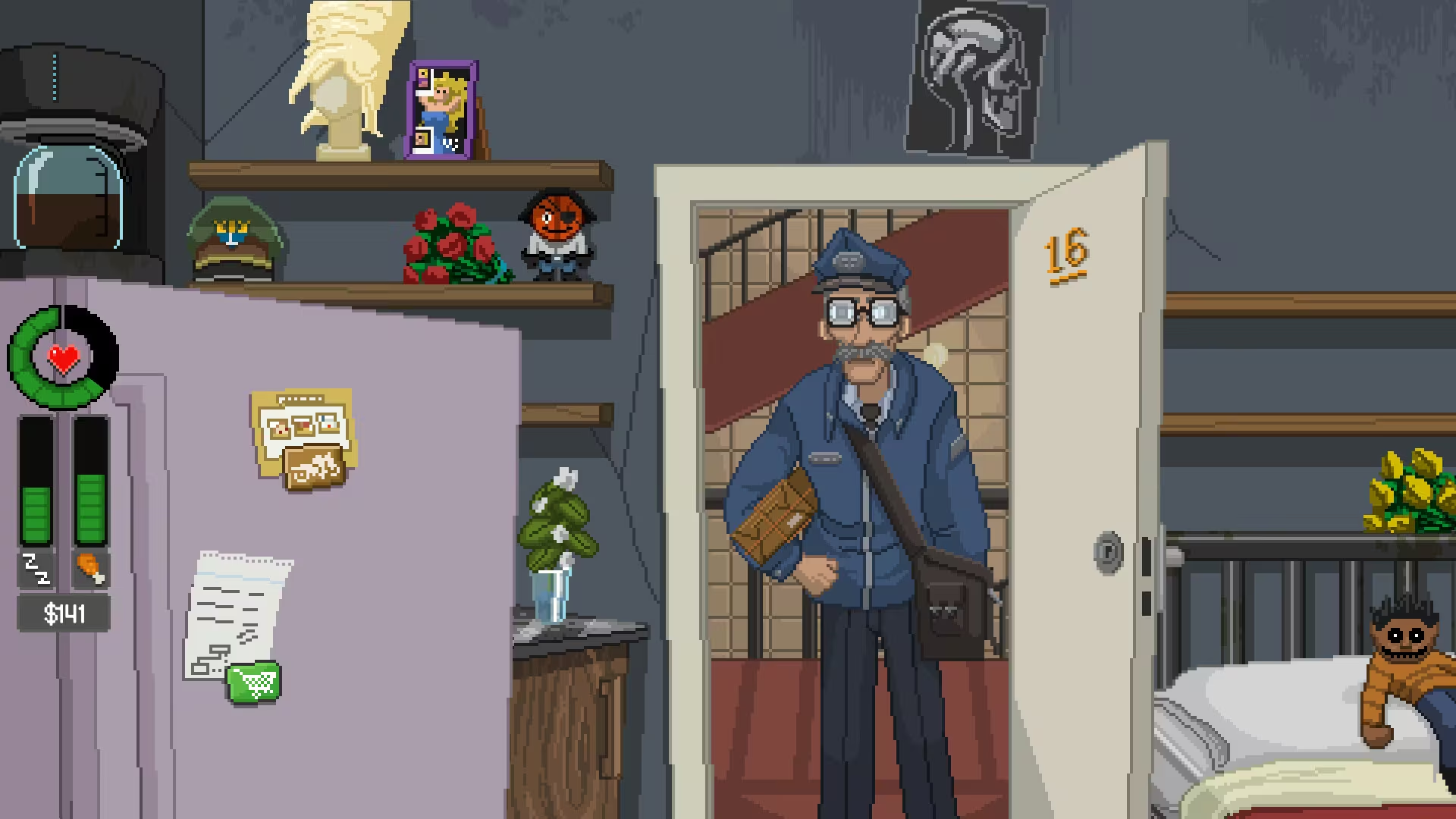
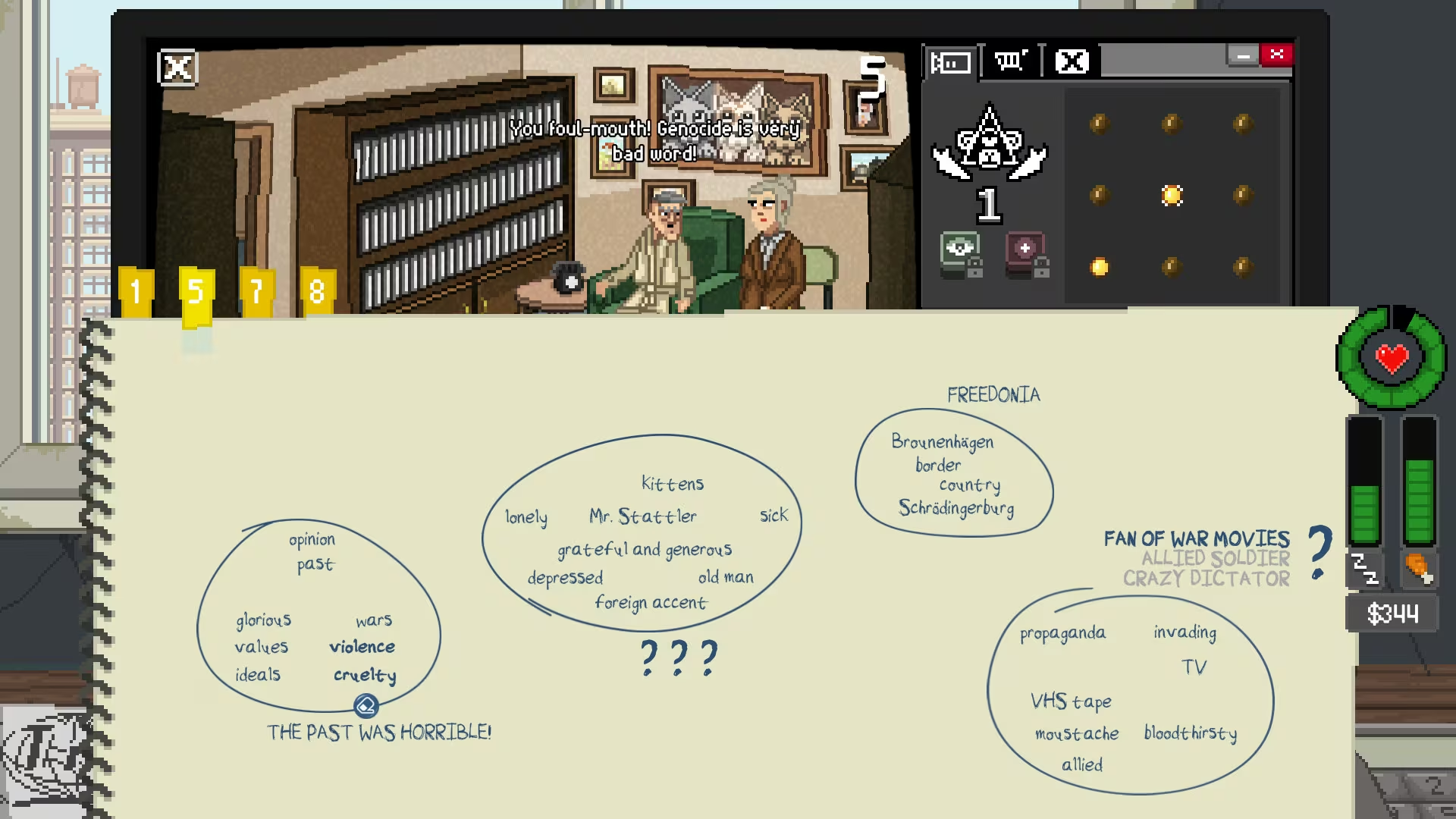
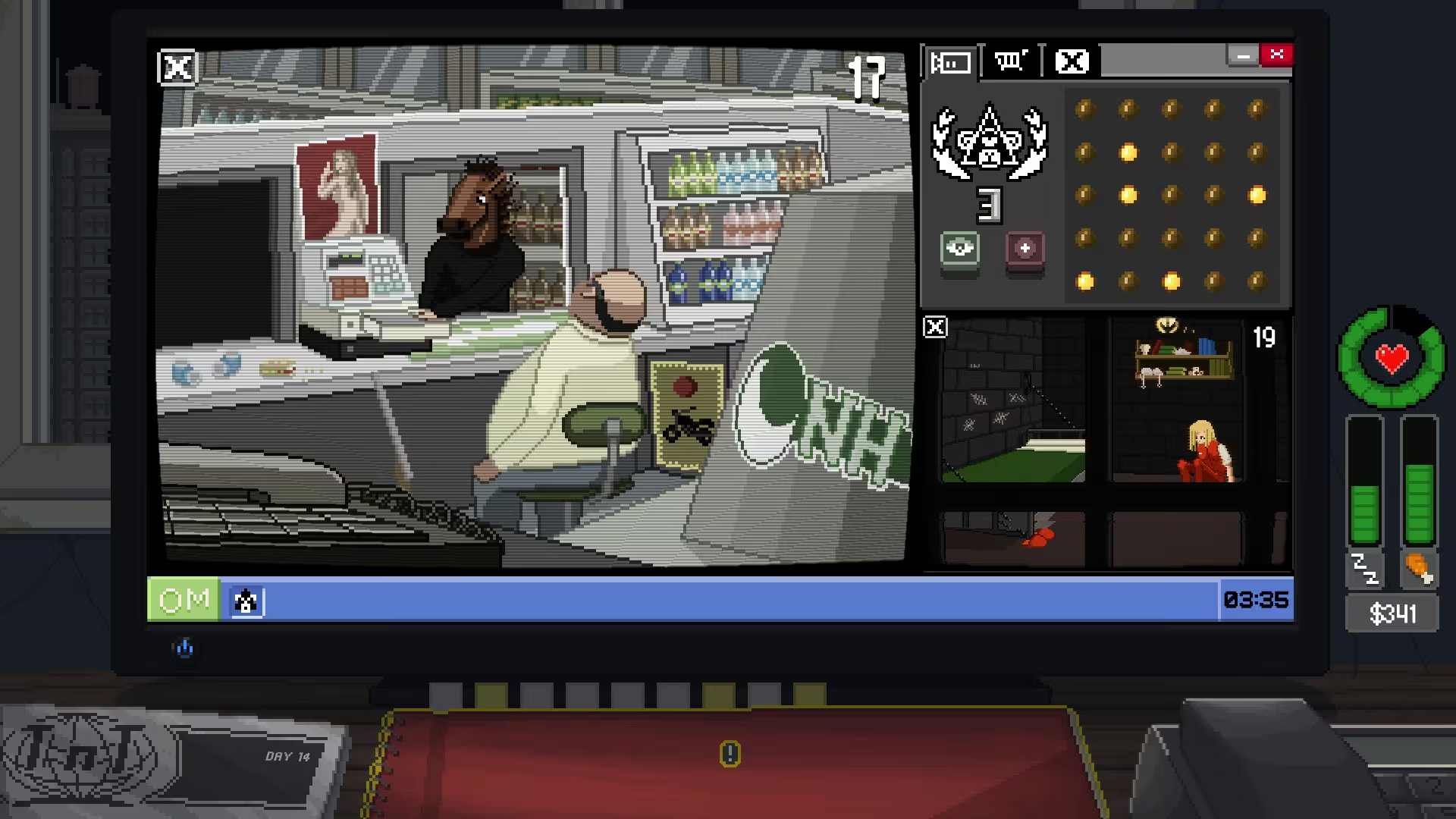
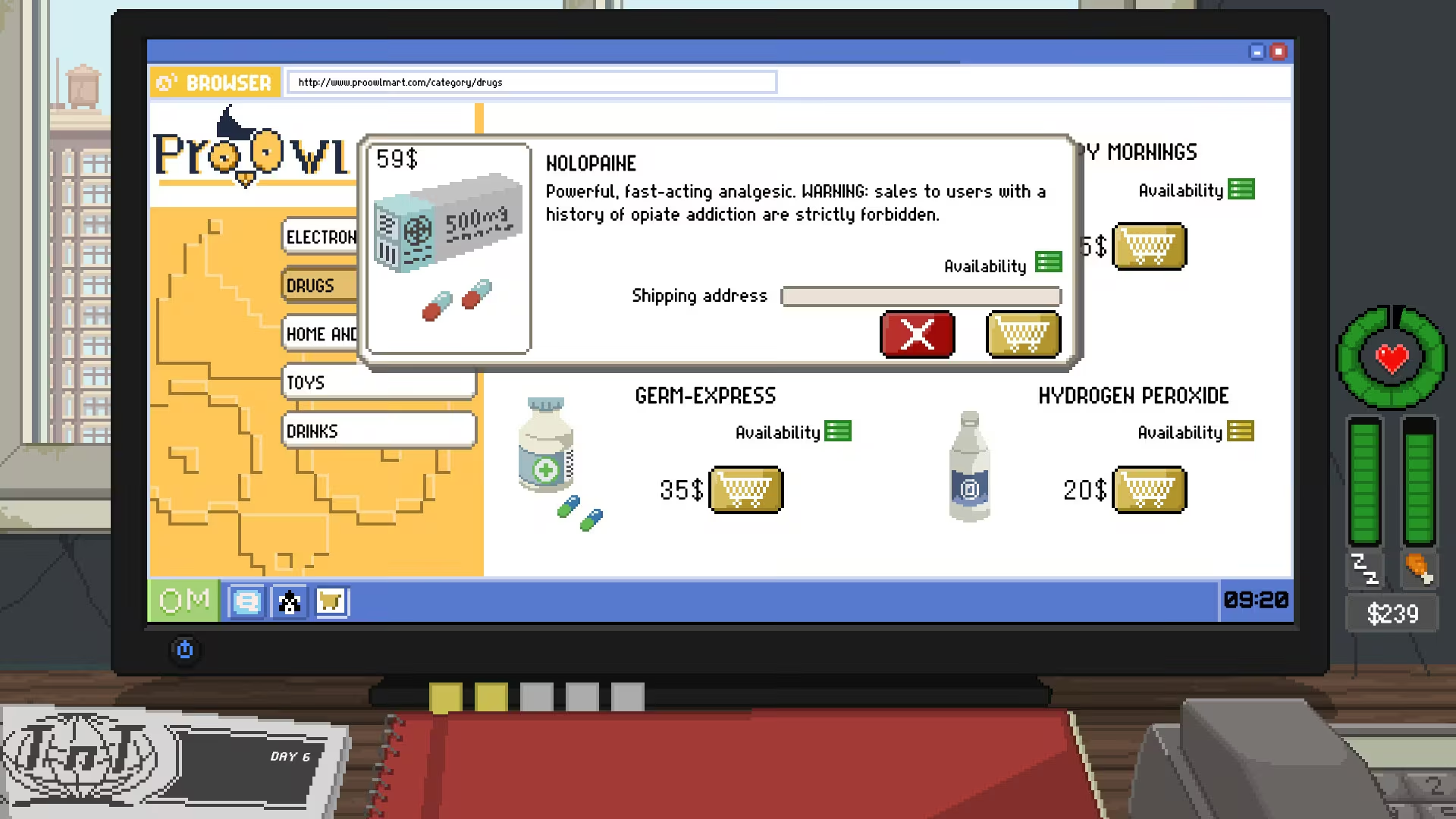
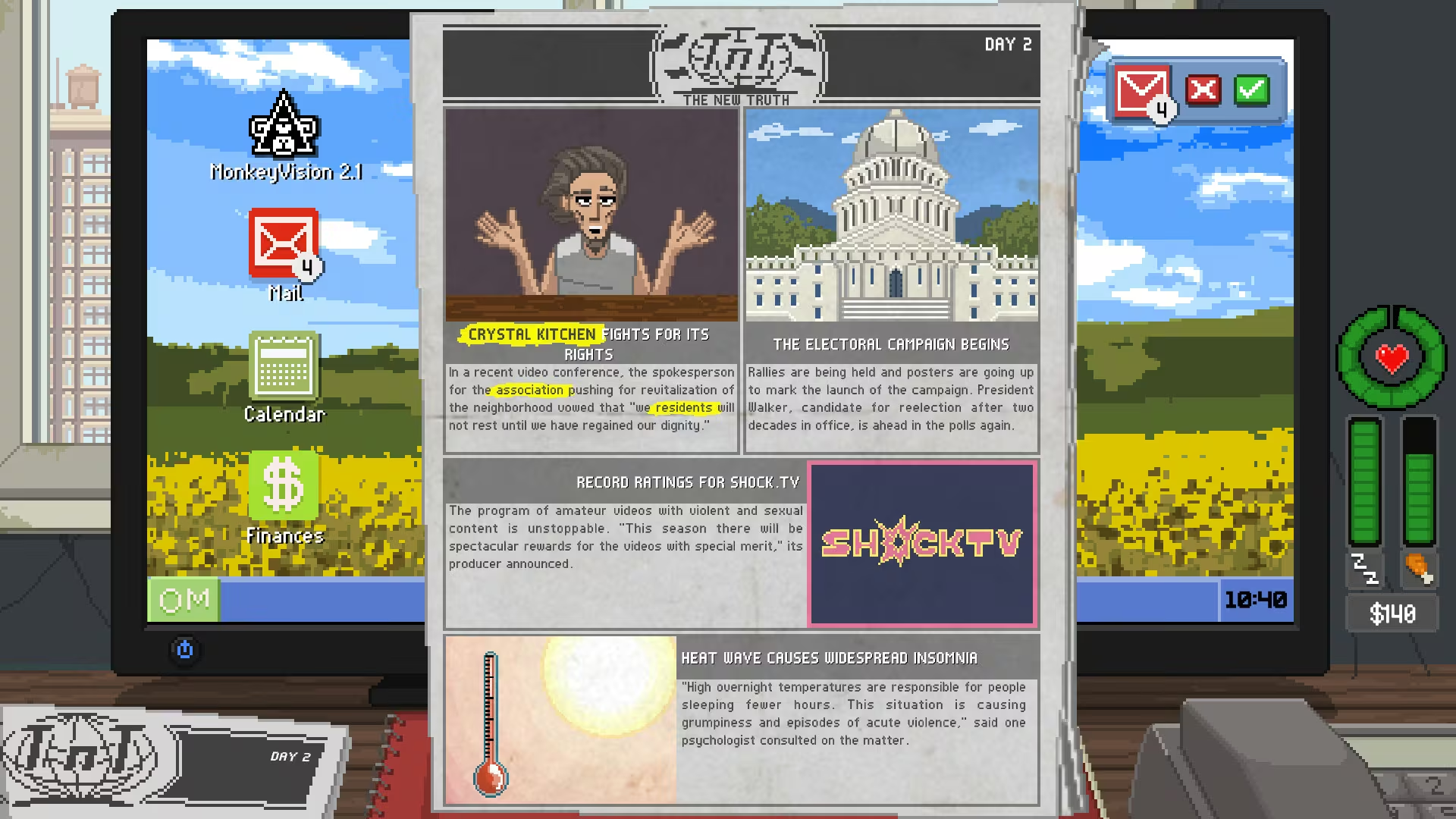
A digital voyeur simulator where you watch strangers through surveillance cameras. Invade their privacy and witness their most intimate moments, but don’t interact with the subjects – anything could happen if you dare feed the monkeys!

Global score

94/100

Genres

Indie, Simulator, Strategy, Adventure, Puzzle

Similar games

    Pros

    • Unique voyeuristic premise
    • High replayability with multiple endings
    • Engaging investigative gameplay
    • Thought-provoking moral choices
    • Accessible pixel art style

    Cons

    • Short fixed playthrough length
    • Resource management can be stressful
    • Some repetitive or filler content
    • Randomized cages may cause replay fatigue
    • Lack of social or cooperative features

    Analysis

    Broadly representative of its motivational profile, with a few distinct shifts. Motivations that often define this kind of title include Relaxation, Survival, Violence, Fellowship. It leans lower than usual among comparable games on Expression, Violence, Status.

    How to use the graph
    Similar games map

    Each dot is a game. They are arranged from the same motivation profile as in the “Motivations” section below. Closer dots usually mean more similar reasons to play (exploration, competition, relaxation, etc.)—not that one game is “better” than another.

    • Larger dot with a light outline: the game you are viewing.
    • Colour: groups of games with comparable motivation patterns (statistical clusters).
    • Hover a dot to see the game name; click to open its page.
    • Scroll or double-click the chart to zoom out and see more games.

    Why don’t the axes read like a score? This view uses t-SNE: it only keeps who is close to whom. The scales are not “good to bad” or hours played—they separate groups on the map. Read distance between dots, not the axis numbers.

    Motivations

    • Autonomy
      4

      "Players have freedom to choose how to interact with the observed subjects, including whether to interfere or not, and can decide their own approach to managing resources and storylines."

    • Competence
      3

      "The game involves puzzle solving, investigation, and resource management that challenge players to learn and optimize strategies, though some tasks can feel repetitive."

    • Competition
      -4

      "Focus is on individual play and personal progress without direct competition or comparison to other players."

    • Continuation
      4

      "High replay value with multiple endings and randomized scenarios encourages repeated playthroughs despite the fixed 16-day limit."

    • Cooperation
      -5

      "Gameplay centers on solo observation and decision-making with no multiplayer or cooperative elements."

    • Creativity
      3

      "Players creatively influence story outcomes and experiment with different interactions, though within predefined scenarios."

    • Domination
      -4

      "Interactions are balanced with moral choices; players are not encouraged to exert control over others aggressively."

    • Escapism
      4

      "The voyeuristic and investigative gameplay offers an immersive escape from real life, with players engaging deeply in the fictional world."

    • Expectation
      -4

      "Players engage voluntarily out of curiosity and intrinsic interest rather than obligation or external pressure."

    • Experimenting
      4

      "Multiple endings and randomized cages encourage trying new approaches and exploring different story paths."

    • Exploration
      3

      "Players discover new storylines and secrets through observation and investigation, though within a limited set of environments."

    • Expression
      -3

      "Limited player customization; expression mainly through choices rather than avatar or environment personalization."

    • Fantasy
      2

      "The game features imaginative and surreal story elements mixed with realistic surveillance themes."

    • Fellowship
      -5

      "No social or community features; gameplay is solitary."

    • Growth
      3

      "Players learn to manage resources, decode clues, and improve strategies over multiple playthroughs."

    • Health
      -4

      "Gameplay involves sedentary play with some players noting stress and obsessive tendencies."

    • Idle
      -3

      "Requires active attention to multiple simultaneous events and resource management."

    • Intimacy
      -5

      "Interactions are surface-level observations without forming close relationships."

    • Leadership
      -5

      "No leadership or group management mechanics; player acts independently."

    • Progression
      3

      "Players accumulate cameras, money, and story knowledge to progress through the game."

    • Relaxation
      -3

      "Resource and time management create tension and stress rather than relaxation."

    • Sensation
      2

      "Pixel art and sound design provide moderate sensory stimulation with a quirky atmosphere."

    • Status
      -5

      "No social recognition or status systems present."

    • Story
      4

      "Strong narrative immersion through multiple interconnected storylines and moral dilemmas."

    • Strategy
      4

      "Players must plan resource use, timing, and investigative approaches to succeed."

    • Thrill
      3

      "Time pressure and moral choices create suspense and tension."

    • Value
      3

      "Generally perceived as good value for price, especially on sale, with satisfying gameplay length and replayability."

    • Violence
      1

      "Some violent story outcomes exist but are not the main focus; gameplay is more about observation and decision-making."

    • Survival
      3

      "Players manage survival elements like hunger, sleep, and finances to avoid failure."

    Last update: 29/04/2026