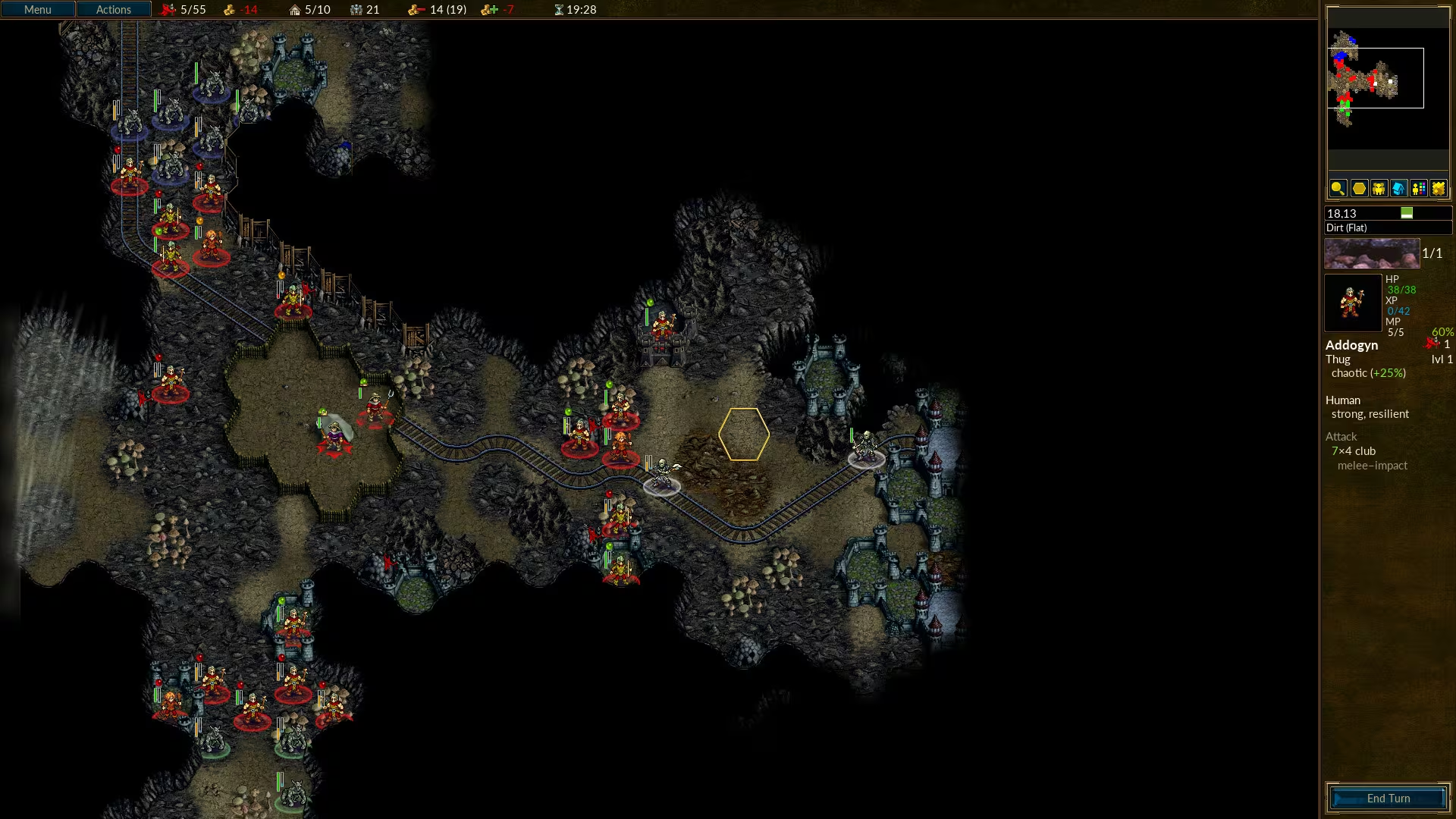
Battle for Wesnoth Thumbnail

Battle for Wesnoth similar games & best alternatives
Battle for Wesnoth

PC (Microsoft Windows), iOS, Mac, Amiga, Linux • 2018

Related articles

Quick resume

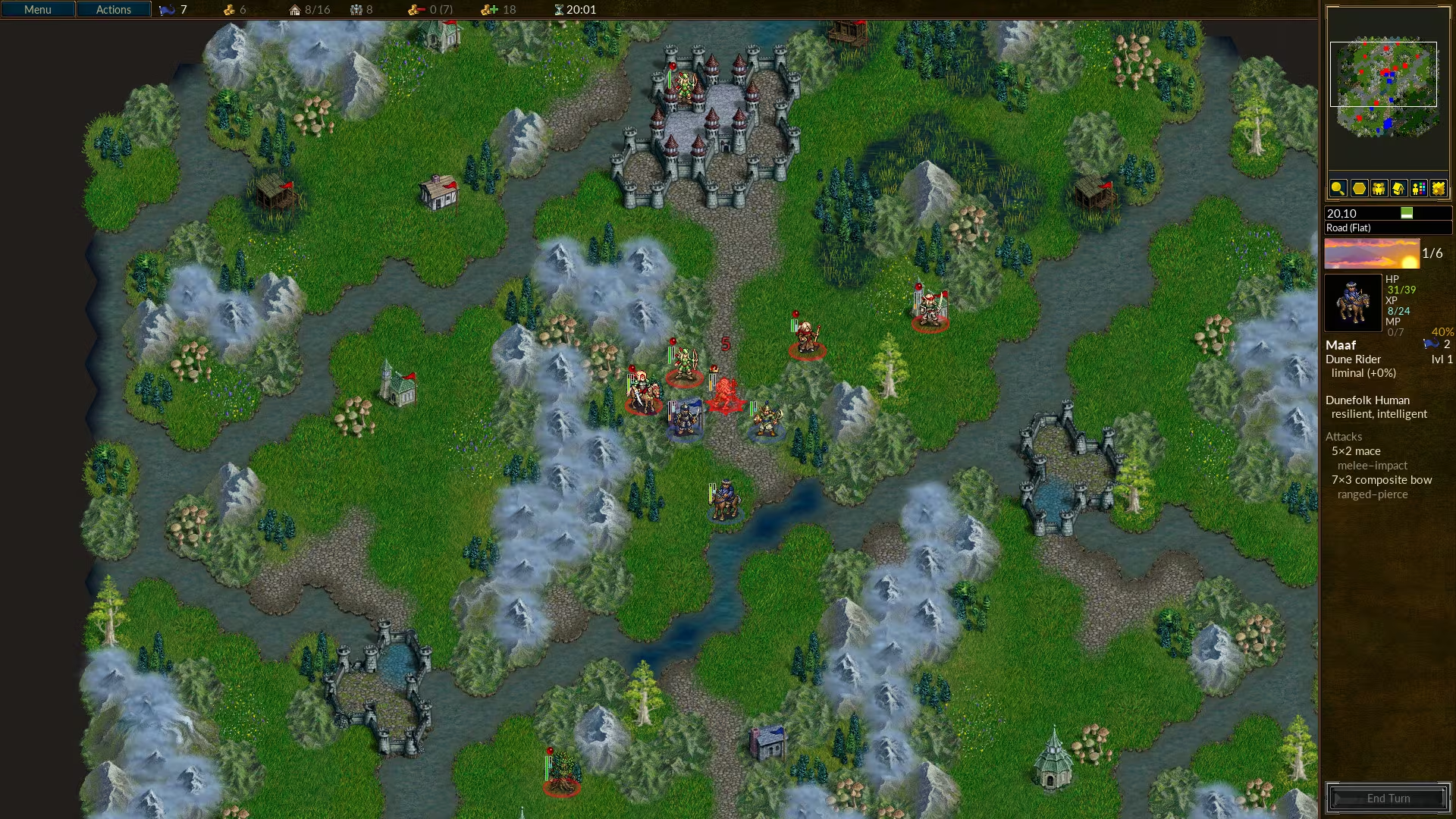
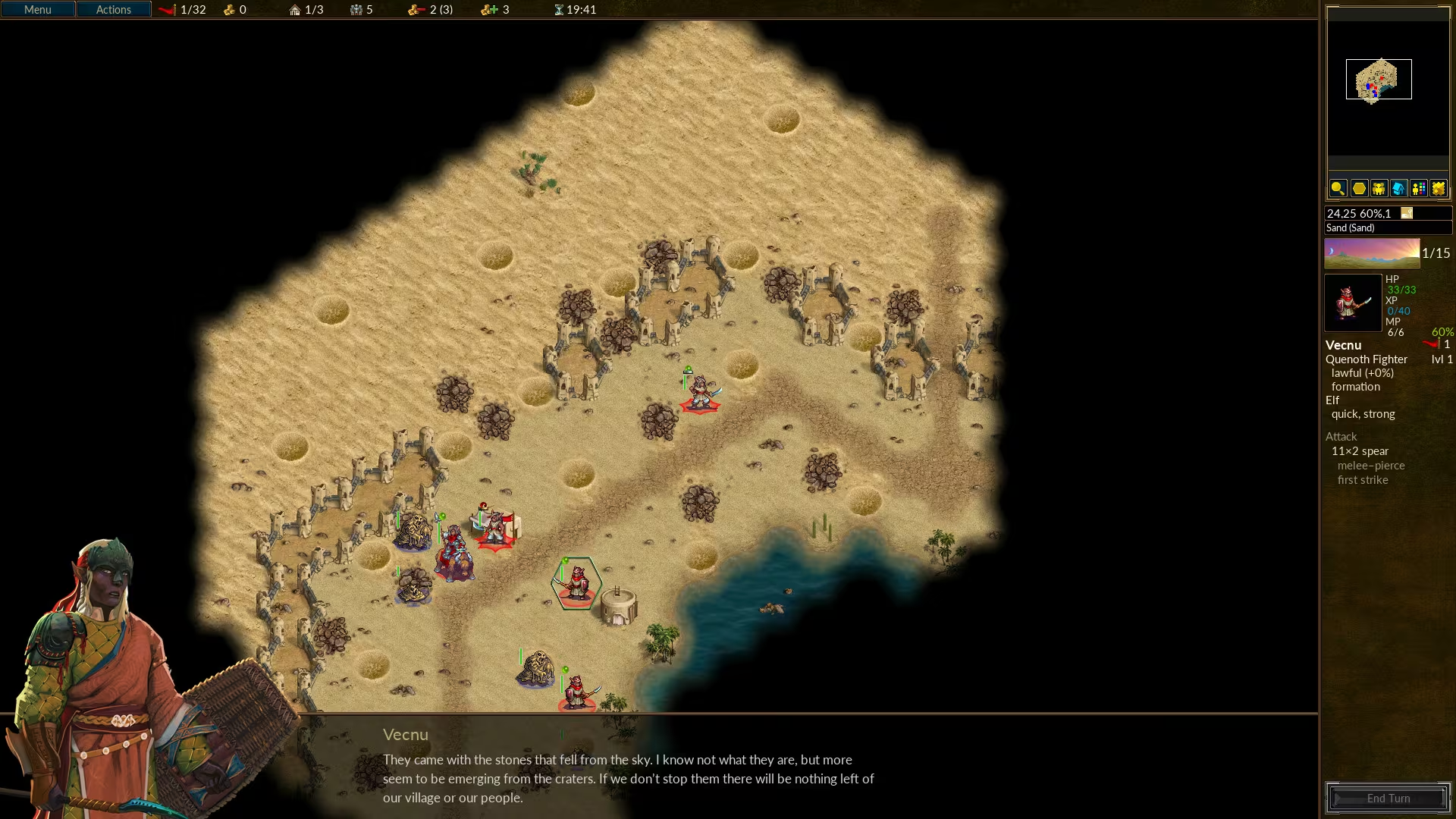
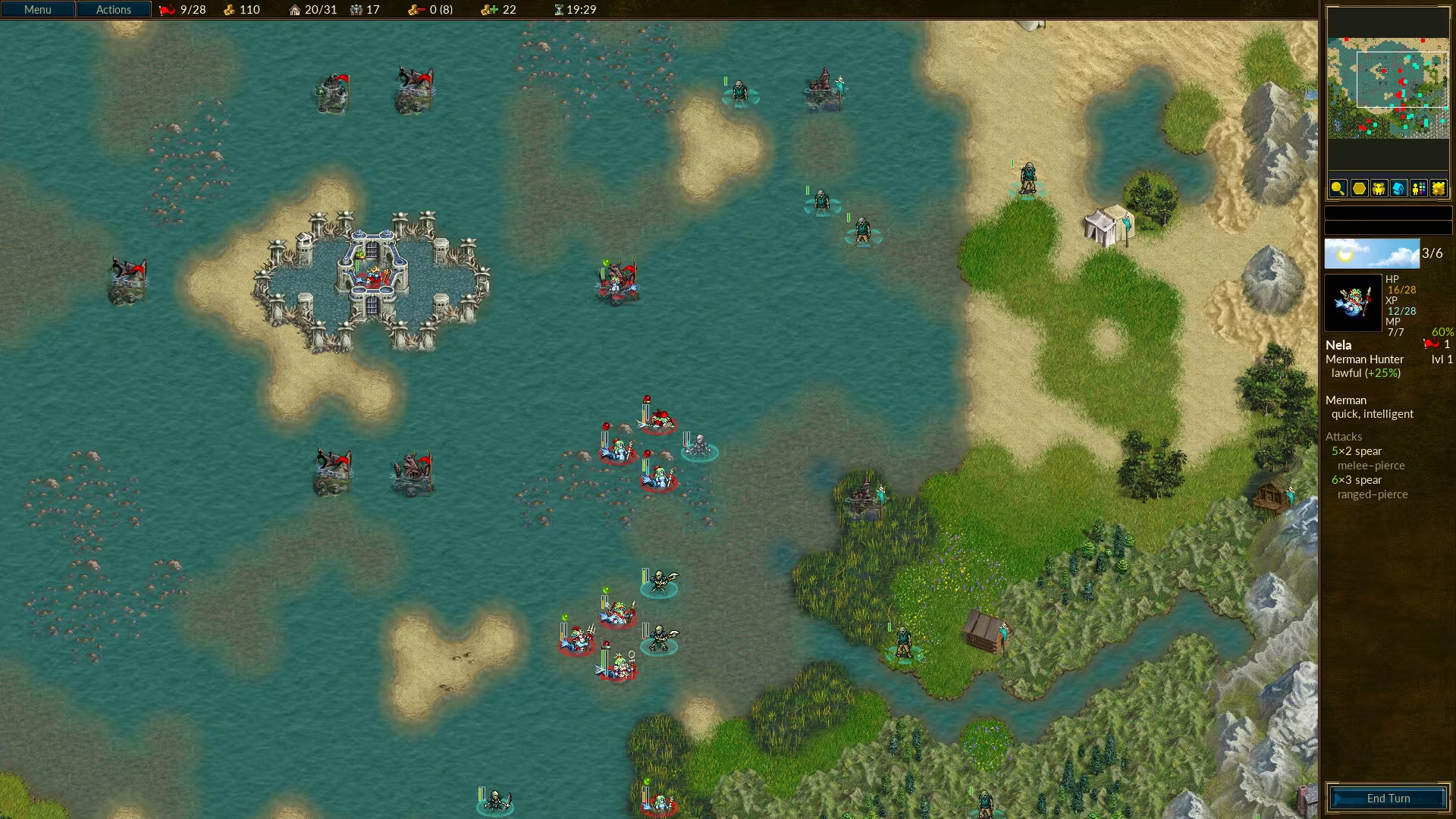
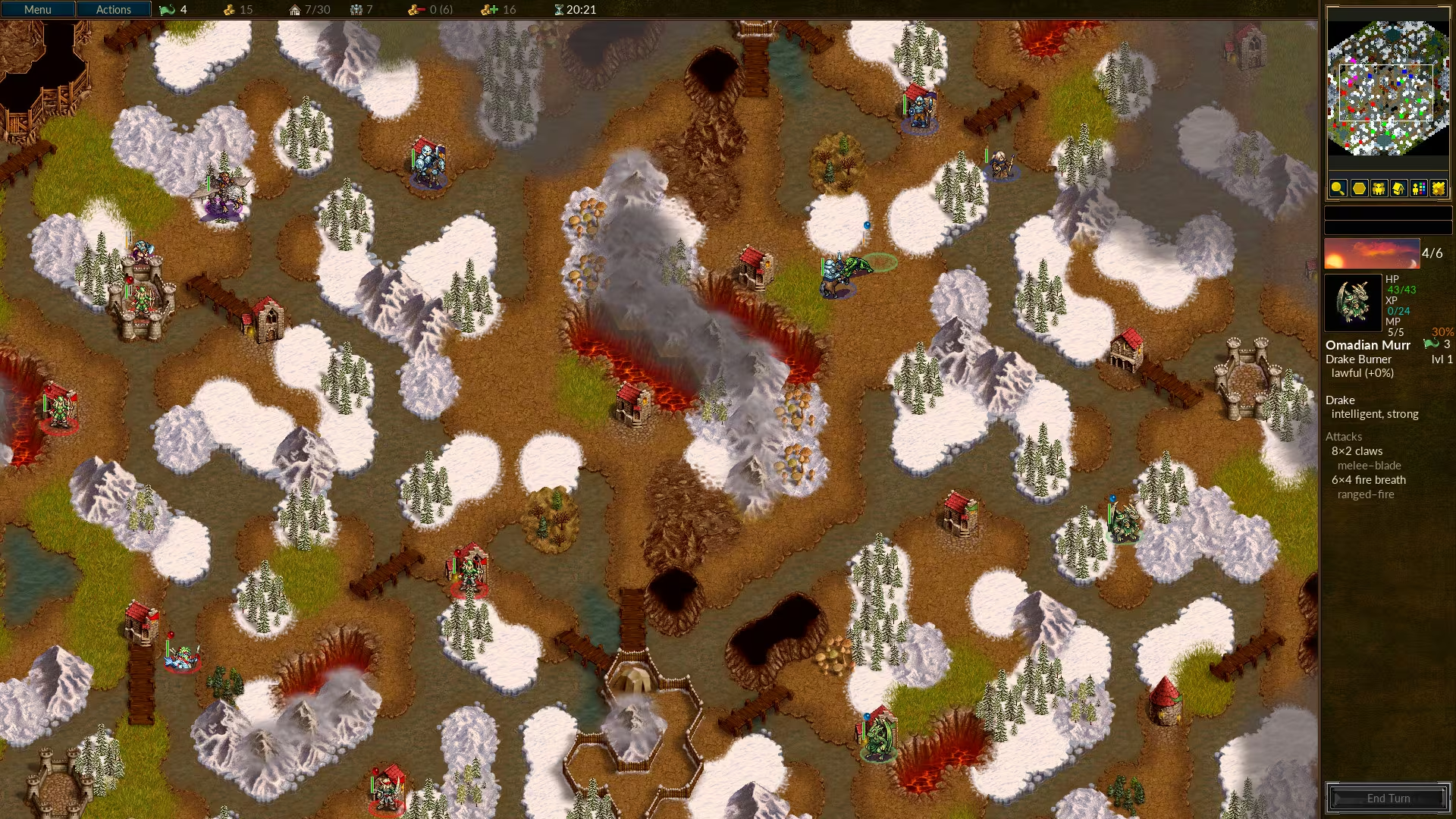
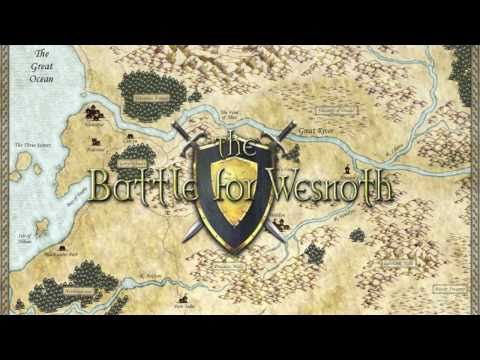
The Battle for Wesnoth is an open source, turn-based strategy game with a high fantasy theme. Explore the four corners of Irdya in seventeen solo campaigns and dozens of multiplayer maps, taking part in countless adventures as you go.

Global score

94/100

Genres

Indie, Strategy, Free To Play, Turn-based strategy (TBS), Role-playing (RPG)

Similar games

    Pros

    • Free and open source
    • Deep and challenging strategy
    • Extensive modding and community content
    • Rich fantasy lore and campaigns
    • Long-term replayability and updates

    Cons

    • Frustrating rng mechanics for some
    • Simple and dated graphics
    • Steep learning curve for beginners
    • Some campaigns can be very difficult
    • Limited physical activity and social intimacy

    Analysis

    Broadly representative of its motivational profile, with a few distinct shifts. Motivations that often define this kind of title include Cooperation, Fellowship, Intimacy, Leadership. Here, the score leans higher than usual among comparable games on Competition, Status. It leans lower than usual among comparable games on Intimacy.

    How to use the graph
    Similar games map

    Each dot is a game. They are arranged from the same motivation profile as in the “Motivations” section below. Closer dots usually mean more similar reasons to play (exploration, competition, relaxation, etc.)—not that one game is “better” than another.

    • Larger dot with a light outline: the game you are viewing.
    • Colour: groups of games with comparable motivation patterns (statistical clusters).
    • Hover a dot to see the game name; click to open its page.
    • Scroll or double-click the chart to zoom out and see more games.

    Why don’t the axes read like a score? This view uses t-SNE: it only keeps who is close to whom. The scales are not “good to bad” or hours played—they separate groups on the map. Read distance between dots, not the axis numbers.

    Motivations

    • Autonomy
      4

      "Players have freedom to choose factions, units, strategies, and mod/custom content, allowing personal control over gameplay."

    • Competence
      4

      "Game is easy to learn but hard to master with deep strategic and tactical challenges, rewarding skill and planning."

    • Competition
      2

      "Includes multiplayer and PvP modes with balanced factions and ranked play, but many players focus on single player or casual play."

    • Continuation
      5

      "Players report hundreds to thousands of hours, with strong attachment, replayability, and ongoing updates for nearly two decades."

    • Cooperation
      2

      "Supports multiplayer and cooperative play, but many reviews emphasize solo campaigns and individual strategic play."

    • Creativity
      4

      "Extensive modding, map editing, and user-generated campaigns allow players to create and modify content extensively."

    • Domination
      -3

      "Community and multiplayer emphasize balanced play and mutual respect rather than dominance or trash talk."

    • Escapism
      4

      "Players use the game for relaxation, nostalgia, and immersion in fantasy worlds, escaping real life stresses."

    • Expectation
      -4

      "Players engage voluntarily out of intrinsic interest and love for the genre, not obligation or external pressure."

    • Experimenting
      4

      "Players experiment with different factions, strategies, RNG settings, and mods to explore new gameplay experiences."

    • Exploration
      3

      "Discovery of new campaigns, user-made content, and modded scenarios encourages exploration beyond base game."

    • Expression
      3

      "Customization through mods, campaigns, and some unit personalization allows player expression within the game."

    • Fantasy
      5

      "Strong fantasy theme with elves, dwarves, dragons, magic, and rich lore central to the experience."

    • Fellowship
      3

      "Active community and multiplayer foster a sense of belonging, though many players also enjoy solo play."

    • Growth
      4

      "Players develop strategic skills, learn complex mechanics, and improve over long-term play."

    • Health
      -5

      "Primarily sedentary gameplay with no physical activity or health-related features."

    • Idle
      -3

      "Requires focused attention during turns and campaigns; not designed for idle or background play."

    • Intimacy
      -3

      "Social interactions are mostly surface-level multiplayer or community engagement, limited emotional closeness."

    • Leadership
      2

      "Players lead armies and make strategic decisions, but multiplayer is balanced without strong hierarchical leadership."

    • Progression
      4

      "Unit leveling, experience carryover, and campaign progression provide strong sense of growth and accumulation."

    • Relaxation
      3

      "Game offers a balance of challenge and flow, though RNG can cause frustration for some players."

    • Sensation
      2

      "Enjoyable pixel art, music, and animations provide sensory pleasure, though graphics are simple and retro."

    • Status
      1

      "Some recognition through multiplayer and community reputation, but not a major focus."

    • Story
      4

      "Rich narrative campaigns with engaging characters and lore are a major draw for players."

    • Strategy
      5

      "Deep tactical and strategic gameplay with terrain, unit synergy, and positioning requiring careful planning."

    • Thrill
      3

      "RNG elements create suspense and tension, making outcomes unpredictable and exciting."

    • Value
      5

      "Completely free with extensive content and ongoing updates, providing exceptional value for time and money."

    • Violence
      3

      "Combat and destruction are central gameplay elements, though stylized and fantasy-themed."

    • Survival
      3

      "Players must manage resources, unit preservation, and tactical defense to avoid failure."

    Last update: 29/04/2026