Sim Companies Thumbnail

Sim Companies similar games & best alternatives

Sim Companies

PC (Microsoft Windows), iOS, Web browser, Android • 2023

Related articles

Quick resume

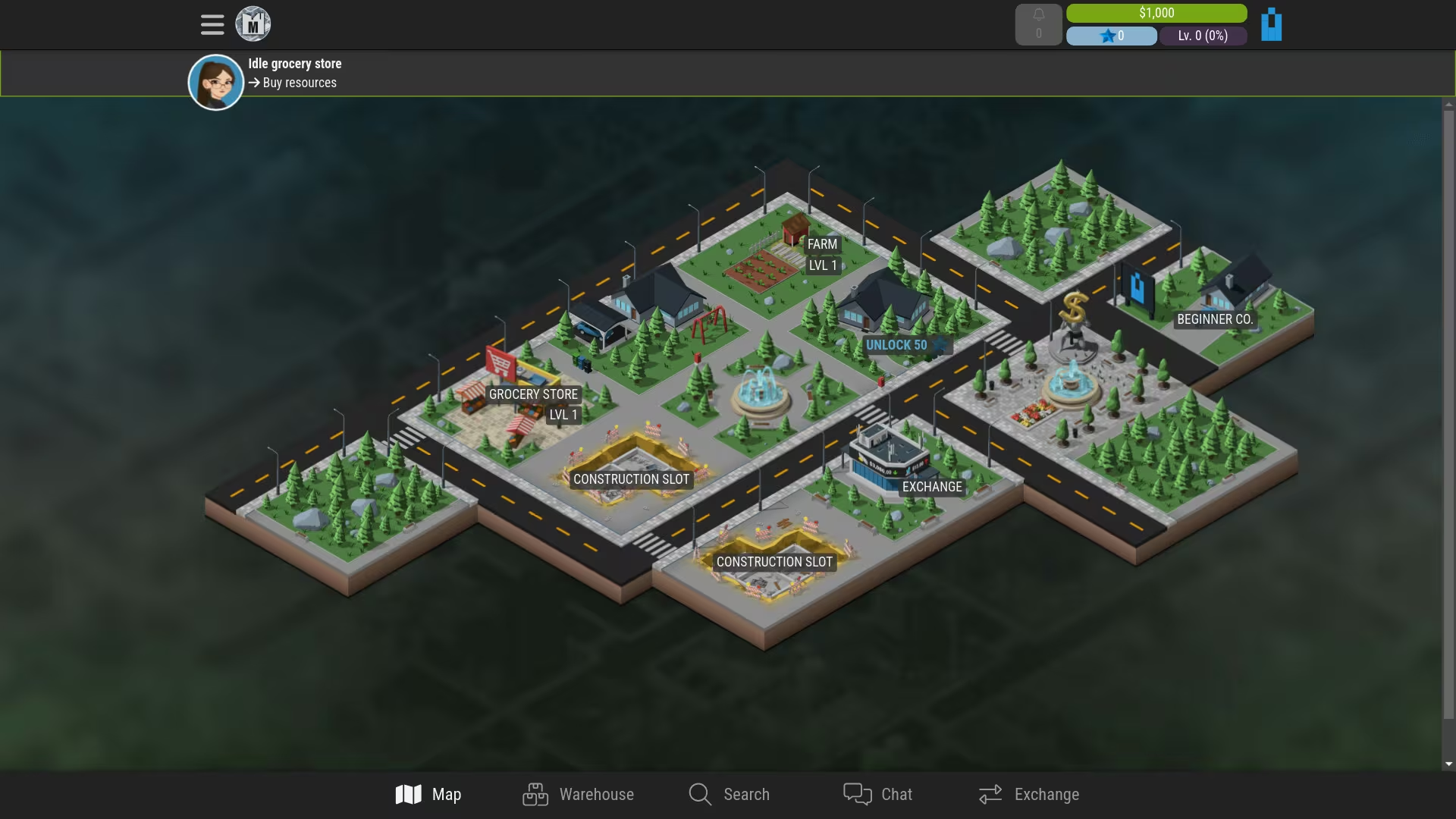
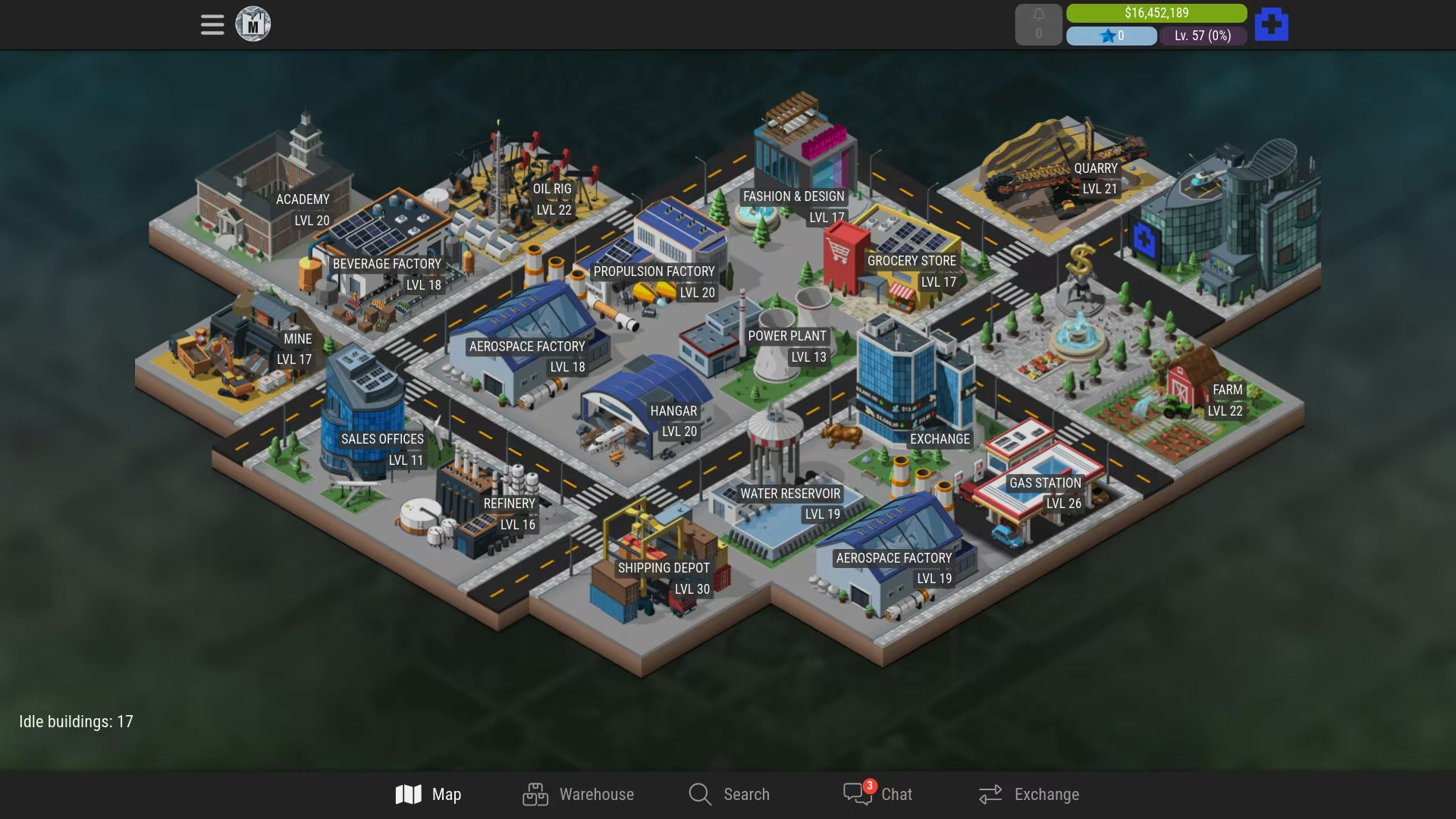
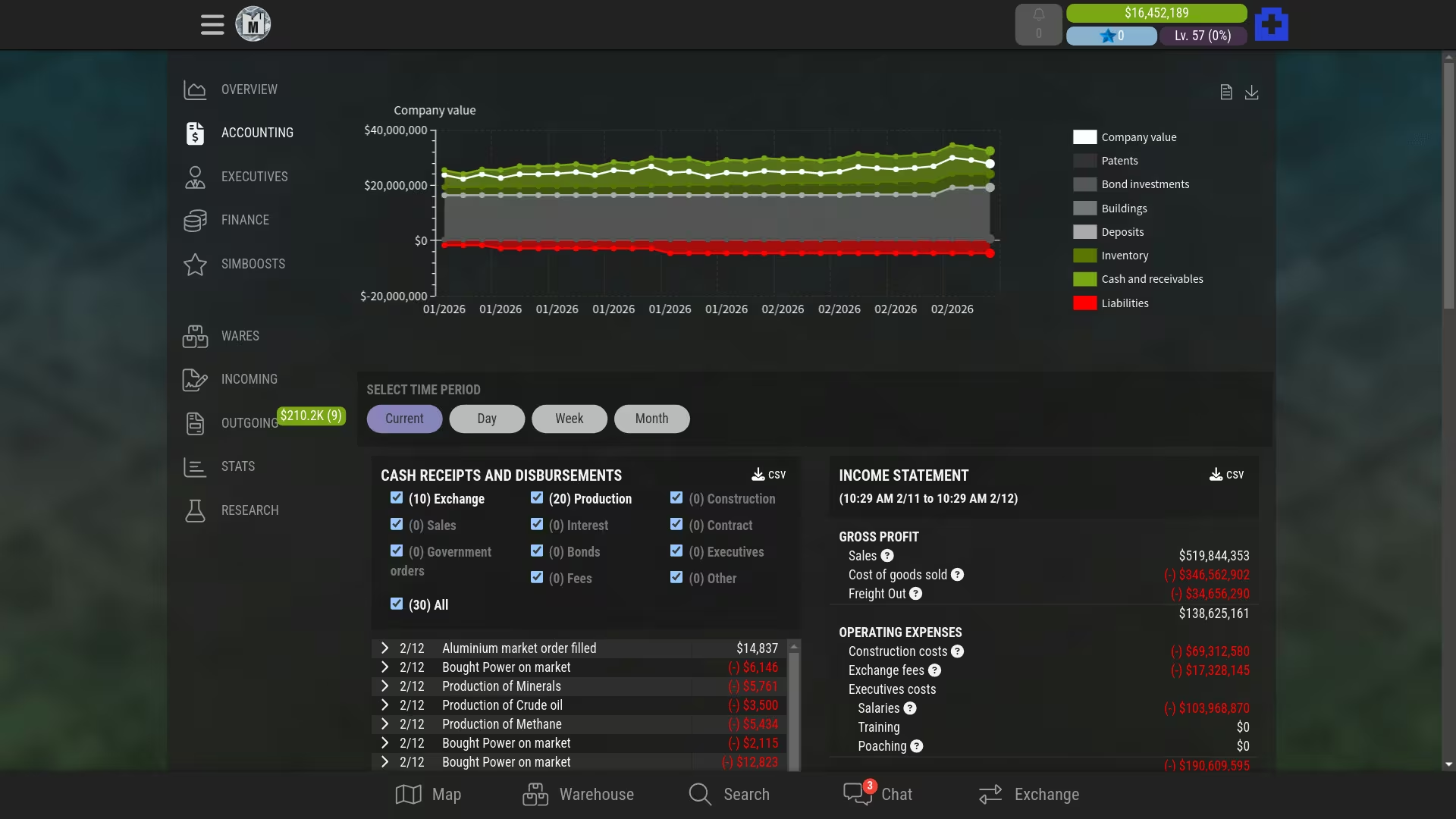
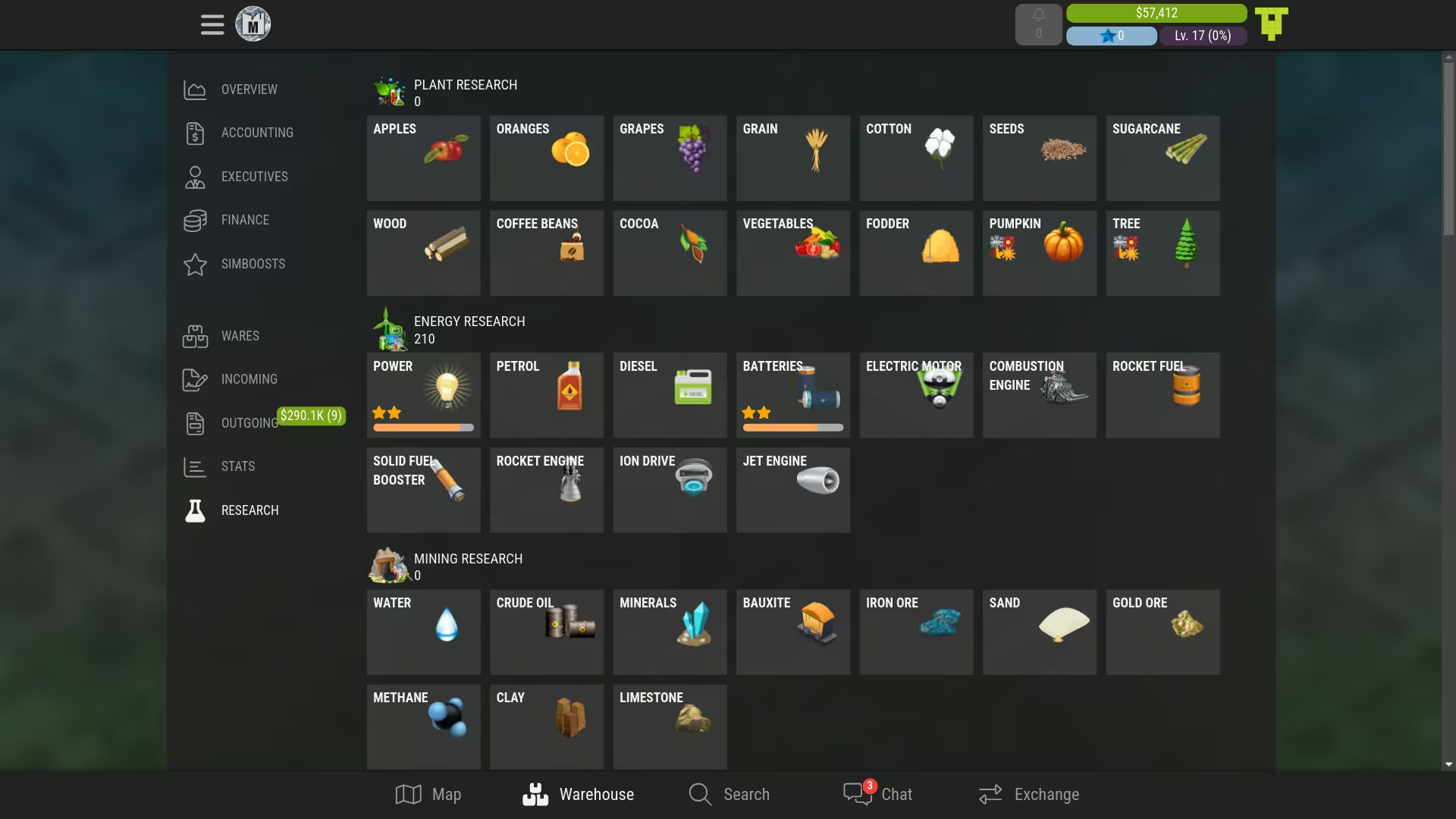
Become a Business Tycoon. Build your own company from the ground up. Do business in a virtual economy with players all around the world! Gain valuable business skills for free. An advanced, proprietary, Economy simulation model is used to deliver the best gaming experience.

Global score

80/100

Genres

Massively Multiplayer, Simulator, Strategy, Free To Play, Real Time Strategy (RTS), Indie

Similar games

    Pros

    • Deep and realistic economic simulation
    • Player-driven market and community
    • Free-to-play with fair monetization
    • Flexible playstyle and pacing
    • Active and supportive player base

    Cons

    • Slow pace and long wait times
    • Steep learning curve for new players
    • Some server performance issues
    • Limited visual and sensory stimulation
    • Potential grind and repetitive tasks

    Analysis

    Less representative of its motivational profile, with noticeable differences. Motivations that often define this kind of title include Idle, Thrill, Violence, Survival. Here, the score leans higher than usual among comparable games on Cooperation, Fellowship, Competition.

    How to use the graph
    Similar games map

    Each dot is a game. They are arranged from the same motivation profile as in the “Motivations” section below. Closer dots usually mean more similar reasons to play (exploration, competition, relaxation, etc.)—not that one game is “better” than another.

    • Larger dot with a light outline: the game you are viewing.
    • Colour: groups of games with comparable motivation patterns (statistical clusters).
    • Hover a dot to see the game name; click to open its page.
    • Scroll or double-click the chart to zoom out and see more games.

    Why don’t the axes read like a score? This view uses t-SNE: it only keeps who is close to whom. The scales are not “good to bad” or hours played—they separate groups on the map. Read distance between dots, not the axis numbers.

    Motivations

    • Autonomy
      4

      "Players have freedom to choose industries, production lines, trade partners, and business strategies, allowing significant control over their actions."

    • Competence
      4

      "The game involves complex economic calculations, strategic planning, and skillful market manipulation, providing meaningful challenges and feedback."

    • Competition
      3

      "There is a player-driven market and rankings, but competition is more about economic positioning than direct confrontation."

    • Continuation
      4

      "Many players report habitual daily check-ins and long-term engagement, though the slow pace encourages intermittent play rather than continuous sessions."

    • Cooperation
      3

      "Players engage in contracts, trade, and loans with others, fostering cooperative economic relationships within the community."

    • Creativity
      2

      "Players can design their business approach and product mix, but production and market structures are predefined."

    • Domination
      -3

      "Interactions emphasize mutual benefit and community support rather than exerting control or superiority over others."

    • Escapism
      3

      "Players use the game as a relaxing, strategic distraction from real life, enjoying a slow-paced economic simulation."

    • Expectation
      -4

      "Players engage voluntarily out of interest and enjoyment, with no pressure or obligation reported."

    • Experimenting
      3

      "The game encourages trying different industries, strategies, and market tactics to find profitable niches."

    • Exploration
      -2

      "The game world is stable and known; exploration is limited to economic experimentation rather than discovering new areas."

    • Expression
      2

      "Players can customize their company logos and business models, allowing some self-expression."

    • Fantasy
      -3

      "The game simulates realistic economic and business processes without fictional or fantastical elements."

    • Fellowship
      3

      "The community is active and supportive, with players sharing tips and collaborating in trade and contracts."

    • Growth
      4

      "Players develop their business skills and knowledge through ongoing learning and strategic refinement."

    • Health
      -5

      "The game is sedentary with no physical activity or health-related features."

    • Idle
      4

      "Gameplay involves waiting for production and sales, with players often logging in briefly multiple times a day."

    • Intimacy
      1

      "Social interactions occur mainly around business and trade, with limited evidence of close personal relationships."

    • Leadership
      2

      "Players lead their own companies and can influence others through investments and contracts, but no formal group leadership roles."

    • Progression
      5

      "Strong focus on accumulating resources, upgrading buildings, expanding production, and increasing company value."

    • Relaxation
      3

      "The slow pace and strategic depth provide a relaxing and thoughtful experience for many players."

    • Sensation
      -2

      "Visuals and audio are minimal and functional; the game emphasizes intellectual engagement over sensory stimulation."

    • Status
      2

      "Rankings and leaderboards provide recognition, though social status is not aggressively pursued."

    • Story
      -4

      "The game lacks narrative or plot, focusing instead on open-ended economic simulation."

    • Strategy
      5

      "High emphasis on strategic planning, market analysis, and problem solving in business management."

    • Thrill
      -3

      "The game is slow-paced and low-risk, with minimal suspense or excitement."

    • Value
      4

      "Players perceive good value from the free-to-play model and the depth of gameplay relative to time invested."

    • Violence
      -5

      "No combat or destructive elements; gameplay centers on constructive economic activities."

    • Survival
      2

      "Players must manage risks like market fluctuations and administrative costs to keep their business viable."

    Last update: 29/04/2026