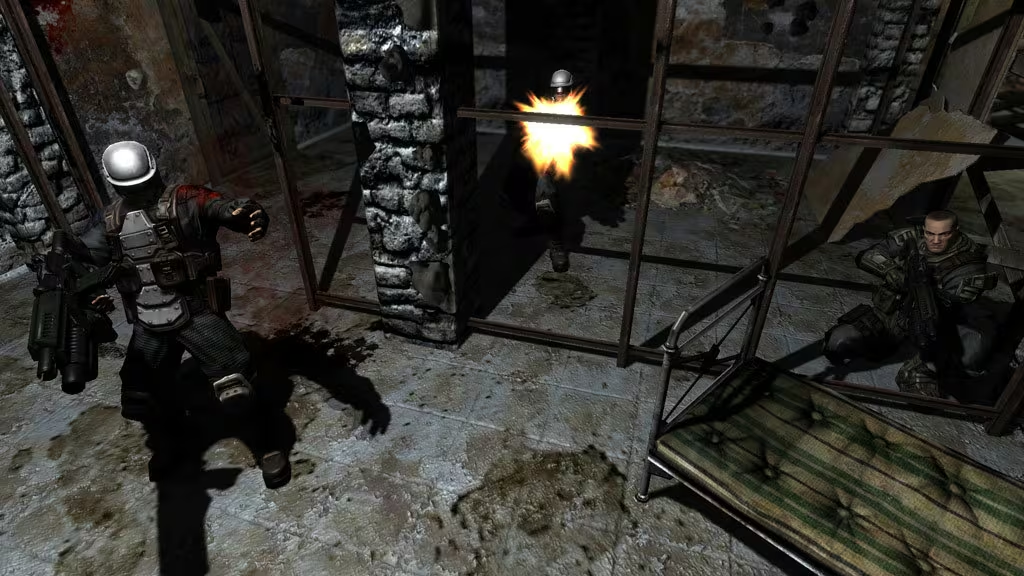
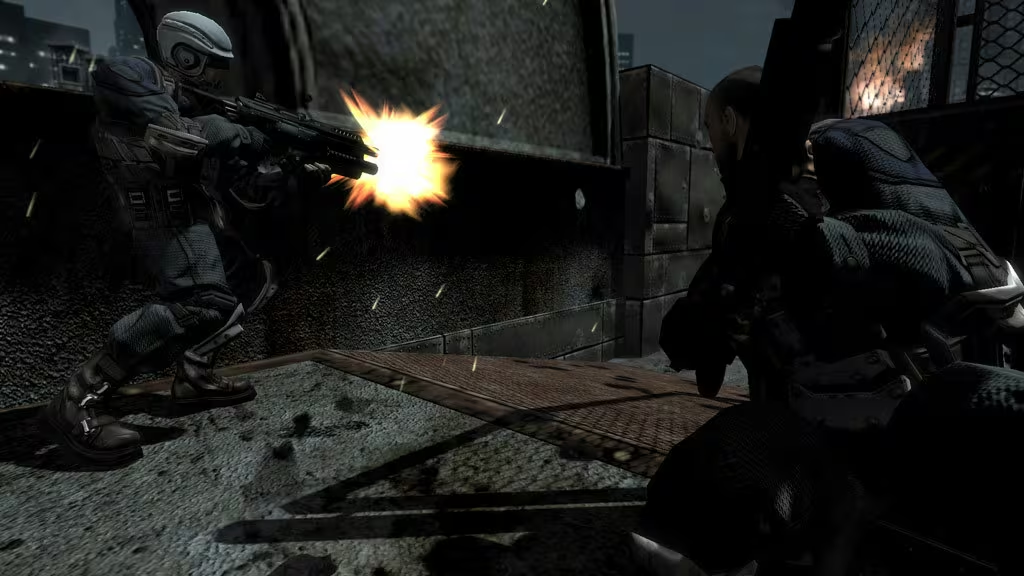
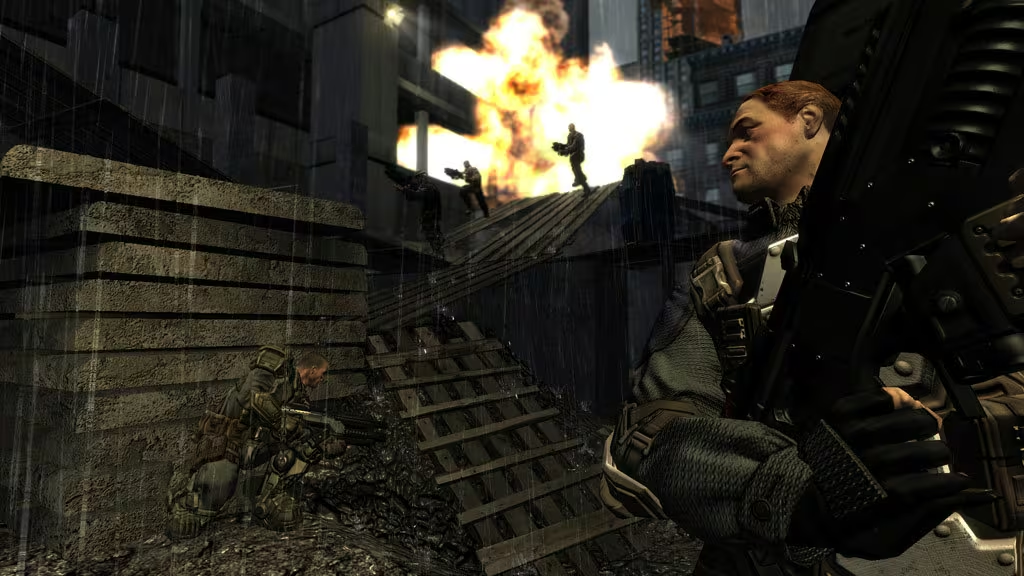
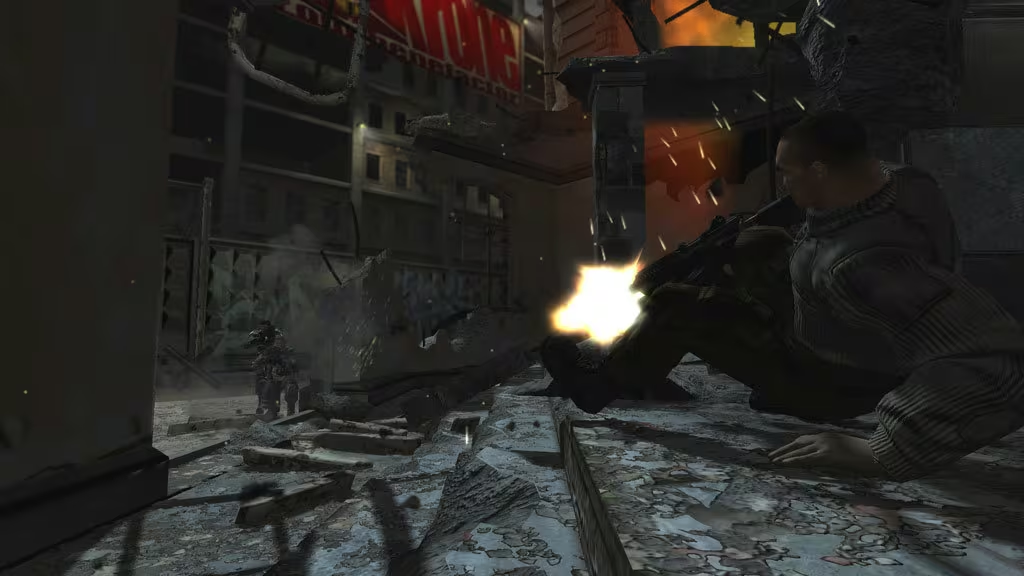
TimeShift™ Thumbnail

TimeShift™ similar games & best alternatives
TimeShift™

PC (Microsoft Windows) • 2009

Related articles

Quick resume

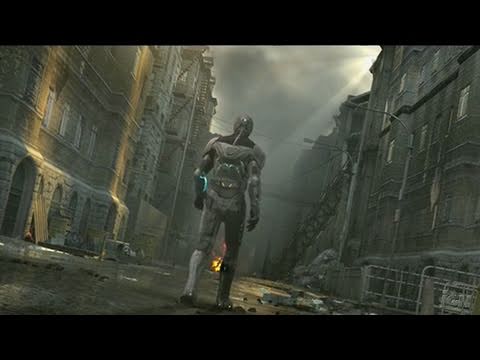
Master time to become the ultimate weapon! Dr. Aiden Krone has made a Time Jump across the space-time continuum - a reckless act with frightening consequences. Now, a disturbing alternate reality has evolved within the bleak and rain-soaked Alpha District.

Global score

80/100

Genres

Action, Adventure, Indie

Similar games

    Pros

    • Innovative time manipulation mechanics
    • Engaging and challenging combat
    • Varied weapons with secondary fire modes
    • Atmospheric sci-fi setting
    • Good graphics for release period

    Cons

    • Weak and confusing story
    • Short campaign length
    • Linear level design
    • Limited multiplayer and social features
    • High price relative to content

    Analysis

    Broadly representative of its motivational profile, with a few distinct shifts. Motivations that often define this kind of title include Expression, Fellowship, Cooperation, Competition. Here, the score leans higher than usual among comparable games on Violence. It leans lower than usual among comparable games on Value, Story.

    How to use the graph
    Similar games map

    Each dot is a game. They are arranged from the same motivation profile as in the “Motivations” section below. Closer dots usually mean more similar reasons to play (exploration, competition, relaxation, etc.)—not that one game is “better” than another.

    • Larger dot with a light outline: the game you are viewing.
    • Colour: groups of games with comparable motivation patterns (statistical clusters).
    • Hover a dot to see the game name; click to open its page.
    • Scroll or double-click the chart to zoom out and see more games.

    Why don’t the axes read like a score? This view uses t-SNE: it only keeps who is close to whom. The scales are not “good to bad” or hours played—they separate groups on the map. Read distance between dots, not the axis numbers.

    Motivations

    • Autonomy
      4

      "Players have control over time manipulation abilities and weapon choices, enabling personal tactical decisions."

    • Competence
      3

      "Game challenges players with combat against tough AI and puzzle-solving using time powers, requiring skill and strategy."

    • Competition
      -3

      "Focus is on single-player experience with no active multiplayer community; gameplay centers on personal progression."

    • Continuation
      2

      "Players report multiple playthroughs and enjoyment over time, though game length is relatively short."

    • Cooperation
      -4

      "Primarily a solo experience with limited or no multiplayer functionality and minimal teamwork elements."

    • Creativity
      3

      "Time manipulation mechanics and weapon secondary modes encourage creative combat and puzzle approaches."

    • Domination
      -4

      "Interactions emphasize player skill and equal challenge rather than exerting superiority or authority over others."

    • Escapism
      4

      "Players enjoy immersive sci-fi setting and time control powers as a form of engaging distraction from reality."

    • Expectation
      -4

      "Players engage voluntarily out of interest and nostalgia rather than obligation or external pressure."

    • Experimenting
      3

      "Time control powers and puzzle elements invite players to try different tactics and experiment with gameplay."

    • Exploration
      1

      "Levels are mostly linear but include varied environments and some puzzles encouraging exploration."

    • Expression
      -3

      "Limited character customization; player expression mainly through gameplay choices rather than visual personalization."

    • Fantasy
      4

      "Strong sci-fi narrative with time travel, dystopian alternate realities, and superhuman abilities."

    • Fellowship
      -4

      "Experience is largely solitary with minimal social interaction or community engagement."

    • Growth
      2

      "Players develop skills in combat tactics and puzzle solving, though progression is limited by linear design."

    • Health
      -4

      "Gameplay is sedentary with no physical activity elements."

    • Idle
      -3

      "Requires focused attention and continuous engagement during combat and puzzle sequences."

    • Intimacy
      -5

      "No evidence of close social relationships or emotional sharing; primarily individual play."

    • Leadership
      -4

      "No leadership roles; player acts independently without managing or guiding others."

    • Progression
      3

      "Players collect and upgrade weapons and abilities, progressing through levels and challenges."

    • Relaxation
      1

      "Game balances action and puzzle solving; some tension but also moments of flow and satisfaction."

    • Sensation
      3

      "Visual effects like slow motion, time stop, and physics-based gore provide sensory excitement."

    • Status
      -4

      "Achievements and recognition are minimal; focus is on individual experience rather than social status."

    • Story
      1

      "Narrative is present but considered weak and secondary to gameplay; some immersion in dystopian sci-fi setting."

    • Strategy
      3

      "Combat and puzzle elements require tactical use of time powers and positioning."

    • Thrill
      2

      "Combat encounters and time manipulation create moments of excitement and tension."

    • Value
      -2

      "Players note high price relative to game length and content; better value during sales."

    • Violence
      4

      "Game features intense combat, gore, and violent interactions enhanced by time manipulation."

    • Survival
      2

      "Players must avoid death and manage resources like suit energy to survive challenging encounters."

    Last update: 29/04/2026