Etherlords II similar games & best alternatives
Etherlords II
2014
Related articles
Quick resume
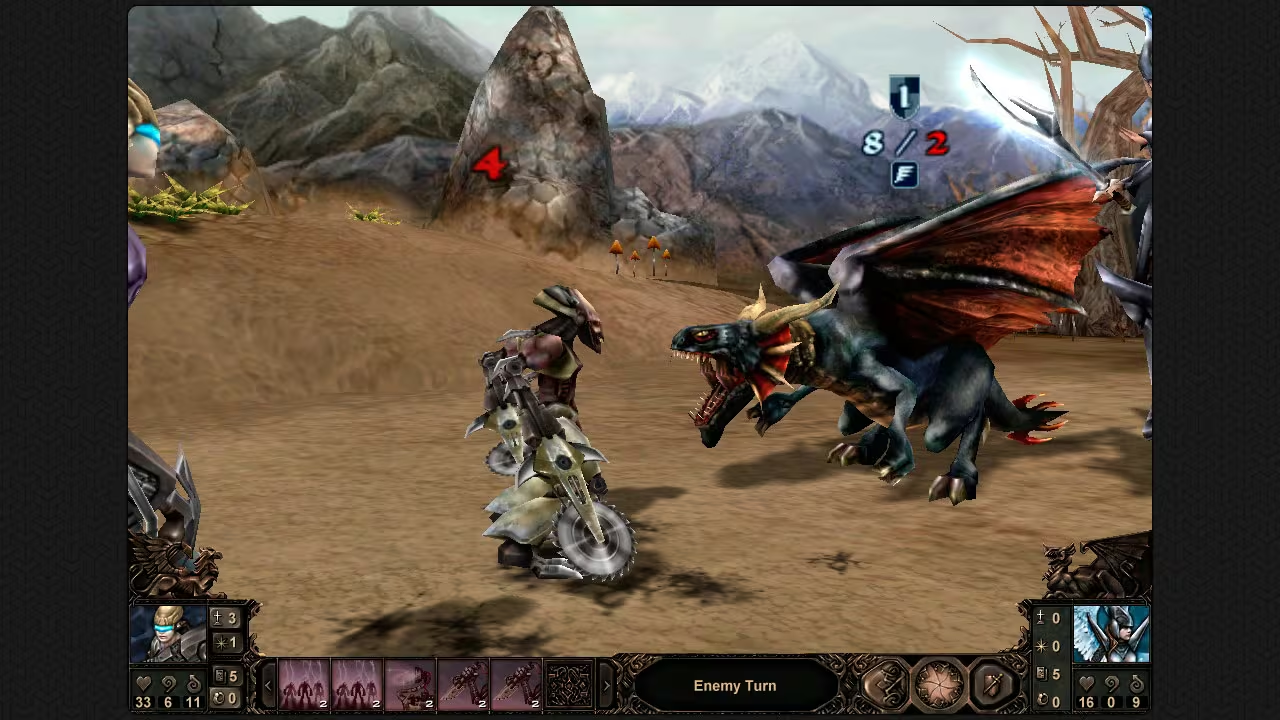
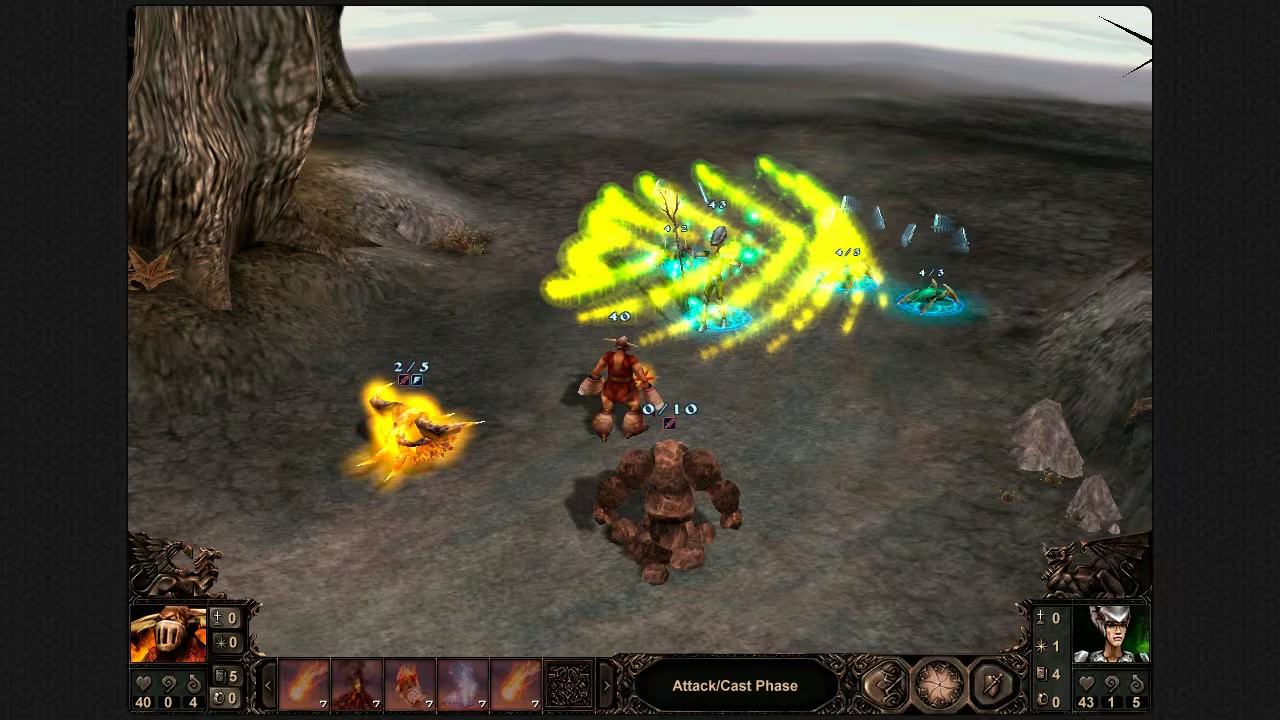
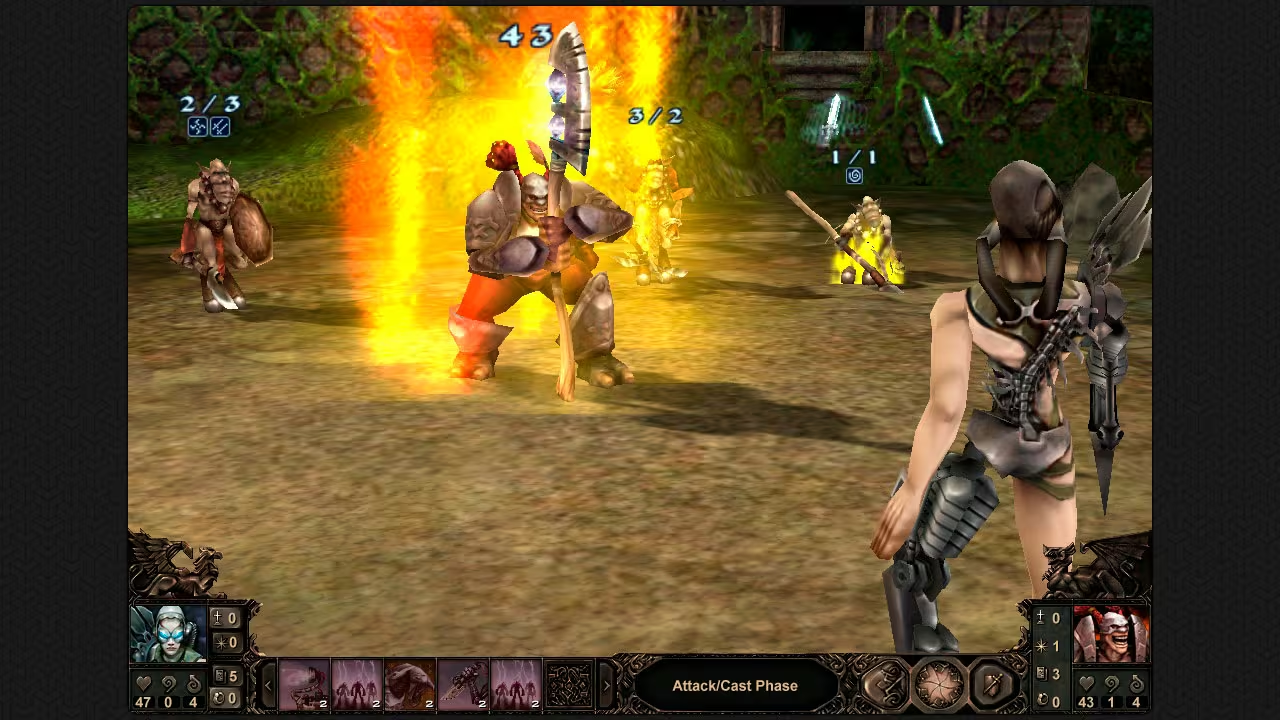
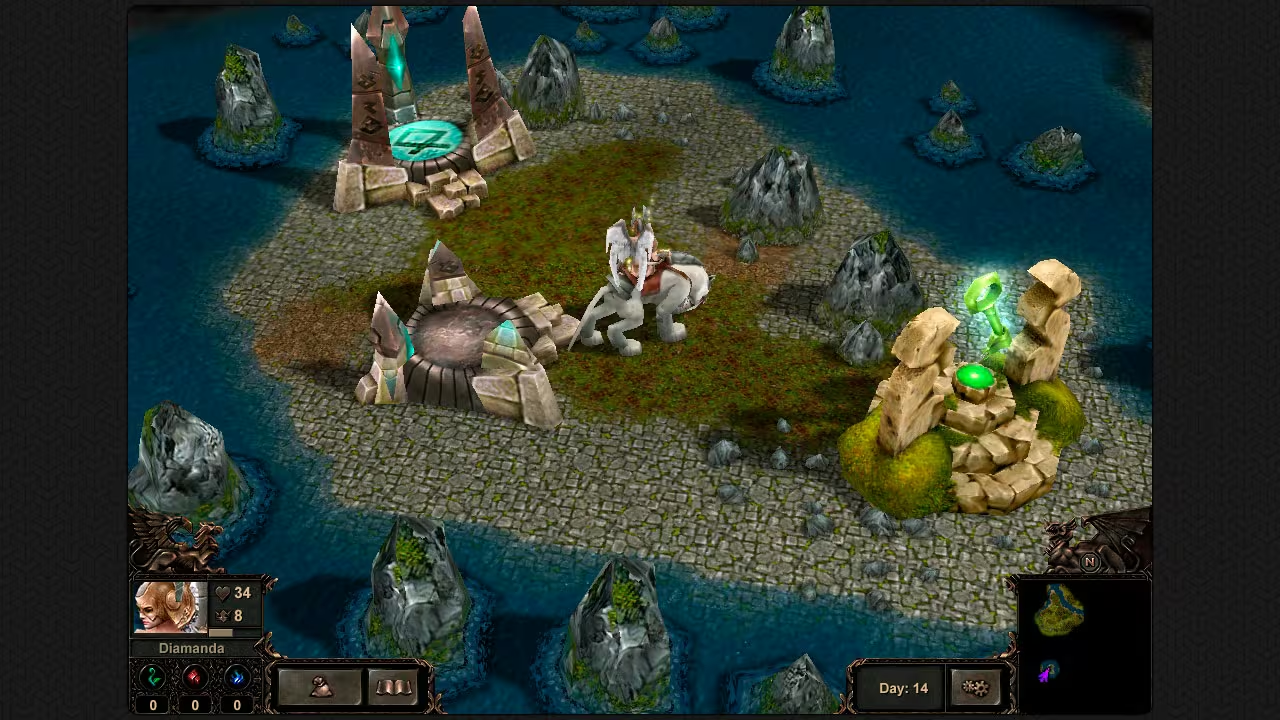
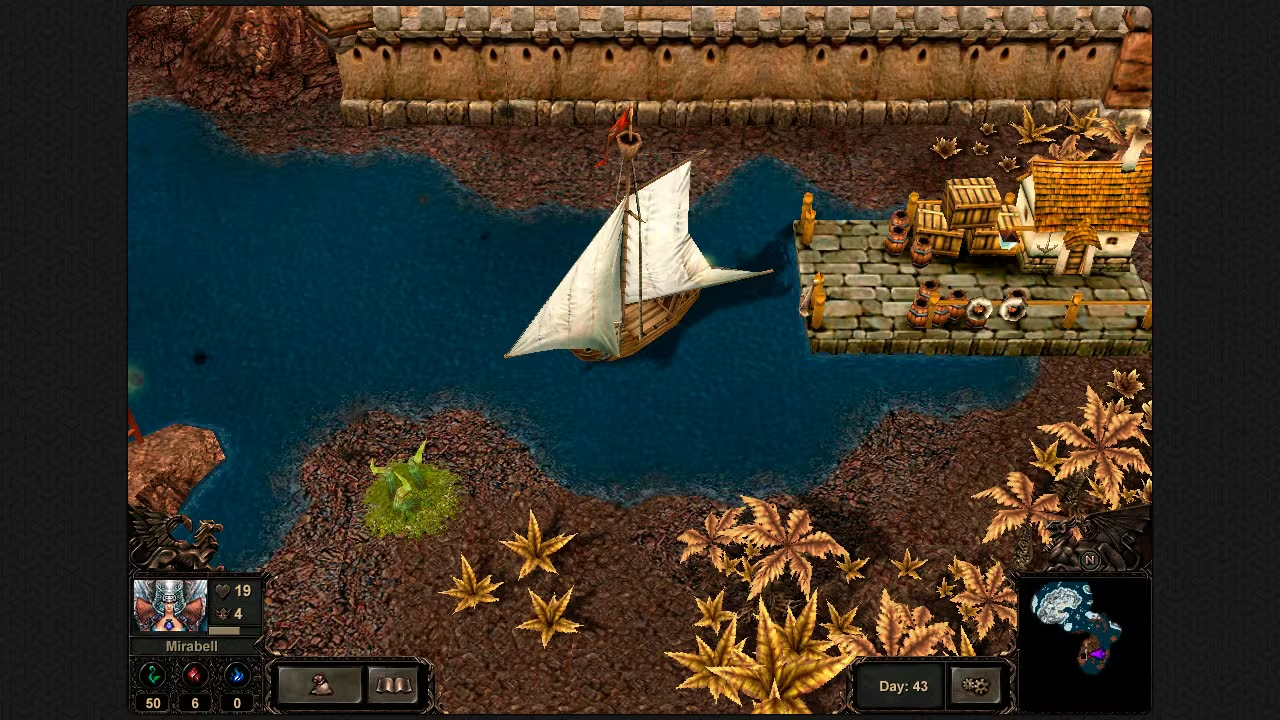
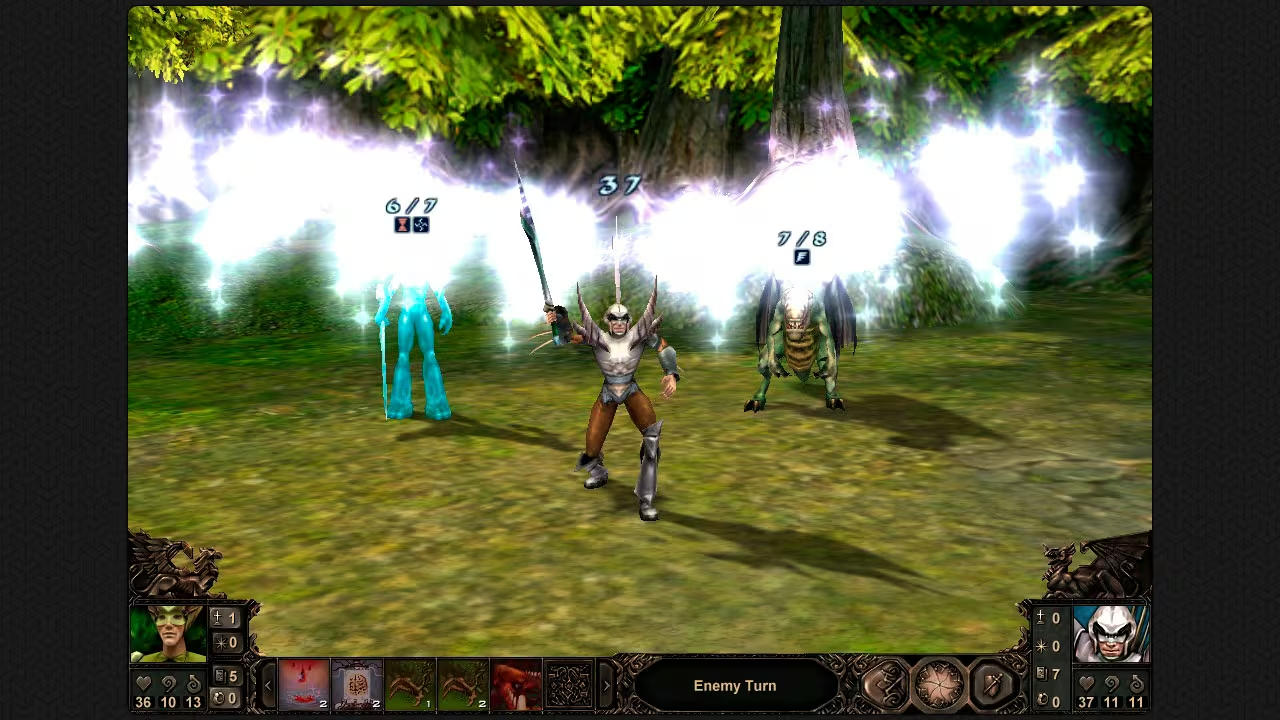
The saga continues! Etherlords II takes you back to the world of Ether and into a whole new realm of fantastic possibilities. Lead your hero on an unforgettable journey through lands filled with unsurpassed beauty and danger to unlock the ultimate mystery.
Global score
83/100
Genres
Adventure, Indie, Role-playing (RPG), Strategy, Turn-based strategy (TBS), Card & Board Game
Similar games
Pros
- Deep and strategic deckbuilding
- Unique fantasy setting and creatures
- Multiple campaigns with replayability
- Challenging ai and tactical combat
- Low price and nostalgic value
Cons
- Outdated graphics and ui
- Dead or minimal multiplayer community
- Some difficulty spikes and rng frustration
- Limited map exploration and linear campaigns
- Lack of modern quality-of-life features
Analysis
Less representative of its motivational profile, with noticeable differences. Motivations that often define this kind of title include Fellowship, Cooperation, Leadership, Violence. Here, the score leans higher than usual among comparable games on Competition, Strategy. It leans lower than usual among comparable games on Violence.
How to use the graph
Similar games map
Each dot is a game. They are arranged from the same motivation profile as in the “Motivations” section below. Closer dots usually mean more similar reasons to play (exploration, competition, relaxation, etc.)—not that one game is “better” than another.
- Larger dot with a light outline: the game you are viewing.
- Colour: groups of games with comparable motivation patterns (statistical clusters).
- Hover a dot to see the game name; click to open its page.
- Scroll or double-click the chart to zoom out and see more games.
Why don’t the axes read like a score? This view uses t-SNE: it only keeps who is close to whom. The scales are not “good to bad” or hours played—they separate groups on the map. Read distance between dots, not the axis numbers.
Motivations
-
Autonomy4
"Players have freedom to build and customize decks, choose strategies, and adapt to different opponents, showing high player control over decisions."
-
Competence4
"The game challenges players with complex deckbuilding, strategic battles, and requires skillful adaptation to enemy decks and situations."
-
Competition2
"Includes multiplayer duels and leaderboards, but multiplayer is mostly inactive; competition is present but limited."
-
Continuation3
"Players report long play sessions, repeated replays, and habitual returns to the game, indicating strong attachment."
-
Cooperation-4
"Focus is on single-player campaigns and individual deckbuilding; multiplayer exists but is minimal and not cooperative."
-
Creativity5
"Highly praised for unique card combinations, deckbuilding creativity, and diverse strategies; players experiment extensively."
-
Domination-3
"Interactions emphasize balanced duels and strategic challenge rather than dominance or trash talk."
-
Escapism4
"Players use the game as a nostalgic escape and immersive fantasy experience, detaching from real life."
-
Expectation-4
"Players engage voluntarily out of personal interest and nostalgia, not out of obligation or pressure."
-
Experimenting5
"Strong emphasis on trying new deck builds, strategies, and adapting to different enemy tactics."
-
Exploration2
"Exploration occurs on campaign maps with resource gathering and questing, though maps are somewhat linear and limited."
-
Expression3
"Players customize decks and heroes with different cards and skills, expressing personal playstyle."
-
Fantasy5
"Set in a rich fantasy world with unique races, creatures, magic, and lore; strong imaginative fiction."
-
Fellowship-3
"Community interaction is limited due to inactive multiplayer; mostly solo play with minimal social connection."
-
Growth4
"Players develop skills in deckbuilding, strategy, and learn enemy mechanics; RPG elements support progression."
-
Health-5
"Typical sedentary computer gameplay with no physical activity or health-related features."
-
Idle-4
"Requires focused attention during battles and strategic planning; not suitable for casual or background play."
-
Intimacy-4
"Limited social interaction and emotional connection; mainly individual gameplay without close relationships."
-
Leadership-3
"Players manage their own decks and heroes but do not lead groups or others; no leadership roles."
-
Progression4
"Strong progression through unlocking cards, leveling heroes, and acquiring artifacts and skills."
-
Relaxation1
"Some players find the game relaxing and immersive, but difficulty spikes and RNG can cause frustration and tension."
-
Sensation2
"Visual and auditory effects are appreciated but graphics are dated; some sensory stimulation but moderate."
-
Status-3
"Limited social recognition due to small multiplayer community; achievements mostly personal."
-
Story3
"Campaigns feature a connected narrative with multiple perspectives, though some find story and characters less engaging."
-
Strategy5
"Highly strategic gameplay requiring planning, deck optimization, and tactical problem solving."
-
Thrill3
"Players experience suspense and challenge in difficult battles and deck-building puzzles."
-
Value4
"Players perceive strong value for money due to deep gameplay, replayability, and low price."
-
Violence-3
"Combat is card-based and tactical rather than violent or destructive; focus on summoning and spells."
-
Survival3
"Players must manage resources and avoid defeat in challenging battles, emphasizing survival through strategy."
Last update: 29/04/2026