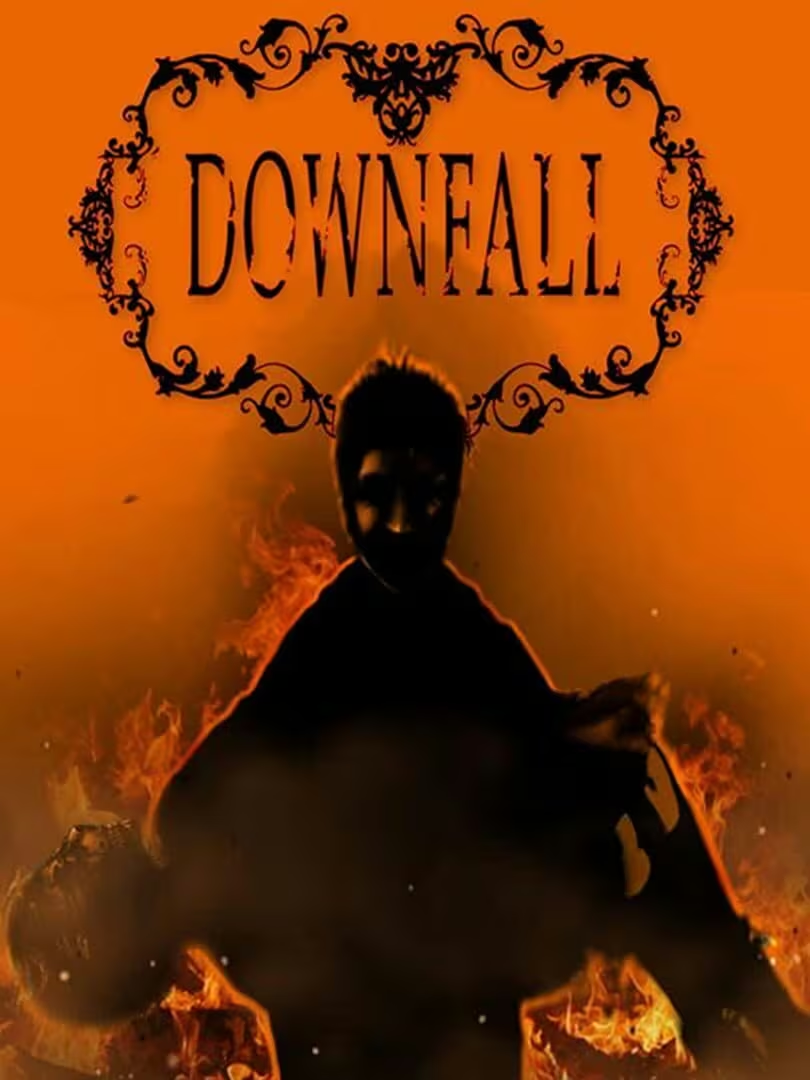
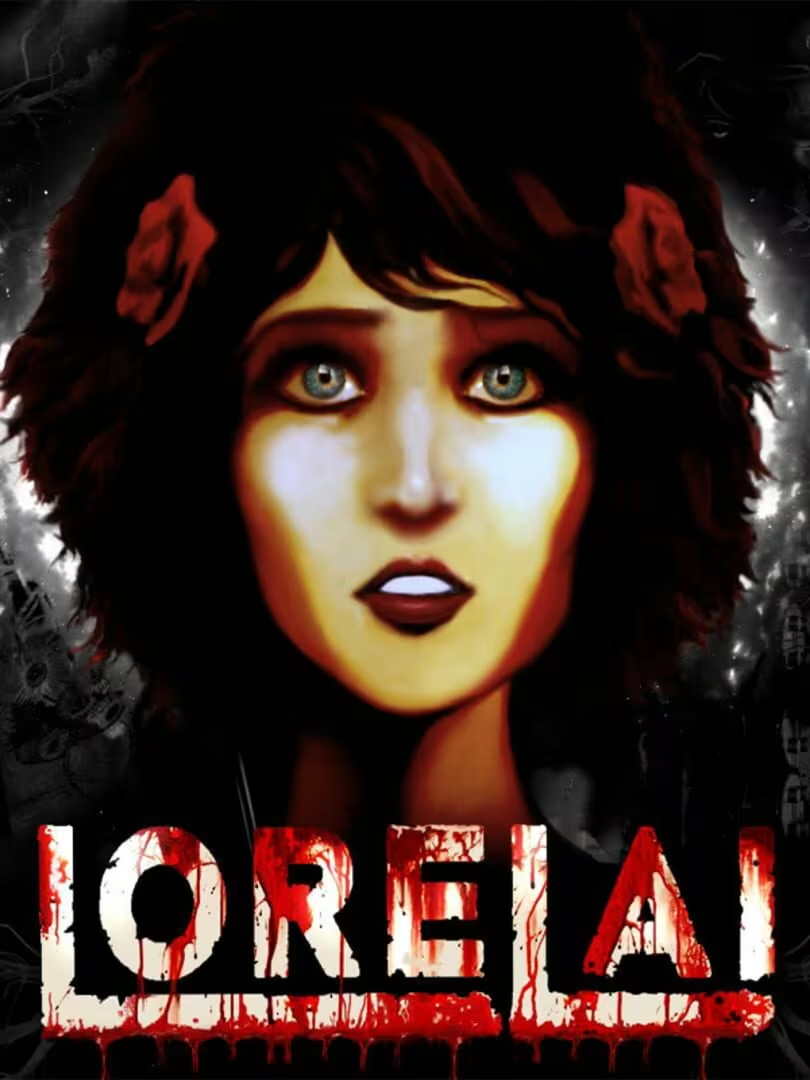
Masochisia Thumbnail

Masochisia similar games & best alternatives

Masochisia

PC (Microsoft Windows), Mac, Linux • 2015

Related articles

Quick resume

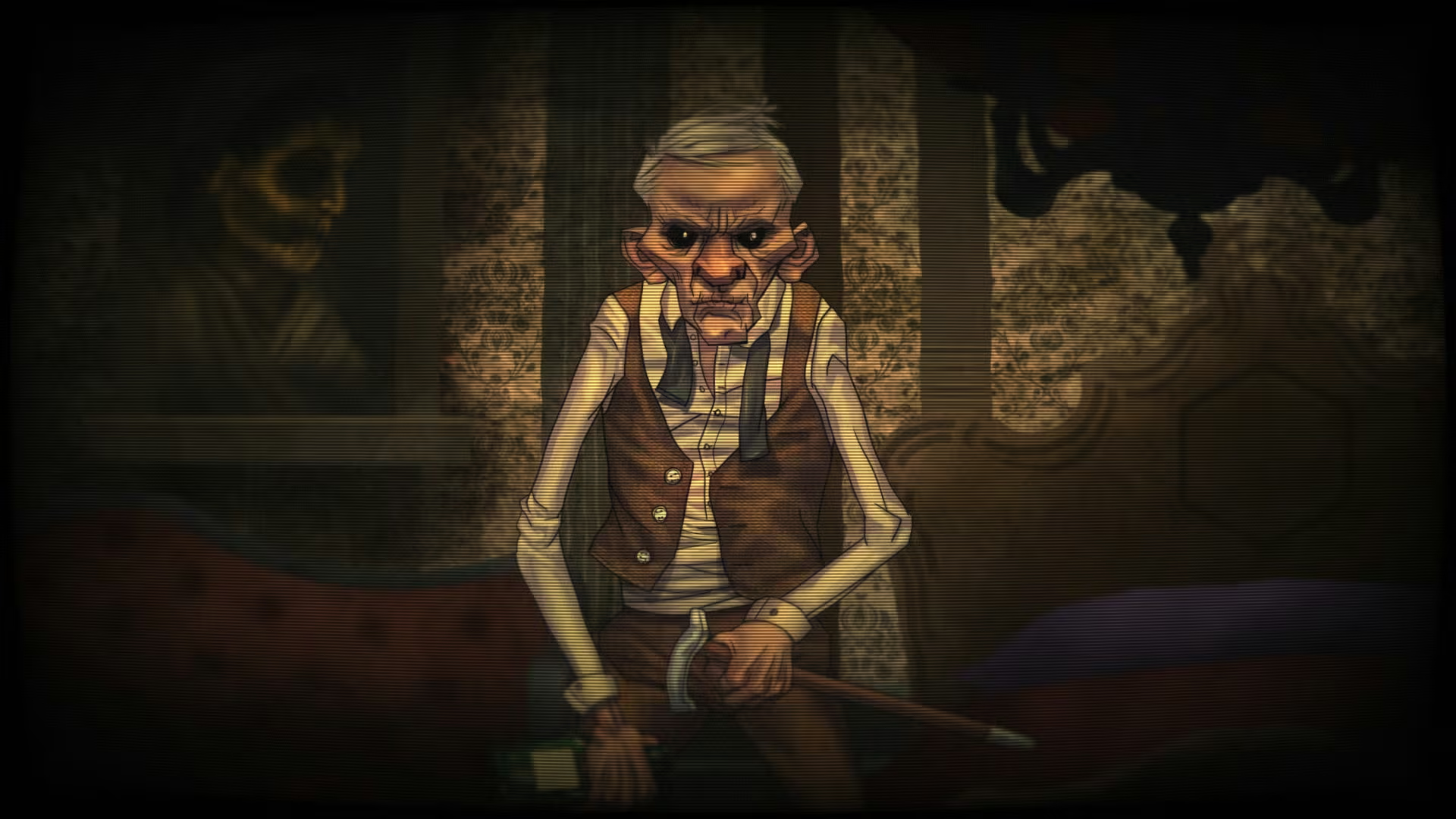
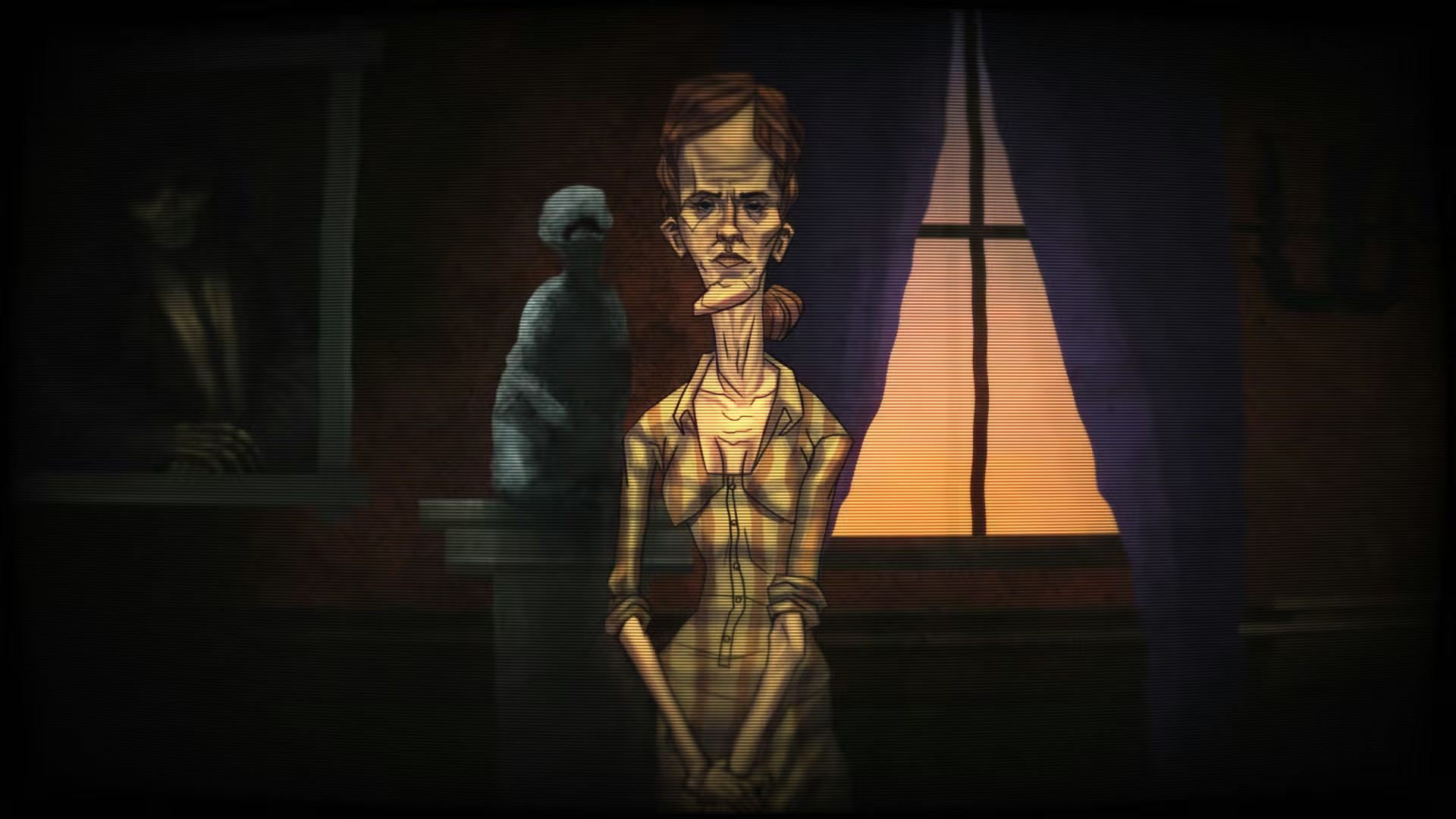
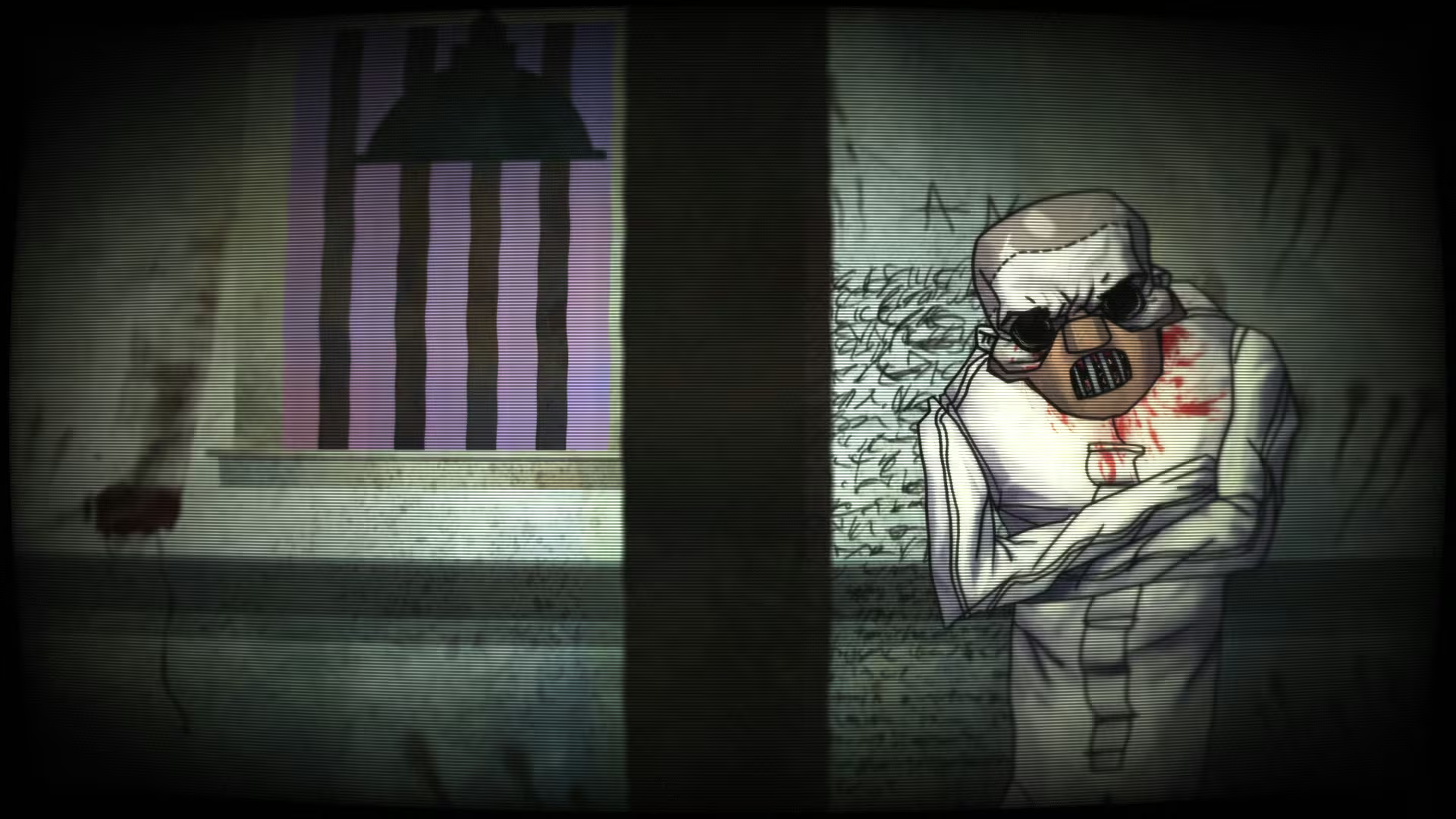
A young man discovers through a series of hallucinations that he will grow up to become a violent psychopath. How will he respond to these revelations? Can he change his fate? Can you even... change fate...

Global score

84/100

Genres

Indie, Adventure, Point-and-click

Similar games

    Pros

    • Unique and disturbing psychological horror narrative
    • Distinctive art style and atmospheric soundtrack
    • Thought-provoking exploration of dark themes
    • Meta elements breaking fourth wall
    • Strong emotional and sensory impact

    Cons

    • Very short gameplay length
    • Linear progression with limited player agency
    • Some technical bugs reported
    • Not suitable for sensitive or vulnerable players
    • Minimal gameplay mechanics beyond narrative

    Analysis

    Broadly representative of its motivational profile, with a few distinct shifts. Motivations that often define this kind of title include Autonomy, Strategy, Experimenting, Competence. Here, the score leans higher than usual among comparable games on Violence, Survival. It leans lower than usual among comparable games on Relaxation.

    How to use the graph
    Similar games map

    Each dot is a game. They are arranged from the same motivation profile as in the “Motivations” section below. Closer dots usually mean more similar reasons to play (exploration, competition, relaxation, etc.)—not that one game is “better” than another.

    • Larger dot with a light outline: the game you are viewing.
    • Colour: groups of games with comparable motivation patterns (statistical clusters).
    • Hover a dot to see the game name; click to open its page.
    • Scroll or double-click the chart to zoom out and see more games.

    Why don’t the axes read like a score? This view uses t-SNE: it only keeps who is close to whom. The scales are not “good to bad” or hours played—they separate groups on the map. Read distance between dots, not the axis numbers.

    Motivations

    • Autonomy
      -4

      "Gameplay and narrative force player to follow a predetermined path with limited meaningful choices, emphasizing lack of control."

    • Competence
      -3

      "Gameplay is simple point-and-click with minimal puzzles, focusing on narrative rather than skill or challenge."

    • Competition
      -5

      "No competitive elements; experience is solitary and narrative-driven without comparison to others."

    • Continuation
      2

      "Short playtime (~2 hours) but strong psychological impact encourages replay for different dialogue and endings."

    • Cooperation
      -5

      "Single-player experience with no cooperative or multiplayer features."

    • Creativity
      3

      "Unique art style and narrative design with meta elements like desktop messages show creative expression."

    • Domination
      -5

      "No domination or power over others; focus is on personal psychological experience."

    • Escapism
      4

      "Players immerse in a dark fictionalized psychological horror to explore disturbing themes and escape reality."

    • Expectation
      -4

      "Players engage voluntarily out of interest in psychological horror and true crime, not obligation."

    • Experimenting
      1

      "Some exploration of narrative paths and dialogue choices, but overall linear progression limits experimentation."

    • Exploration
      1

      "Limited spatial exploration with some discovery of hidden messages and codes, but mostly linear."

    • Expression
      -4

      "No character customization or player expression; presentation is fixed and story-driven."

    • Fantasy
      -3

      "Based on true story with realistic psychological horror themes rather than fantasy or improbable fiction."

    • Fellowship
      -5

      "Experience is solitary with no social or community gameplay elements."

    • Growth
      2

      "Players gain insight into psychological themes and character mindsets, encouraging reflection and learning."

    • Health
      -5

      "Sedentary gameplay with no physical activity or health-related features."

    • Idle
      -4

      "Requires focused attention to narrative and choices; not suitable for background or idle play."

    • Intimacy
      -4

      "Limited social interaction; emotional engagement is with narrative rather than interpersonal relationships."

    • Leadership
      -5

      "No leadership or group management; single-player narrative experience."

    • Progression
      1

      "Some item collection and story progression, but no complex upgrade or accumulation systems."

    • Relaxation
      -4

      "Tense, disturbing atmosphere creates sustained emotional strain rather than relaxation."

    • Sensation
      3

      "Strong atmospheric audio-visual design evokes emotional and sensory responses."

    • Status
      -5

      "No social recognition or status systems; focus is on individual experience."

    • Story
      5

      "Narrative-driven game with deep psychological horror story and meta-narrative elements."

    • Strategy
      -3

      "Minimal strategic or problem-solving gameplay; mostly linear narrative with simple puzzles."

    • Thrill
      3

      "Psychological horror and suspense create tension and emotional thrill."

    • Value
      3

      "Highly praised for narrative and artistic value despite short length; good return for price."

    • Violence
      5

      "Graphic depictions of violence and disturbing themes are central to the experience."

    • Survival
      3

      "Themes of psychological survival and coping with abuse are present, though no gameplay survival mechanics."

    Last update: 29/04/2026