Penumbra: Black Plague Gold Edition Thumbnail

Penumbra: Black Plague Gold Edition similar games & best alternatives
Penumbra: Black Plague Gold Edition

PC (Microsoft Windows) • 2009

Related articles

Quick resume

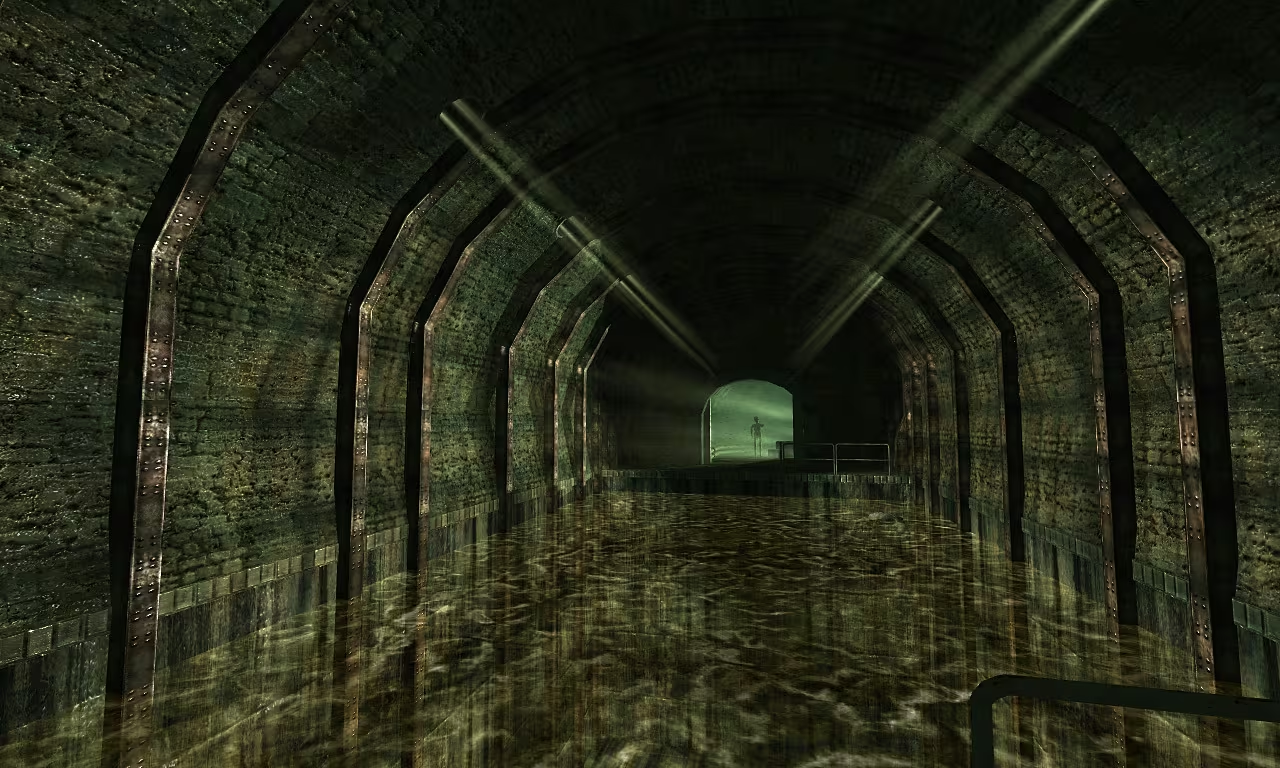
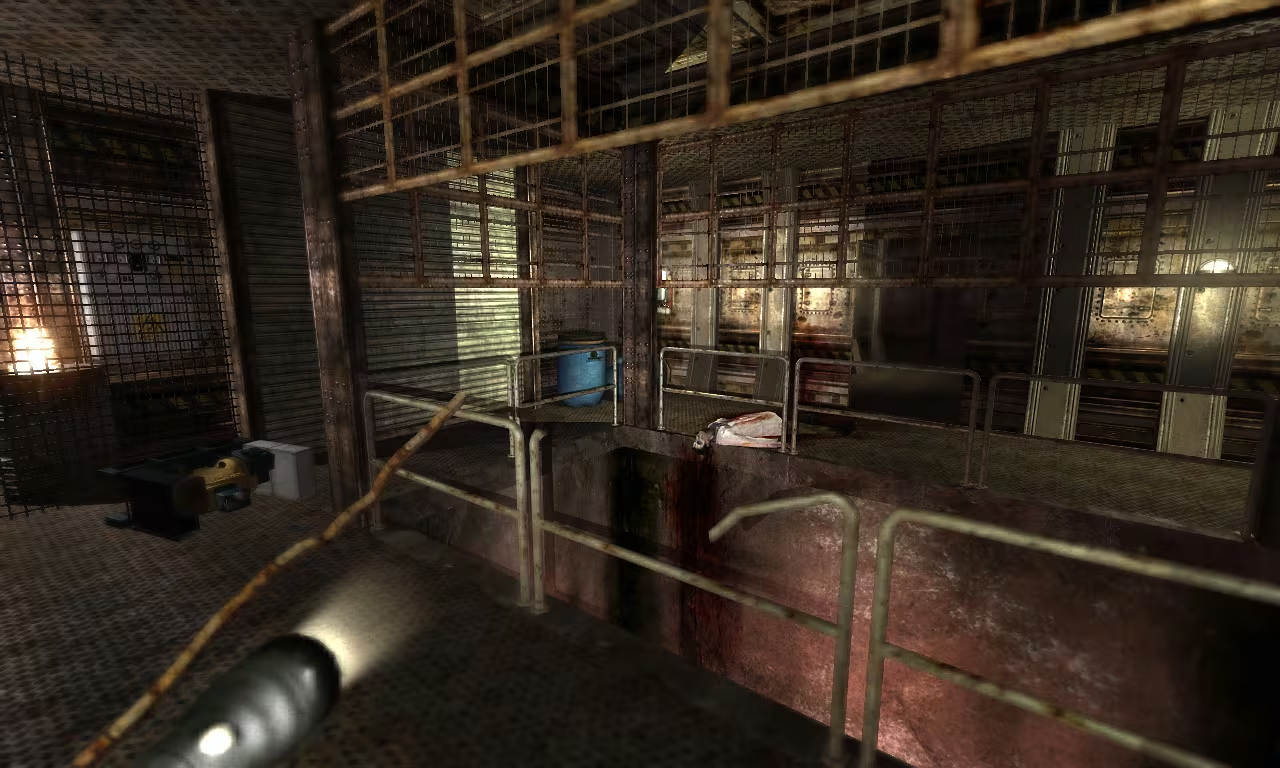
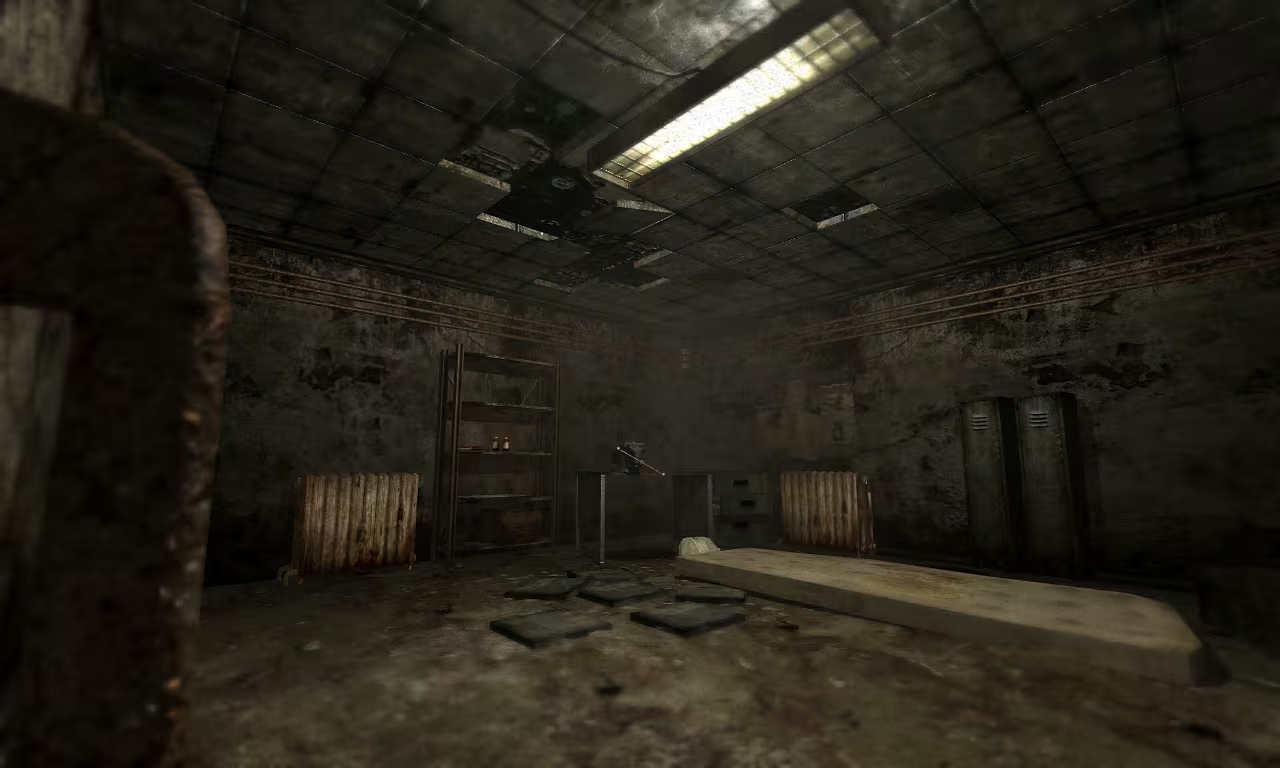
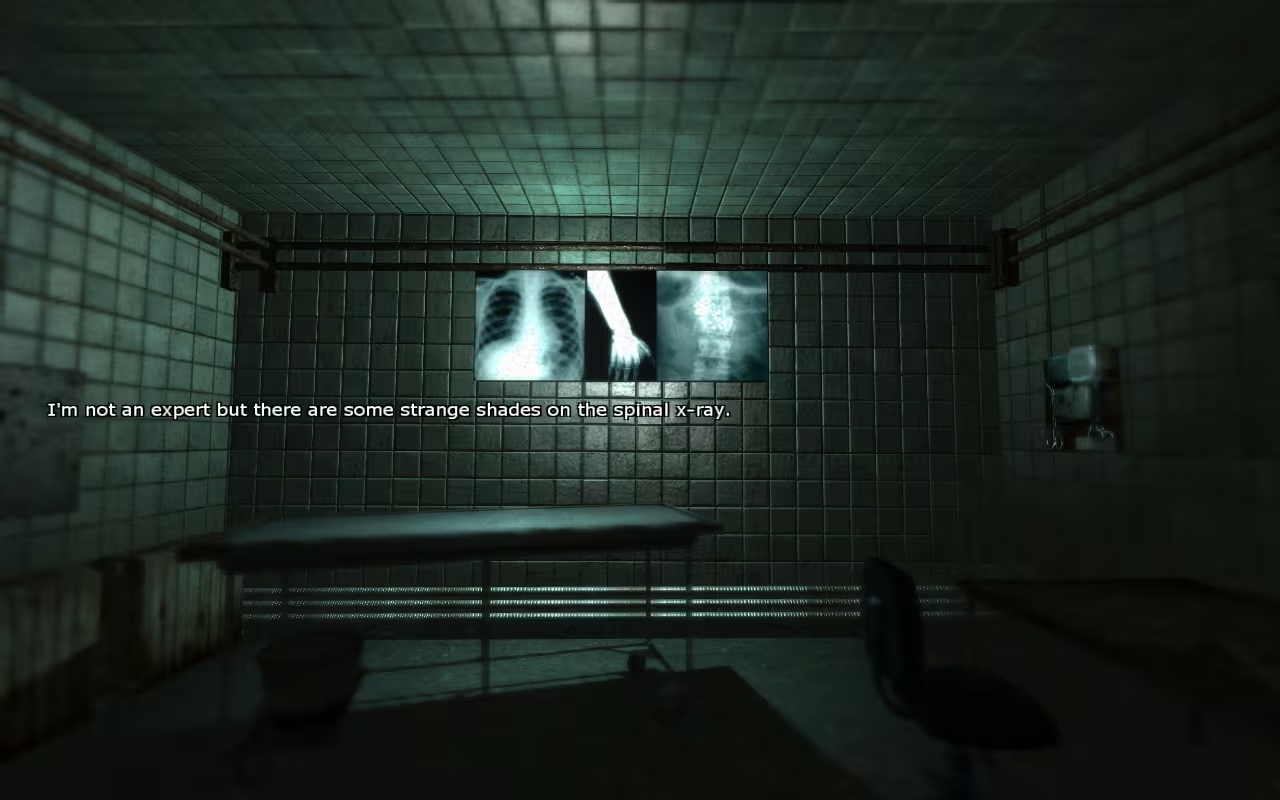
Surrounded by enemies and assaulted by terror from all sides, Philip must collect clues and solve vexing puzzles while combating the gnawing psychological terrors that assail his mind and threaten to strip him of his sanity.

Global score

94/100

Genres

Action, Adventure, Indie

Similar games

    Pros

    • Strong atmosphere and horror tension
    • Engaging and well-written story
    • Challenging and logical puzzles
    • Immersive sound design and voice acting
    • Improved stealth mechanics and enemy design

    Cons

    • Short game length
    • Some puzzles can be unintuitive
    • Limited enemy variety and ai simplicity
    • Lack of combat may disappoint some players
    • Minor technical issues and dated graphics

    Analysis

    Broadly representative of its motivational profile, with a few distinct shifts. Motivations that often define this kind of title include Relaxation, Survival, Violence, Fellowship. It leans lower than usual among comparable games on Violence, Expression, Competition.

    How to use the graph
    Similar games map

    Each dot is a game. They are arranged from the same motivation profile as in the “Motivations” section below. Closer dots usually mean more similar reasons to play (exploration, competition, relaxation, etc.)—not that one game is “better” than another.

    • Larger dot with a light outline: the game you are viewing.
    • Colour: groups of games with comparable motivation patterns (statistical clusters).
    • Hover a dot to see the game name; click to open its page.
    • Scroll or double-click the chart to zoom out and see more games.

    Why don’t the axes read like a score? This view uses t-SNE: it only keeps who is close to whom. The scales are not “good to bad” or hours played—they separate groups on the map. Read distance between dots, not the axis numbers.

    Motivations

    • Autonomy
      4

      "Players have control over exploration, puzzle solving, and stealth tactics, with no combat options, emphasizing personal decision-making in how to survive."

    • Competence
      3

      "The game features challenging puzzles and stealth mechanics that require skill and problem solving, though combat is removed."

    • Competition
      -5

      "No competitive elements; the game is a single-player experience focused on personal progression without comparison to others."

    • Continuation
      3

      "Players report engaging story and atmosphere that encourage completing the game, though it is relatively short."

    • Cooperation
      -5

      "Entirely single-player with no cooperative or multiplayer elements."

    • Creativity
      3

      "Players interact with environment and solve physics-based puzzles creatively; some freedom in puzzle approaches."

    • Domination
      -5

      "No social or multiplayer dominance; interactions are limited to single-player narrative."

    • Escapism
      4

      "Strong atmospheric horror and immersive story provide an escape from reality into a tense, dark world."

    • Expectation
      -4

      "Players engage voluntarily for intrinsic interest in horror and puzzle gameplay, not out of obligation."

    • Experimenting
      2

      "Encourages trying different puzzle solutions and stealth tactics, though within a structured narrative."

    • Exploration
      4

      "Exploration of new, varied environments is a core part of gameplay, with discovery of story elements and secrets."

    • Expression
      -3

      "Limited character customization or self-expression; focus is on narrative and environment rather than avatar personalization."

    • Fantasy
      4

      "Strongly rooted in Lovecraftian horror and supernatural fiction, with surreal and imaginative elements."

    • Fellowship
      -5

      "No social or community features; strictly a solo experience."

    • Growth
      3

      "Players develop problem-solving skills and learn game mechanics through puzzles and stealth challenges."

    • Health
      -5

      "Sedentary gameplay typical of first-person adventure games; no physical activity involved."

    • Idle
      -4

      "Requires focused attention and continuous engagement to solve puzzles and avoid enemies."

    • Intimacy
      -5

      "Minimal social interaction; narrative includes some character dialogue but no emotional social bonding."

    • Leadership
      -5

      "No leadership or group management elements; single-player only."

    • Progression
      3

      "Progression through story advancement, puzzle completion, and item collection."

    • Relaxation
      -3

      "Sustained tension and suspense dominate the experience; not designed for relaxation."

    • Sensation
      3

      "Atmospheric audio and lighting create sensory immersion and emotional tension."

    • Status
      -5

      "No social recognition or status systems; achievements are minimal and not socially emphasized."

    • Story
      4

      "Strong narrative immersion with voice acting, character interactions, and unfolding plot."

    • Strategy
      3

      "Requires logical thinking, planning, and problem solving to navigate puzzles and enemy encounters."

    • Thrill
      4

      "Tense stealth and horror elements create suspense and adrenaline-inducing moments."

    • Value
      4

      "Considered good value for price, especially in bundles; praised for story and atmosphere."

    • Violence
      -4

      "Combat removed; no violent player actions, focus on evasion and hiding rather than fighting."

    • Survival
      4

      "Core gameplay involves avoiding threats and managing stealth to survive hostile environments."

    Last update: 29/04/2026