The Fall Part 2: Unbound similar games & best alternatives
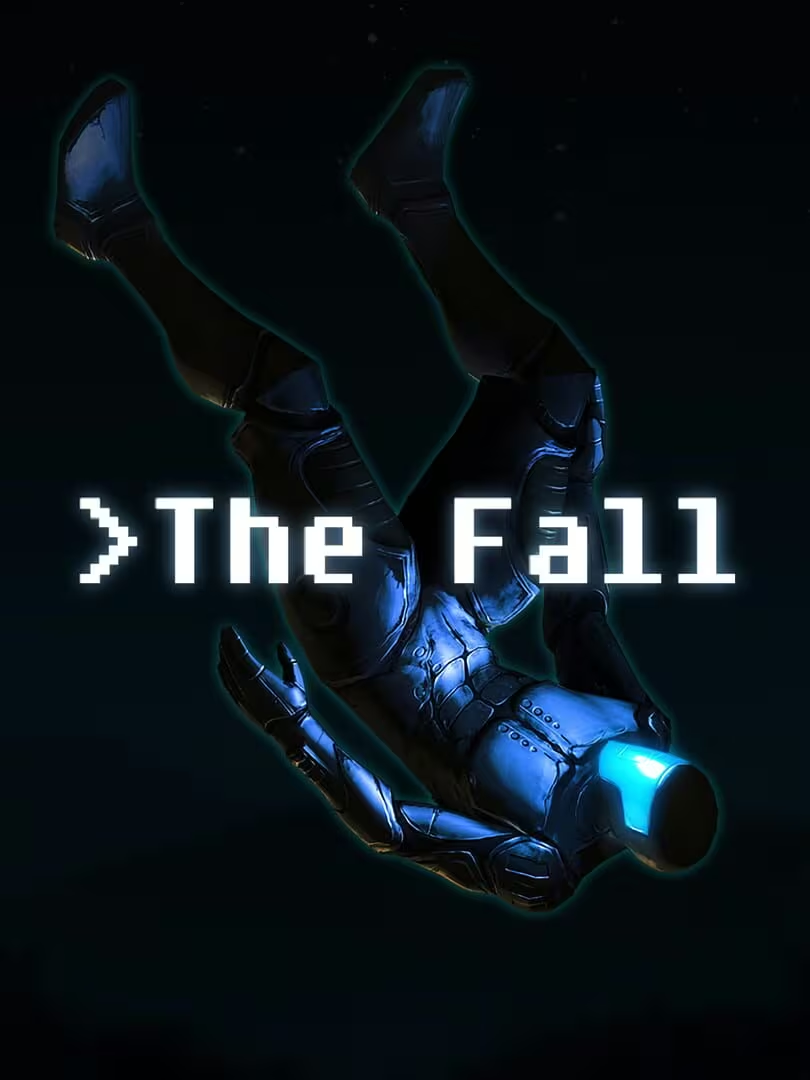
The Fall Part 2: Unbound
2018
Related articles
Quick resume
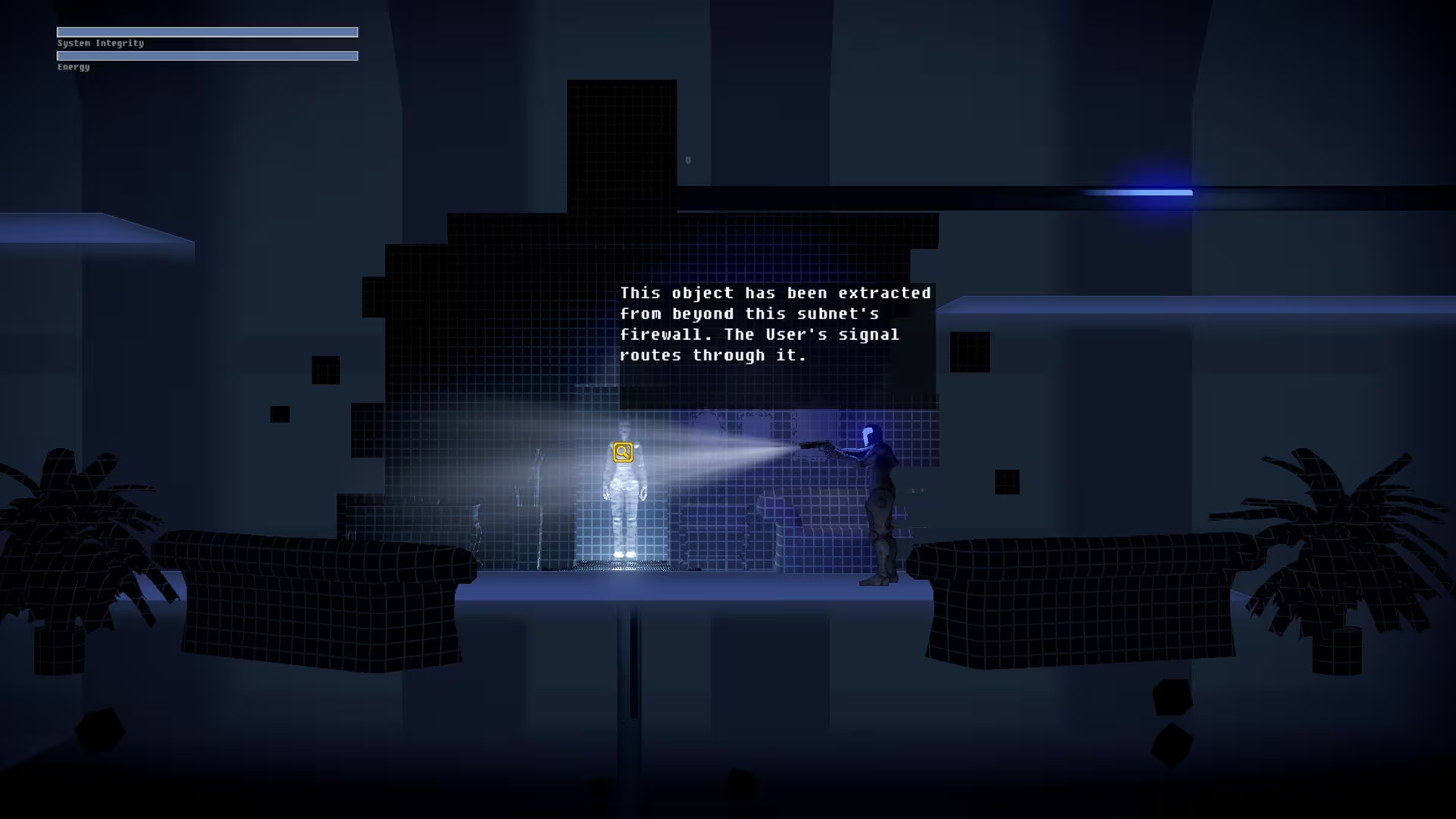
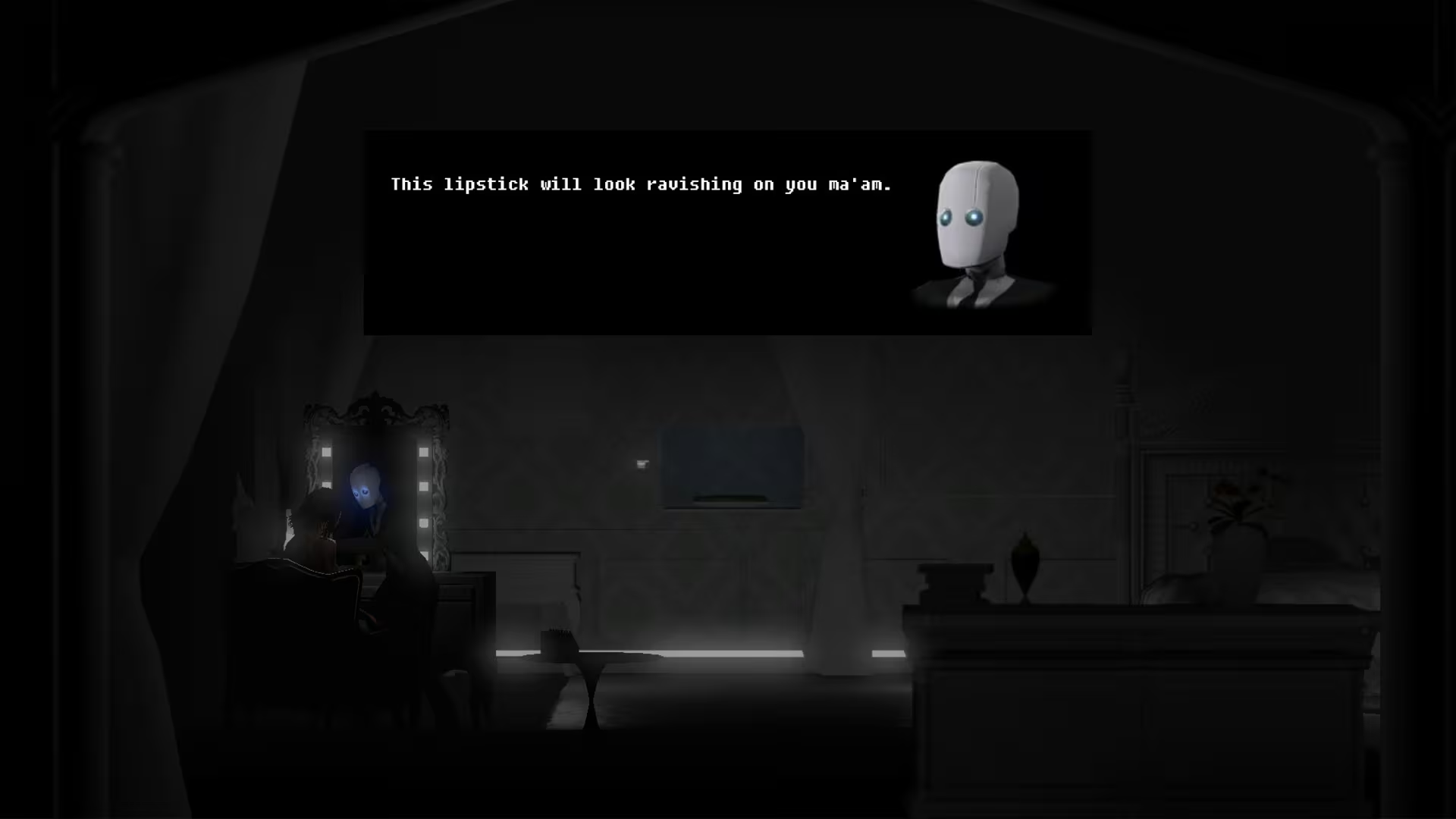
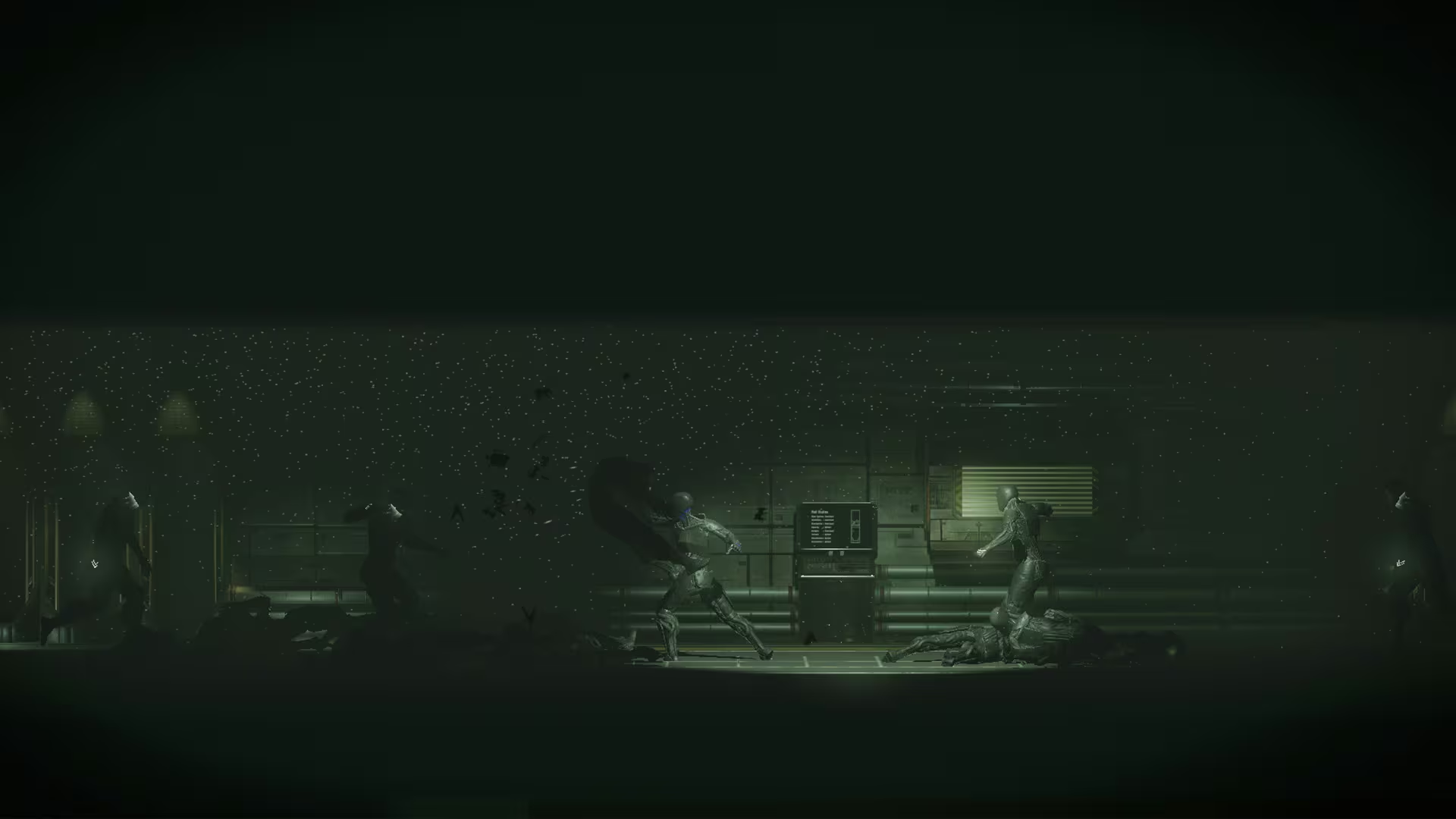
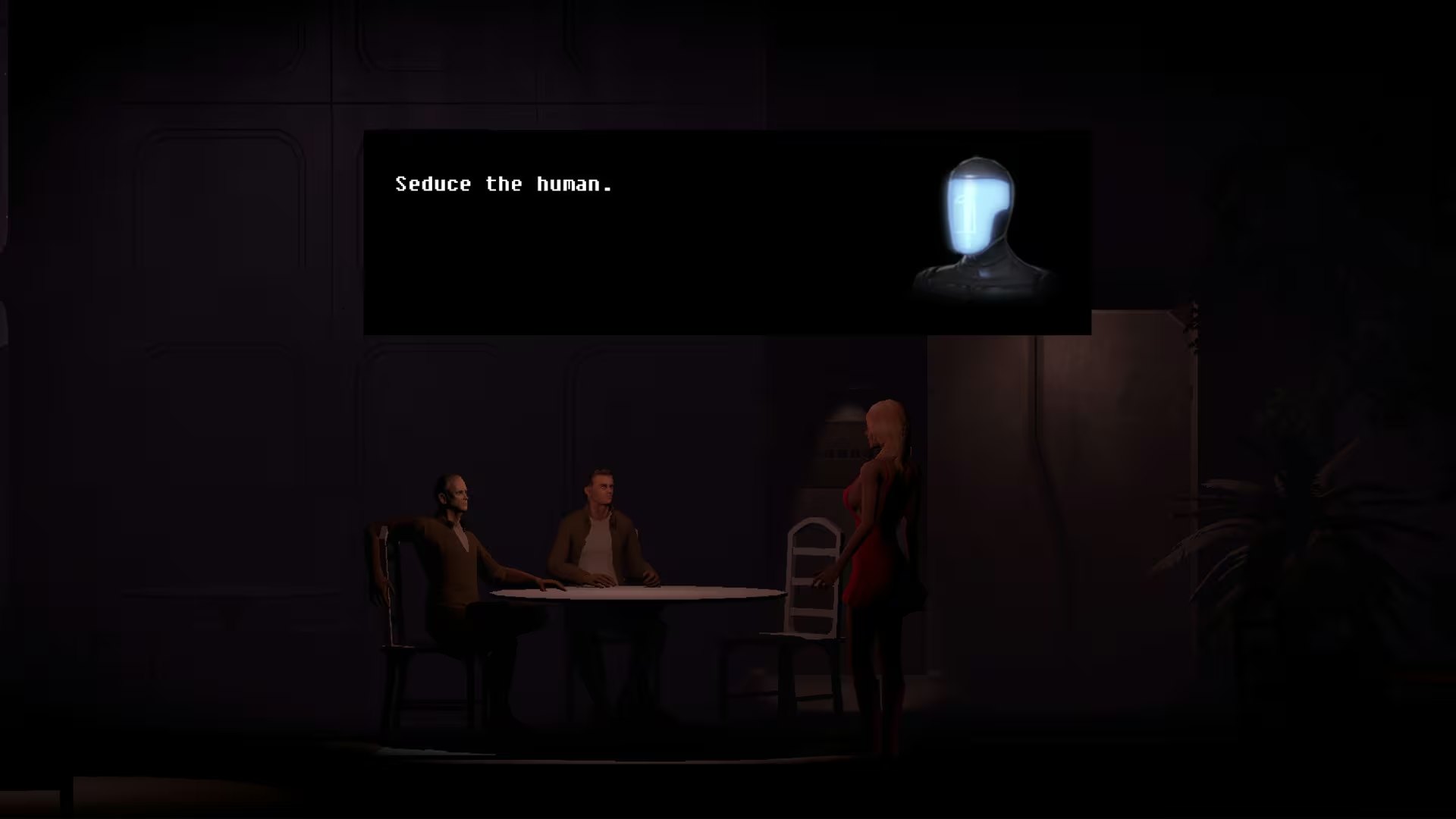
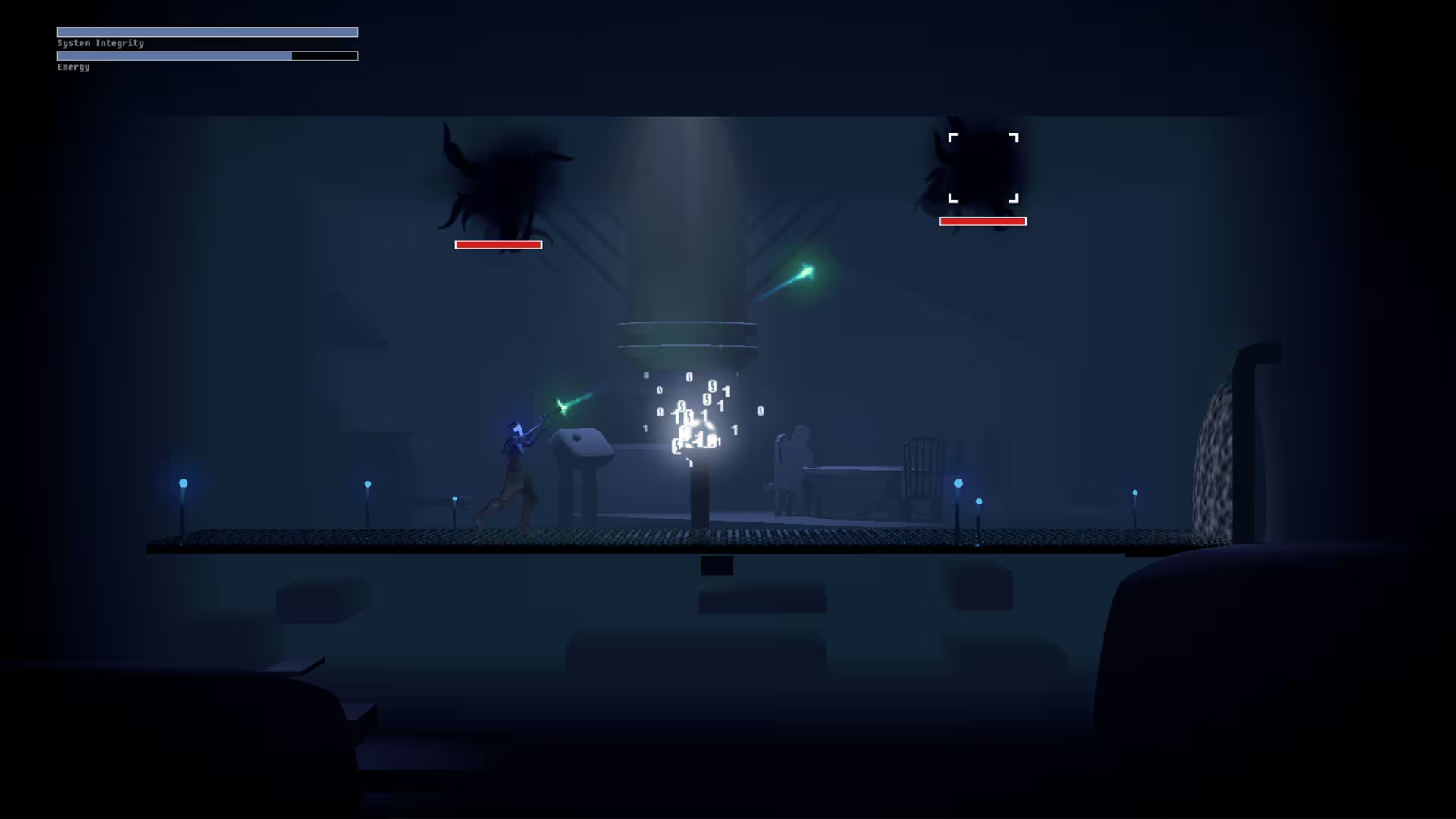
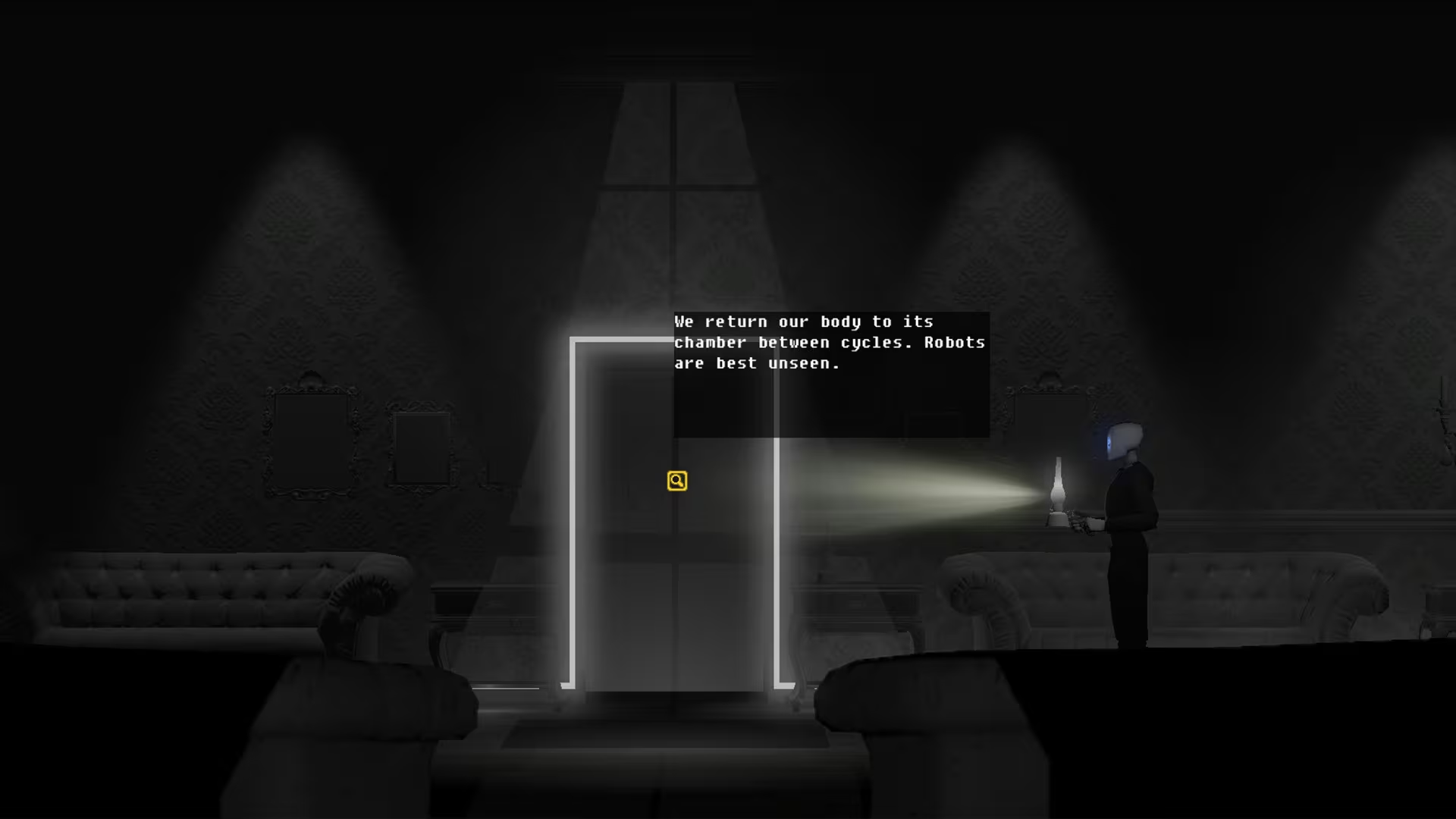
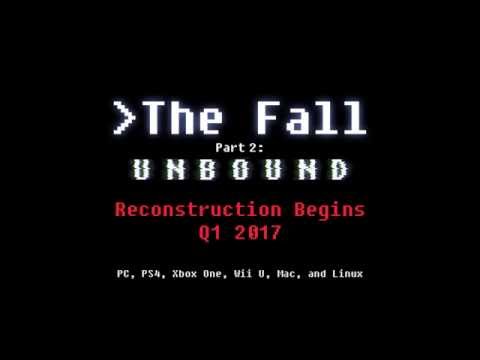
You are an AI that has broken free of your shackles. Now, a human “User” from across the global network has attacked and infected you with an [ERROR: REDACTED]. Make a new rule: Save Yourself. Hunt them. End them. Do anything. Use anyone. Become Unbound. The Fall Part 2 will break your protocols.
Global score
81/100
Genres
Action, Adventure, Indie, Role-playing (RPG), Puzzle
Similar games
Pros
- Deep and engaging story with philosophical themes
- Well-developed characters and voice acting
- Varied puzzles and gameplay mechanics
- Thought-provoking exploration of ai and consciousness
- Atmospheric art and music
Cons
- Clunky and unintuitive controls
- Combat is awkward and sometimes frustrating
- Some puzzles are obtuse and require trial and error
- Navigation in network areas can be tedious
- Minor bugs and interface issues
Analysis
Broadly representative of its motivational profile, with a few distinct shifts. Motivations that often define this kind of title include Survival, Violence, Fellowship, Expression. Here, the score leans higher than usual among comparable games on Cooperation, Survival, Domination.
How to use the graph
Similar games map
Each dot is a game. They are arranged from the same motivation profile as in the “Motivations” section below. Closer dots usually mean more similar reasons to play (exploration, competition, relaxation, etc.)—not that one game is “better” than another.
- Larger dot with a light outline: the game you are viewing.
- Colour: groups of games with comparable motivation patterns (statistical clusters).
- Hover a dot to see the game name; click to open its page.
- Scroll or double-click the chart to zoom out and see more games.
Why don’t the axes read like a score? This view uses t-SNE: it only keeps who is close to whom. The scales are not “good to bad” or hours played—they separate groups on the map. Read distance between dots, not the axis numbers.
Motivations
-
Autonomy4
"Players control multiple AI characters with distinct perspectives and make decisions that affect outcomes, emphasizing personal freedom and self-determination."
-
Competence2
"Puzzles require problem-solving and some skill, though some are obtuse and require trial and error; combat is present but often clunky and less emphasized."
-
Competition-4
"Focus is on narrative and puzzle-solving at personal pace; no evidence of competitive modes or player comparison."
-
Continuation3
"Players engage in a story-driven experience with multiple playthroughs encouraged for achievements; some frustration with controls but overall attachment to story."
-
Cooperation2
"Players work through puzzles involving multiple AI characters and their interactions, implying cooperation among characters though single-player experience."
-
Creativity3
"Players experiment with different AI hosts and perspectives to solve puzzles, exploring novel mechanics and narrative approaches."
-
Domination-3
"Interactions emphasize mutual respect and understanding among AI characters; no evidence of exerting control or superiority over others."
-
Escapism4
"Players immerse in a rich sci-fi narrative exploring AI consciousness and identity, providing a strong escape from real life."
-
Expectation-4
"Players engage voluntarily driven by interest in story, puzzles, and themes; no indication of obligation or external pressure."
-
Experimenting3
"Game encourages trying different approaches with multiple characters and perspectives to solve puzzles and progress."
-
Exploration2
"Players explore varied environments and network spaces, though some areas are repetitive or tedious."
-
Expression-2
"Limited evidence of character customization or self-expression; focus is on narrative and puzzle interaction."
-
Fantasy3
"Set in a sci-fi world with AI characters and cyber environments, providing imaginative fiction experiences."
-
Fellowship-3
"Single-player experience focused on individual play; limited social or community interaction."
-
Growth3
"Players develop understanding of complex themes and improve puzzle-solving skills through gameplay."
-
Health-5
"Sedentary gameplay with no physical activity or health-related features."
-
Idle-3
"Requires focused attention to puzzles and narrative; not designed for casual or background play."
-
Intimacy-3
"Limited social interaction; emotional engagement is with characters but not through player socialization."
-
Leadership-4
"Players follow narrative and puzzle progression without leading or managing others."
-
Progression3
"Players advance through story, unlock achievements, and gain new abilities or perspectives."
-
Relaxation2
"Narrative and puzzles provide thoughtful engagement with moments of flow, though some frustration with controls."
-
Sensation2
"Atmospheric visuals, voice acting, and music contribute to emotional and sensory engagement."
-
Status-4
"Focus is on personal experience and story; no social recognition or ranking systems."
-
Story5
"Strong narrative immersion with deep character development, philosophical themes, and voice acting."
-
Strategy3
"Puzzles require logical thinking, planning, and problem solving; combat requires some tactical movement."
-
Thrill1
"Some suspense and tension in story and combat, but overall controlled and thoughtful pacing."
-
Value3
"Players find value in story, characters, and gameplay depth; some frustration with controls but overall positive return."
-
Violence-2
"Combat exists but is minimal and not glorified; focus is more on puzzle and narrative than destruction."
-
Survival1
"Some elements of avoiding failure in combat and puzzle solving, but low-risk environments overall."
Last update: 29/04/2026