Colony Ship: A Post-Earth Role Playing Game Thumbnail

Colony Ship: A Post-Earth Role Playing Game similar games & best alternatives
Colony Ship: A Post-Earth Role Playing Game

PC (Microsoft Windows) • 2023

Related articles

Quick resume

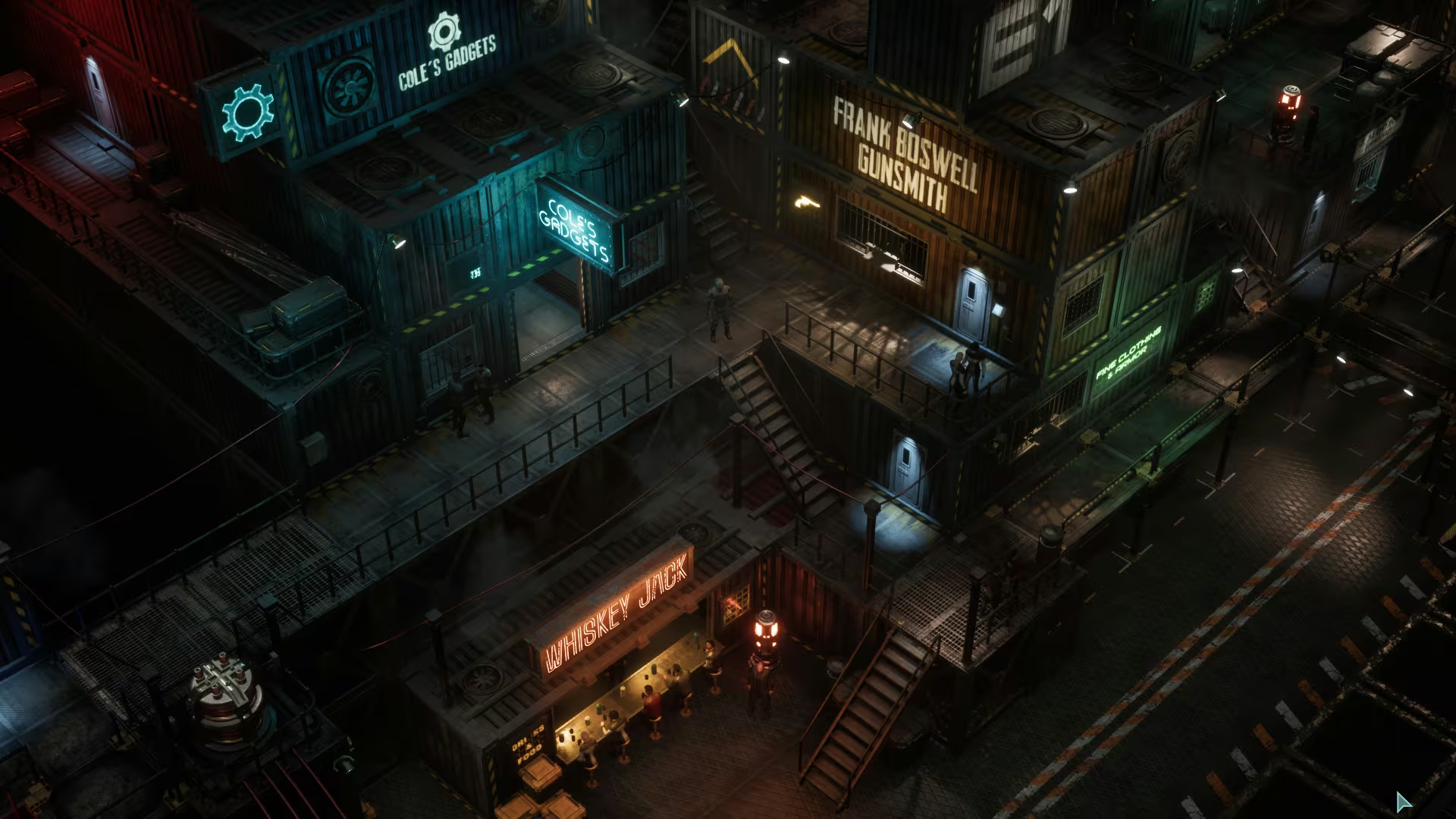
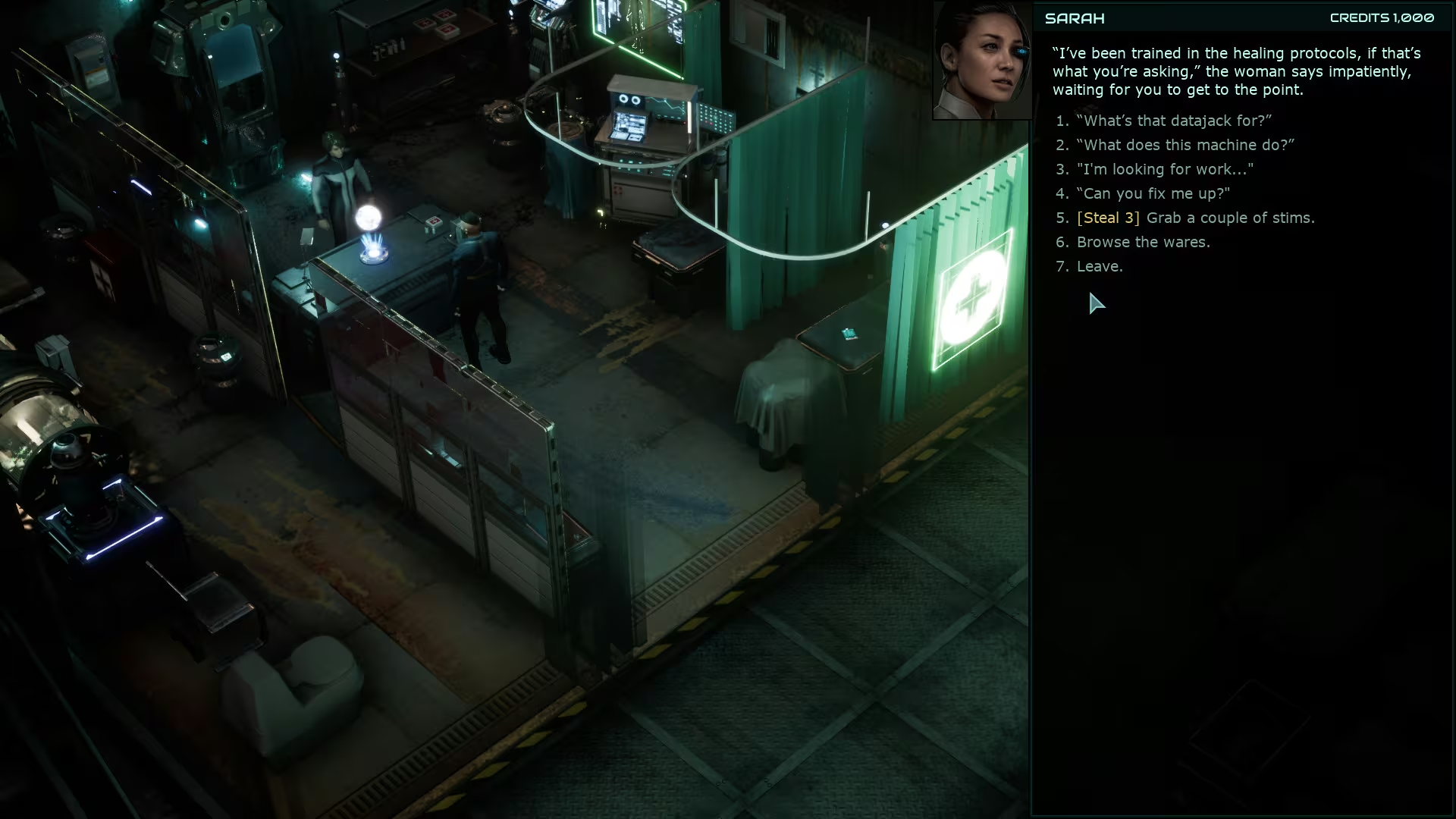
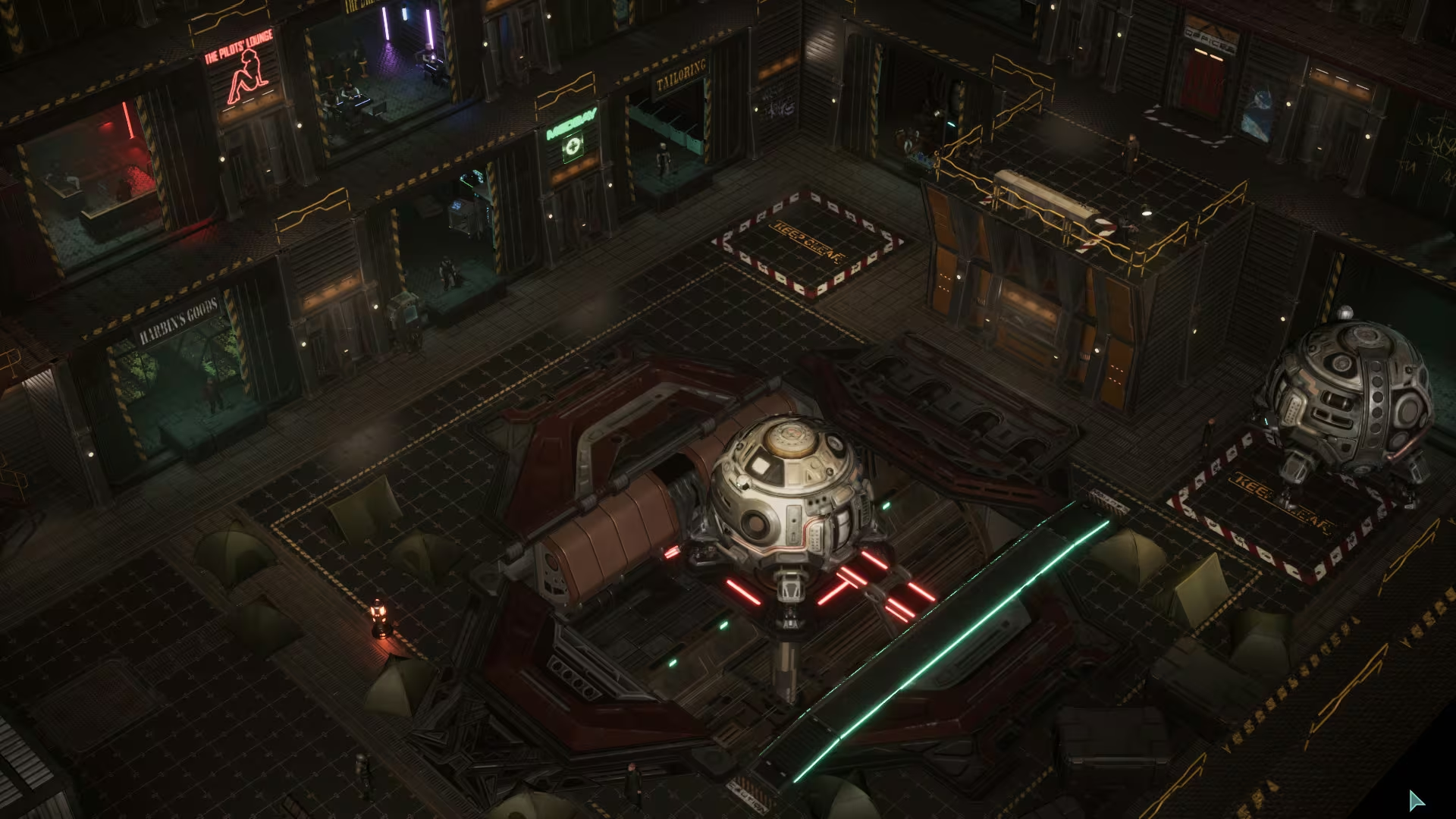
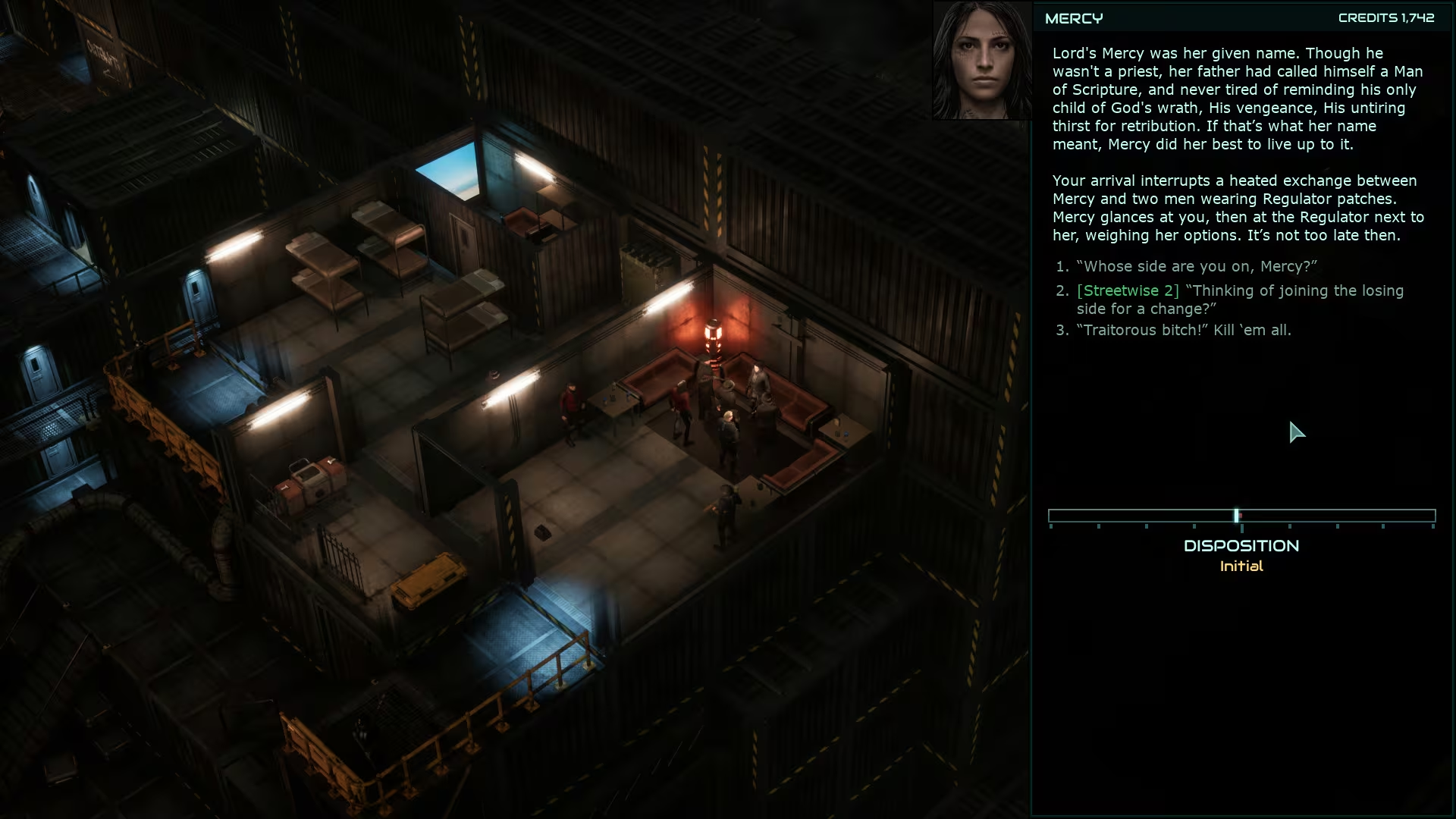
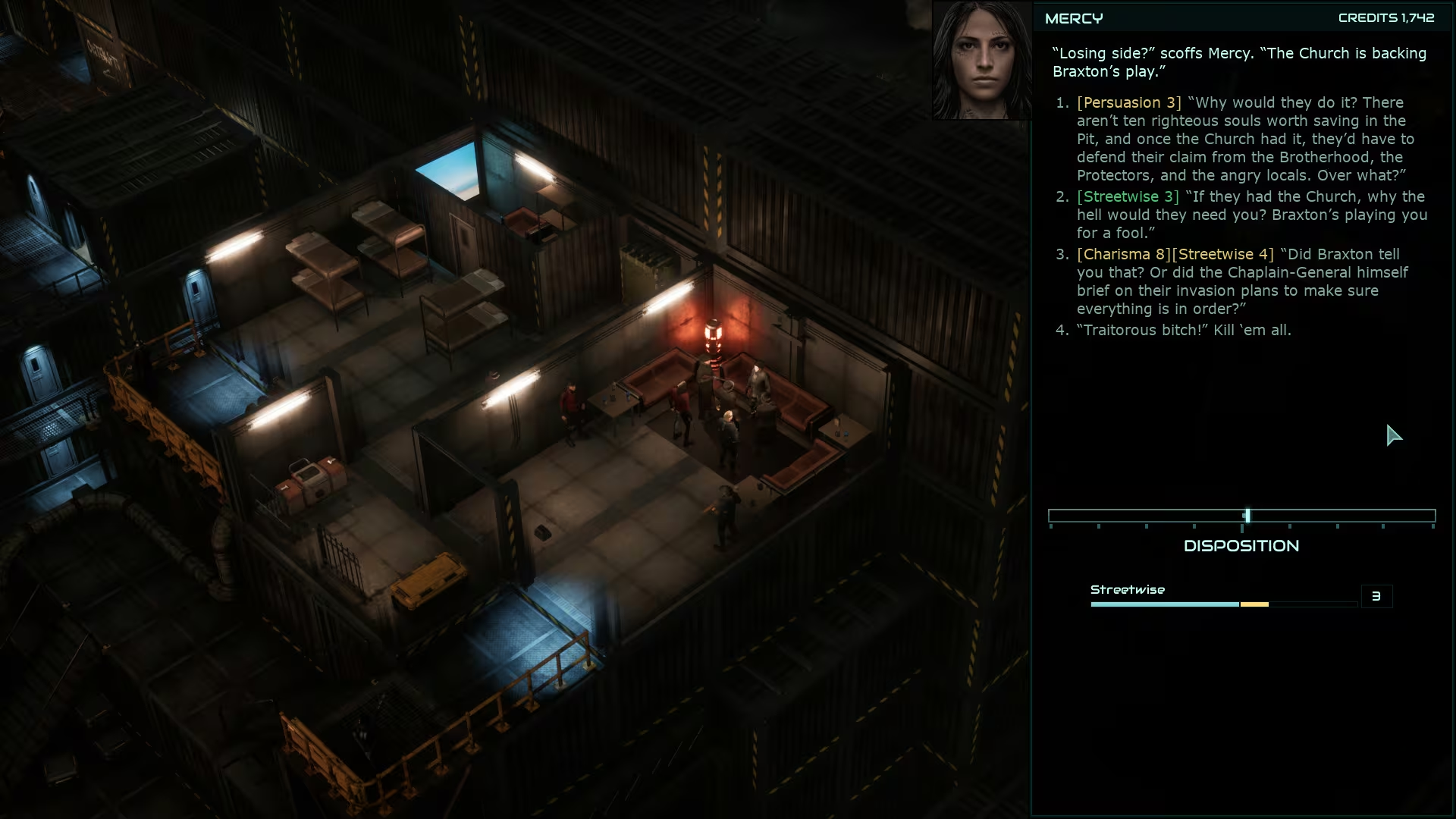
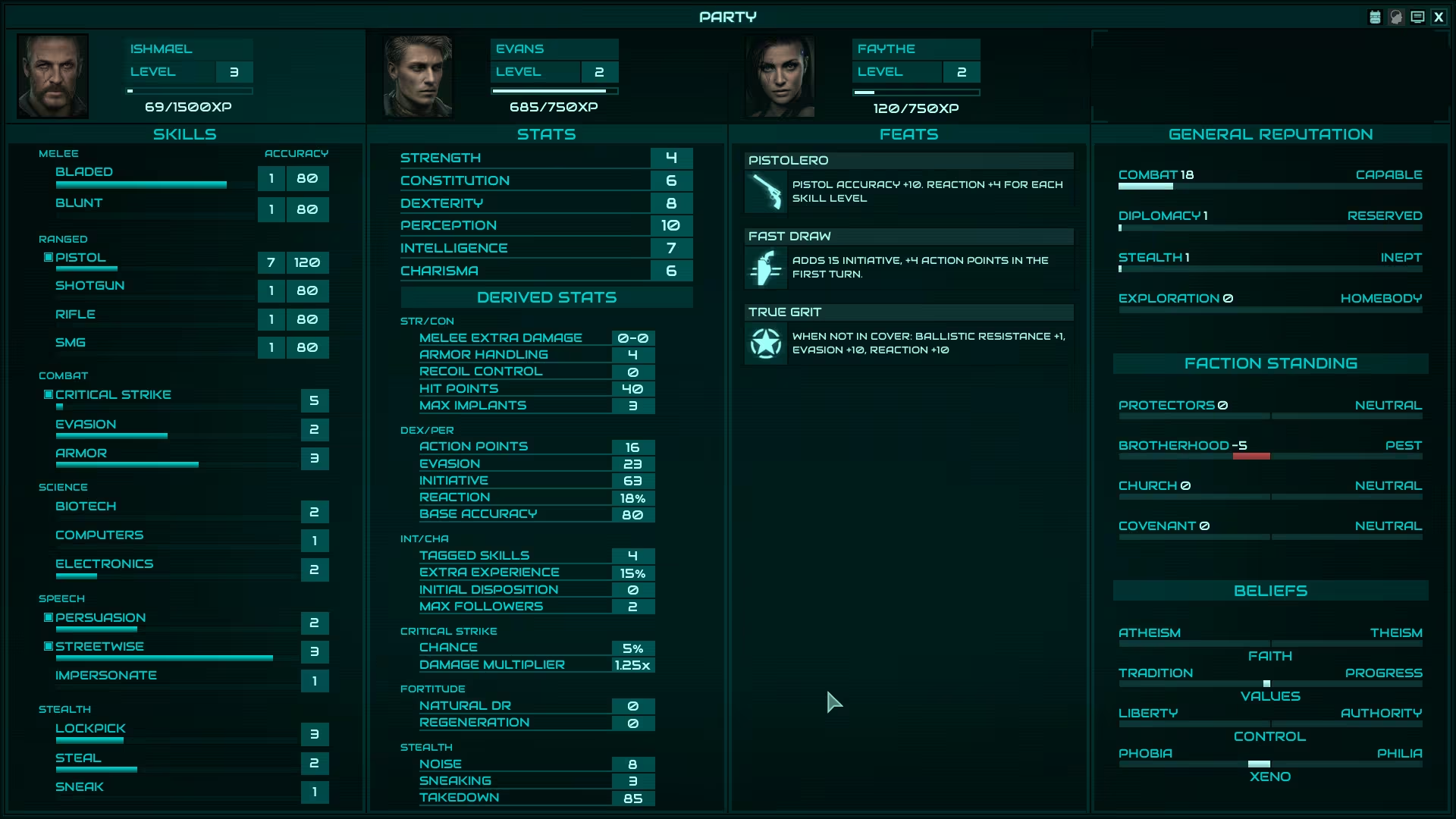
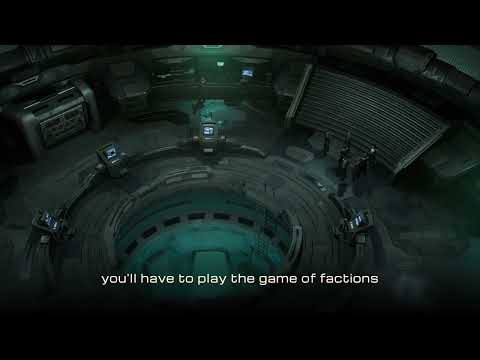
Colony Ship is a turn-based, party-based role-playing game set aboard a generation ship launched to Proxima Centauri. The game features a detailed skill-based character system, multiple ways to handle quests, choices & consequences, and branching dialogue trees.

Global score

88/100

Genres

Role-playing (RPG)

Similar games

    Pros

    • Deep narrative and meaningful choices
    • Challenging and tactical combat
    • Multiple viable playstyles
    • Immersive sci-fi setting
    • High replayability

    Cons

    • Steep learning curve
    • Some ui and camera limitations
    • Combat can be punishing and rng-dependent
    • Limited exploration scope
    • Minor bugs and early access polish needed

    Analysis

    Broadly representative of its motivational profile, with a few distinct shifts. Motivations that often define this kind of title include Leadership, Survival, Violence, Strategy. Here, the score leans higher than usual among comparable games on Cooperation, Fellowship. It leans lower than usual among comparable games on Relaxation.

    How to use the graph
    Similar games map

    Each dot is a game. They are arranged from the same motivation profile as in the “Motivations” section below. Closer dots usually mean more similar reasons to play (exploration, competition, relaxation, etc.)—not that one game is “better” than another.

    • Larger dot with a light outline: the game you are viewing.
    • Colour: groups of games with comparable motivation patterns (statistical clusters).
    • Hover a dot to see the game name; click to open its page.
    • Scroll or double-click the chart to zoom out and see more games.

    Why don’t the axes read like a score? This view uses t-SNE: it only keeps who is close to whom. The scales are not “good to bad” or hours played—they separate groups on the map. Read distance between dots, not the axis numbers.

    Motivations

    • Autonomy
      4

      "Players have significant freedom to choose playstyles and solve quests in multiple ways, including combat, stealth, hacking, or diplomacy."

    • Competence
      4

      "The game is challenging with complex combat and skill systems requiring mastery and strategic planning."

    • Competition
      -3

      "Focus is on individual progression and personal challenge rather than direct competition with other players."

    • Continuation
      4

      "Players report long play sessions, replayability through multiple builds, and high engagement with the game."

    • Cooperation
      2

      "Players can manage a party and companions, but much gameplay can be done solo; cooperation is present but not dominant."

    • Creativity
      3

      "Character builds and quest approaches allow creative problem solving and customization of playstyle."

    • Domination
      -4

      "Interactions emphasize balanced, consequence-driven choices rather than exerting power or superiority over others."

    • Escapism
      4

      "The immersive sci-fi setting and complex narrative provide a strong escape from real life."

    • Expectation
      -4

      "Players engage voluntarily out of interest and passion for the genre and style, not out of obligation."

    • Experimenting
      4

      "The game encourages trying different builds, tactics, and quest solutions, rewarding experimentation."

    • Exploration
      3

      "Exploration of the ship and its mysteries is rewarding, though maps are static and somewhat limited."

    • Expression
      2

      "Character customization is meaningful but limited mostly to stats, skills, and gear rather than cosmetic expression."

    • Fantasy
      3

      "The game features a sci-fi setting with speculative fiction elements, distinct from realistic scenarios."

    • Fellowship
      1

      "Some social interaction with companions and factions, but mostly a solitary experience."

    • Growth
      4

      "Players develop skills through use and learn complex systems, promoting personal development."

    • Health
      -4

      "The game involves sedentary play with no physical activity or health-related features."

    • Idle
      -3

      "Requires focused attention and strategic planning; not suited for casual or background play."

    • Intimacy
      -3

      "Social interactions are mostly functional and limited to party and faction relations, with little emotional depth."

    • Leadership
      2

      "Players manage party members and make decisions affecting group outcomes, showing some leadership elements."

    • Progression
      4

      "Strong emphasis on accumulating skills, gear, and experience to advance through the game."

    • Relaxation
      -3

      "The game is challenging and can be tense, requiring patience and focus rather than relaxation."

    • Sensation
      2

      "The atmospheric visuals and soundtrack provide sensory engagement, though not highly stimulating."

    • Status
      -3

      "Achievements and recognition are mostly personal; social status and popularity are not central."

    • Story
      5

      "Narrative immersion is a core strength with deep lore, meaningful choices, and engaging characters."

    • Strategy
      5

      "Combat and gameplay require careful planning, tactical thinking, and problem solving."

    • Thrill
      3

      "The challenging combat and high stakes create suspense and excitement."

    • Value
      4

      "Players report high replayability and satisfaction, feeling the game is worth the investment."

    • Violence
      1

      "Combat is present and tactical but can be avoided; violence is not gratuitous."

    • Survival
      3

      "Resource management and avoiding failure in combat are important gameplay elements."

    Last update: 29/04/2026