Manifold Garden Thumbnail

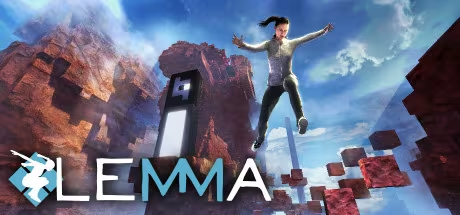
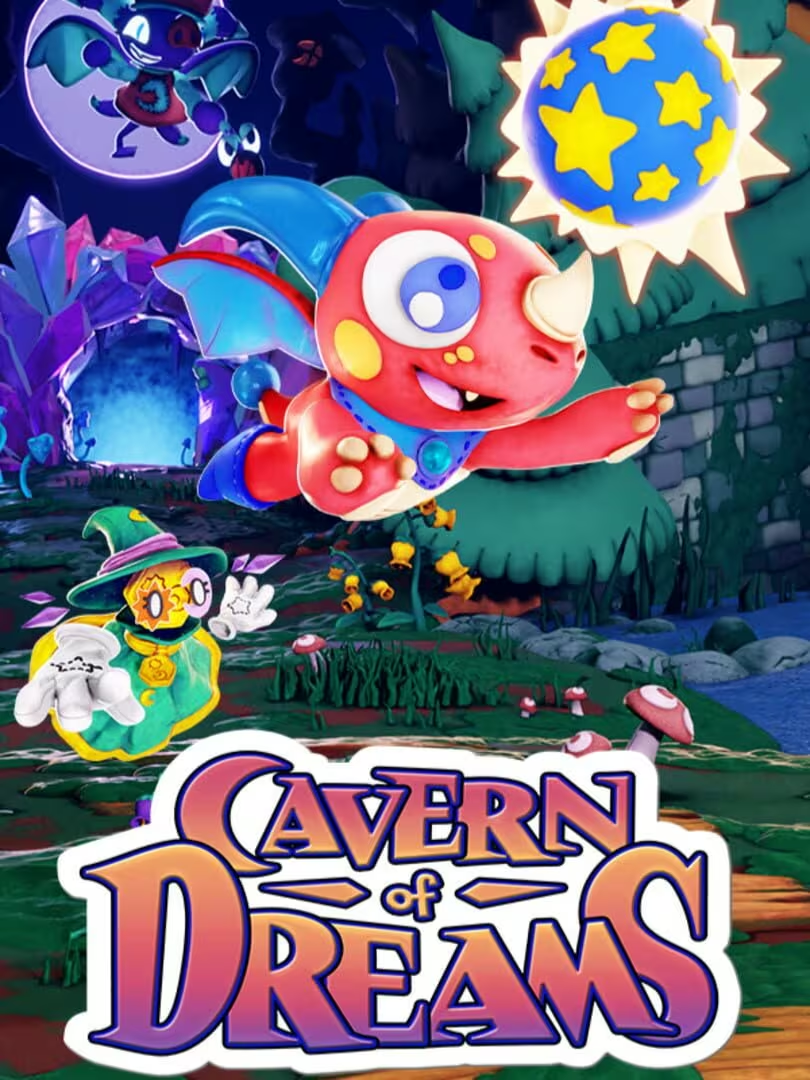
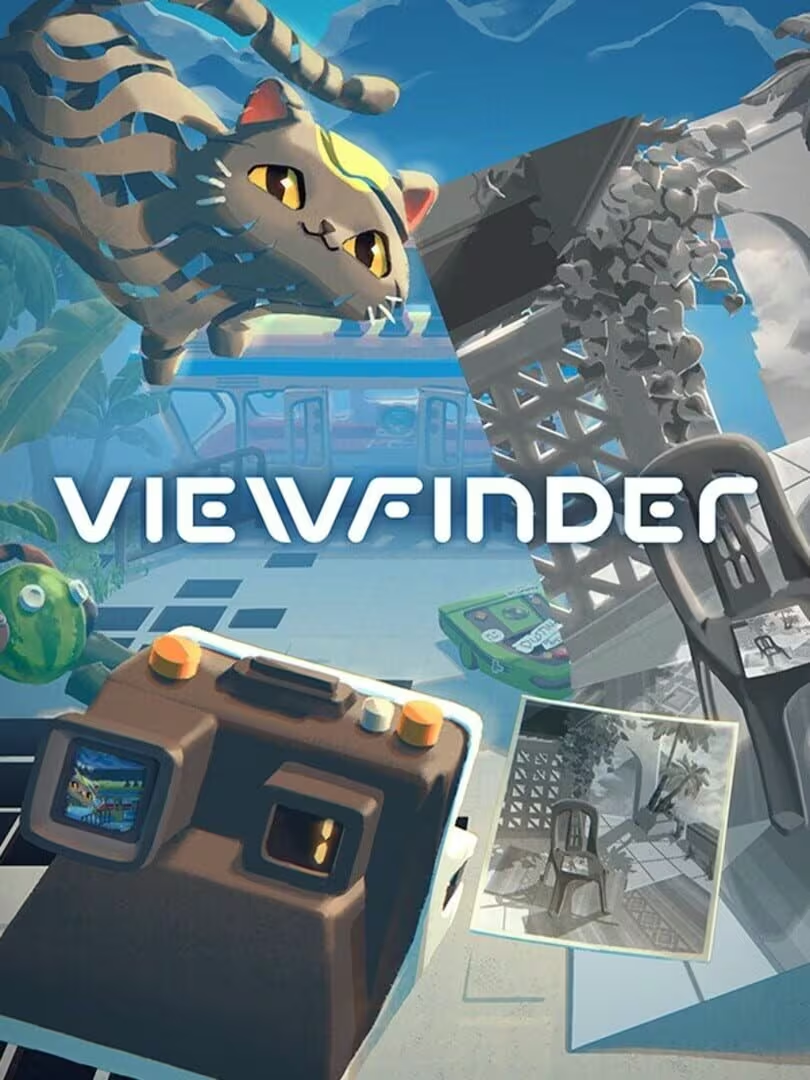
Manifold Garden similar games & best alternatives

Manifold Garden

PC (Microsoft Windows), Mac, iOS, PlayStation 4, Xbox One, Xbox Series X|S, Nintendo Switch, PlayStation 5 • 2020

Related articles

Quick resume

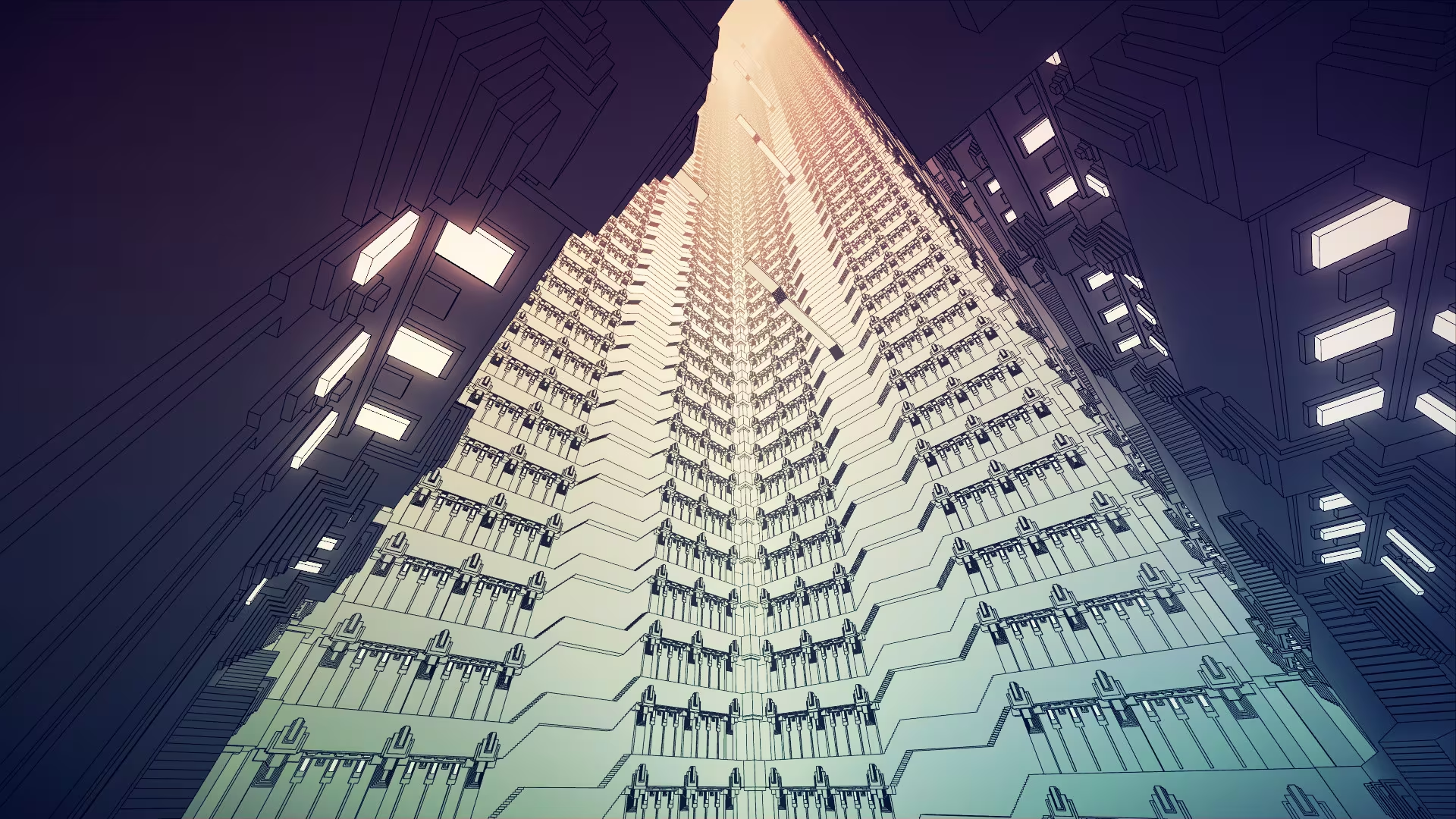
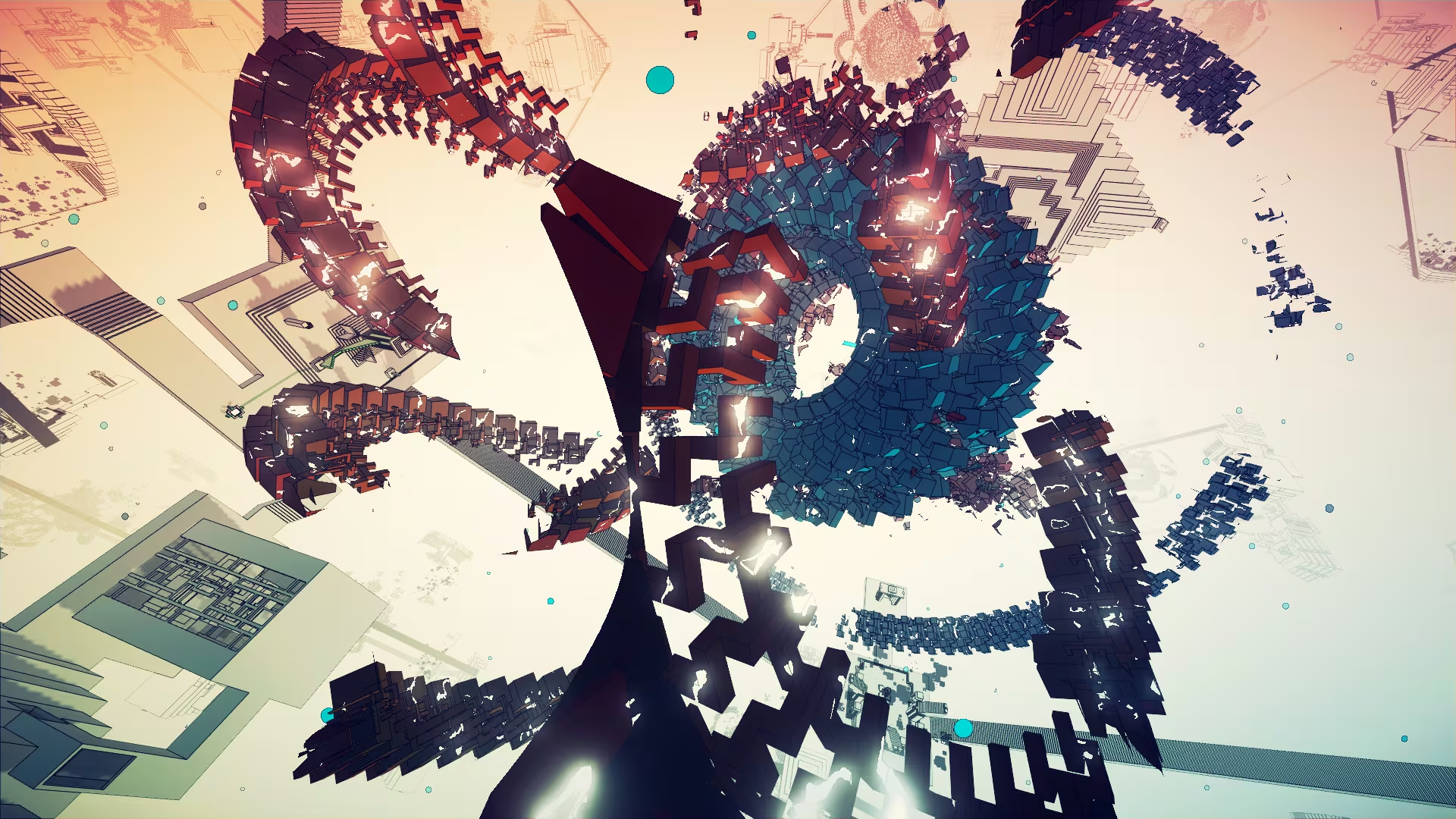
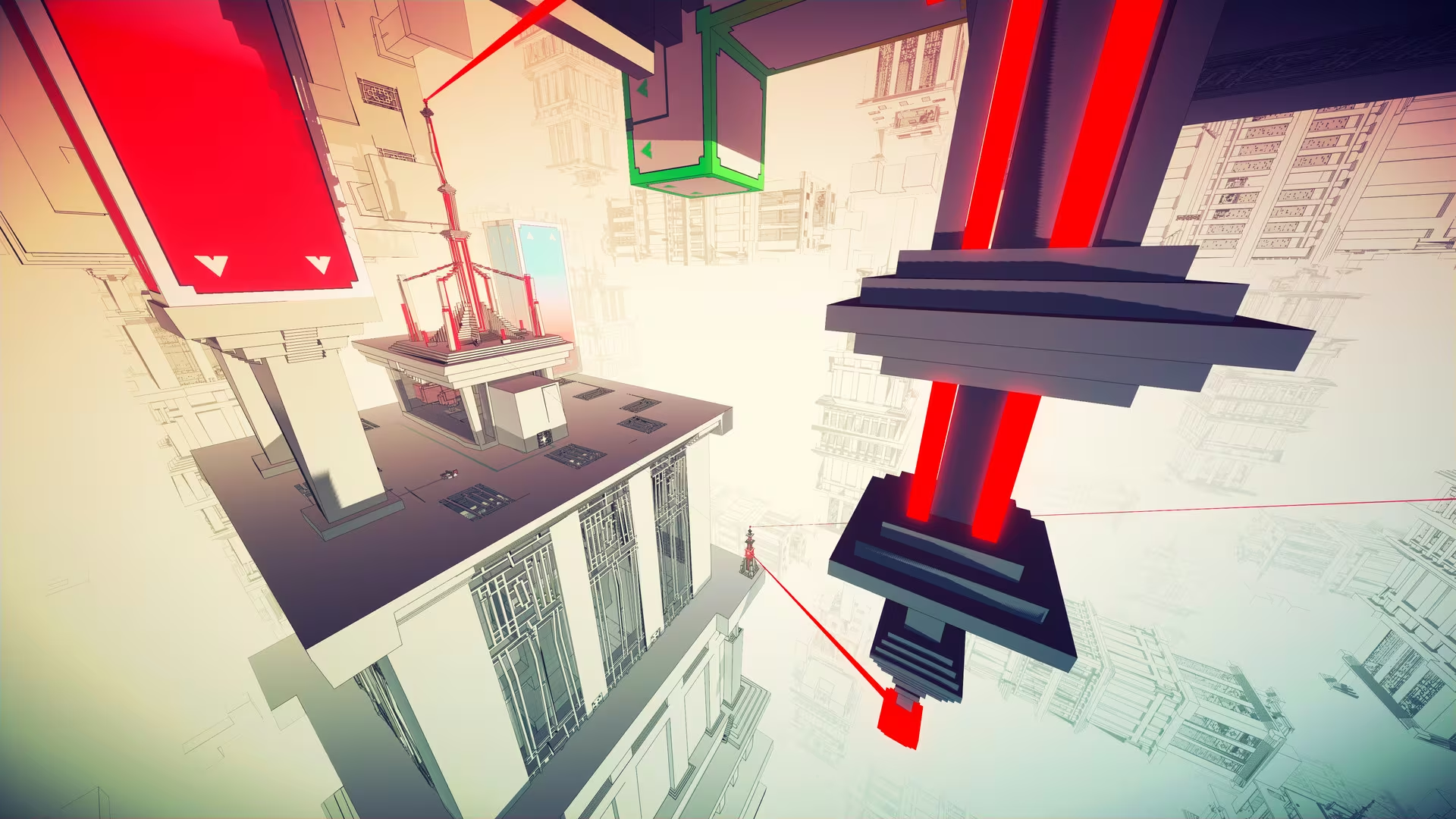
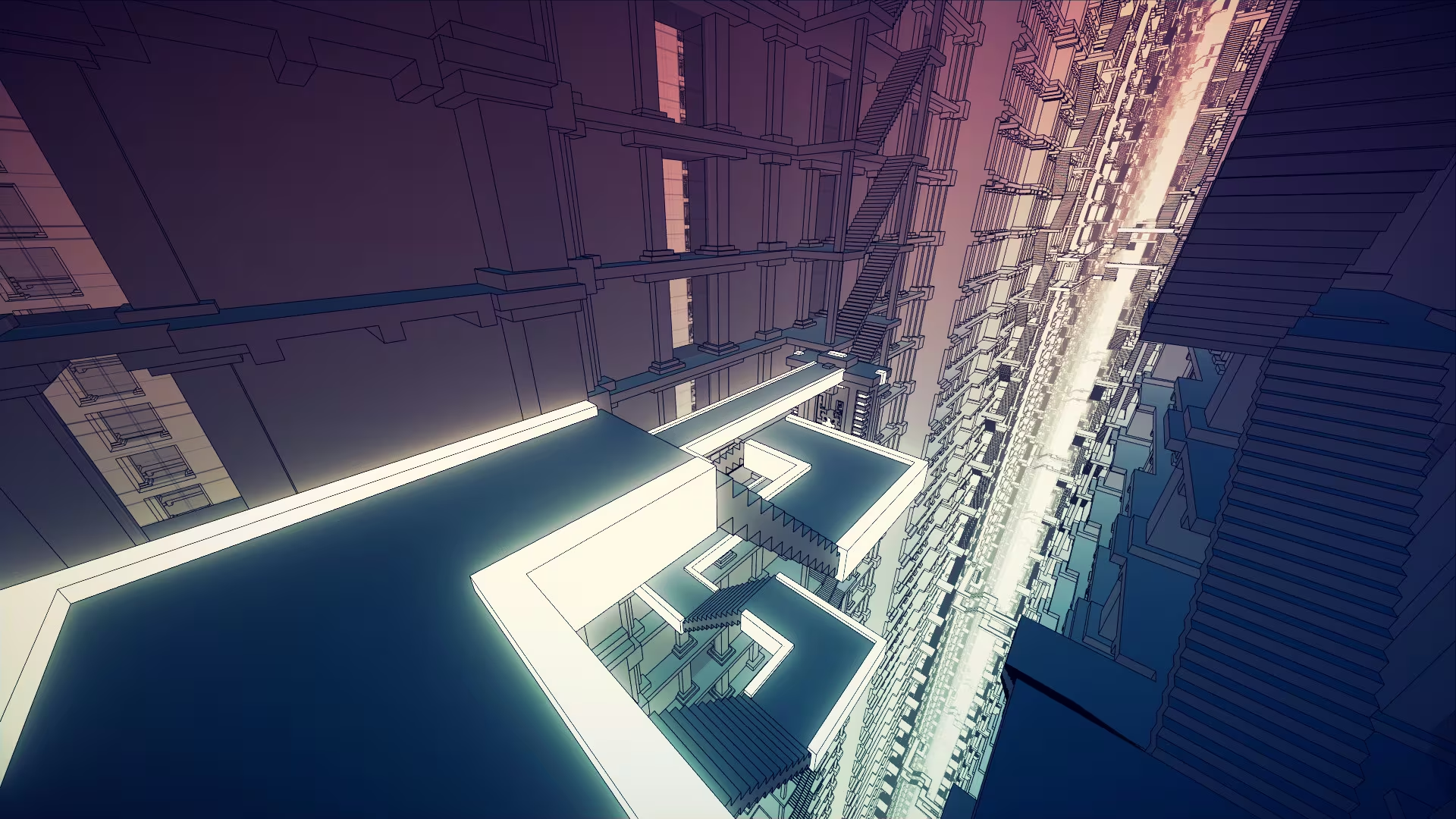
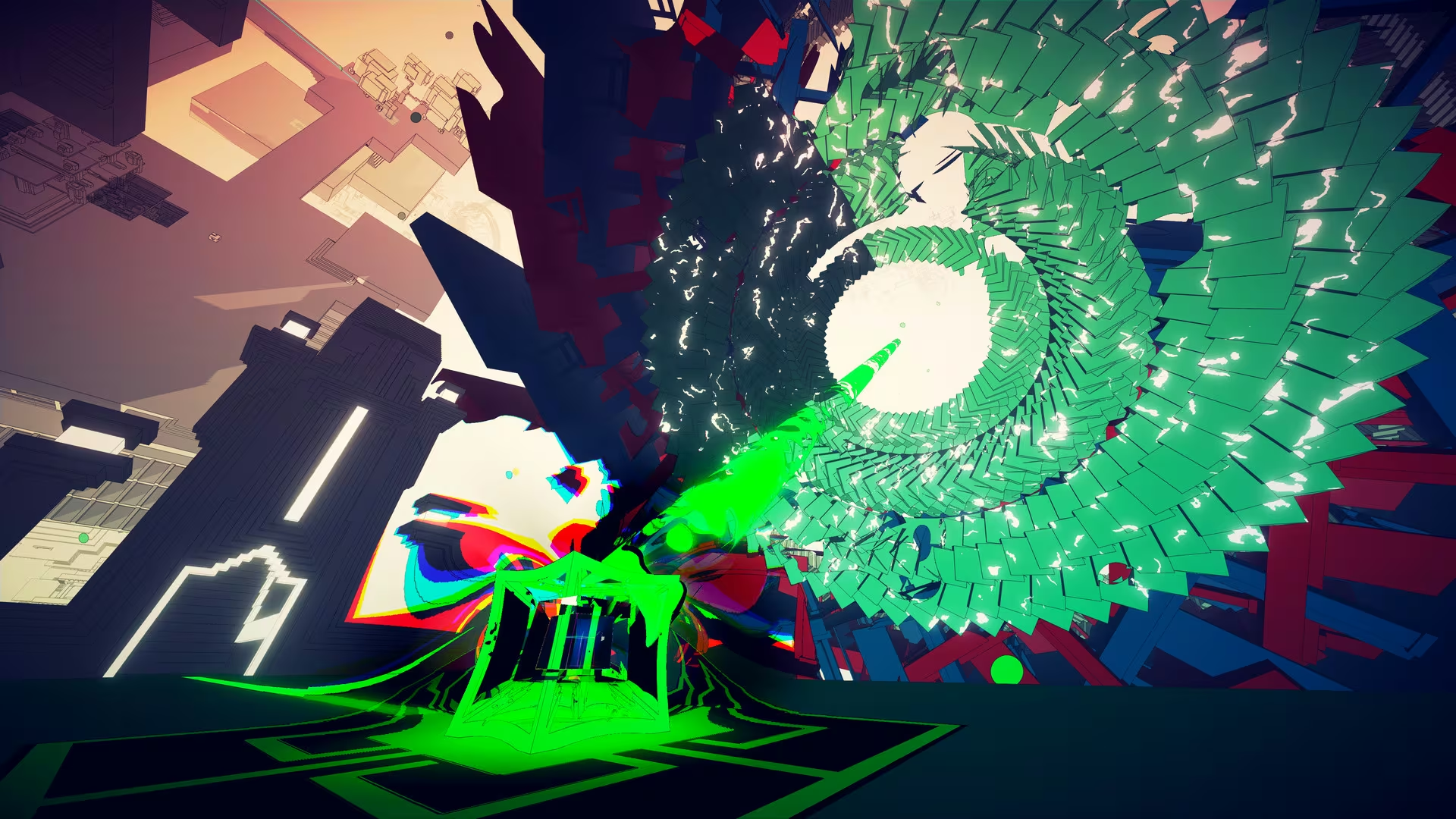
Rediscover gravity and explore an Escher-esque world of impossible architecture. Witness infinity in first-person and master its rules to solve physics-defying puzzles. Cultivate a garden to open new paths forward, where an eternal expanse awaits.

Global score

95/100

Genres

Adventure, Indie, Puzzle

Similar games

    Pros

    • Unique infinite non-euclidean world
    • Innovative gravity manipulation mechanics
    • Stunning visual and audio design
    • Moderate puzzle challenge accessible to many
    • Immersive and contemplative atmosphere

    Cons

    • Short game length
    • Minimal narrative or story
    • Some puzzles feel simple or repetitive
    • Can cause disorientation or nausea for some players
    • Lack of replayability beyond achievements

    Analysis

    Broadly representative of its motivational profile, with a few distinct shifts. Motivations that often define this kind of title include Survival, Violence, Fellowship, Expression. Here, the score leans higher than usual among comparable games on Expression. It leans lower than usual among comparable games on Story, Thrill.

    How to use the graph
    Similar games map

    Each dot is a game. They are arranged from the same motivation profile as in the “Motivations” section below. Closer dots usually mean more similar reasons to play (exploration, competition, relaxation, etc.)—not that one game is “better” than another.

    • Larger dot with a light outline: the game you are viewing.
    • Colour: groups of games with comparable motivation patterns (statistical clusters).
    • Hover a dot to see the game name; click to open its page.
    • Scroll or double-click the chart to zoom out and see more games.

    Why don’t the axes read like a score? This view uses t-SNE: it only keeps who is close to whom. The scales are not “good to bad” or hours played—they separate groups on the map. Read distance between dots, not the axis numbers.

    Motivations

    • Autonomy
      4

      "Players freely manipulate gravity direction and explore infinite, non-Euclidean spaces with no forced routines."

    • Competence
      3

      "Puzzles require spatial reasoning and understanding of gravity mechanics, offering moderate challenge."

    • Competition
      -5

      "No competitive elements; focus is on individual puzzle solving and exploration."

    • Continuation
      2

      "Players often spend extended time exploring and appreciating visuals, though game length is relatively short."

    • Cooperation
      -5

      "Single-player experience with no multiplayer or cooperative gameplay."

    • Creativity
      4

      "Players creatively solve puzzles by manipulating gravity and spatial orientation in an infinite world."

    • Domination
      -5

      "No social dominance or power dynamics present; experience is solitary and introspective."

    • Escapism
      4

      "Highly immersive, surreal environments provide strong escape from reality and induce awe."

    • Expectation
      -4

      "Players engage voluntarily driven by curiosity and intrinsic interest in puzzles and exploration."

    • Experimenting
      4

      "Game encourages experimentation with gravity and spatial mechanics to discover solutions."

    • Exploration
      4

      "Exploration of infinite, repeating, and surreal spaces is a core part of the experience."

    • Expression
      2

      "Photo mode and appreciation of visual aesthetics allow some personal expression."

    • Fantasy
      4

      "Engages players in an imaginative, impossible geometry and physics-defying world."

    • Fellowship
      -5

      "Minimal social interaction; experience is solitary without community features."

    • Growth
      3

      "Players develop spatial reasoning and puzzle-solving skills through gameplay."

    • Health
      -5

      "Sedentary gameplay with no physical activity or health-related features."

    • Idle
      -3

      "Requires focused attention and active problem solving; not suited for passive or background play."

    • Intimacy
      -5

      "No social or emotional relationship building; purely individual experience."

    • Leadership
      -5

      "No leadership or group management elements present."

    • Progression
      3

      "Progression through unlocking puzzles and areas by placing cubes and solving challenges."

    • Relaxation
      3

      "Calming music and visuals create a soothing atmosphere despite occasional mental challenge."

    • Sensation
      4

      "Strong visual and auditory stimulation with striking, surreal aesthetics and sound design."

    • Status
      -5

      "No social recognition or status systems; achievements are personal."

    • Story
      -3

      "Minimal narrative; story is abstract and left to player interpretation."

    • Strategy
      3

      "Puzzles require logical thinking and spatial strategy, though not overly complex."

    • Thrill
      -2

      "Low risk and tension; experience is more contemplative than suspenseful."

    • Value
      2

      "Players generally feel the game offers good value for its unique experience despite short length."

    • Violence
      -5

      "No violence or destructive gameplay; focus on constructive puzzle solving."

    • Survival
      -5

      "No survival or threat mechanics; safe, stable environment."

    Last update: 29/04/2026