The Bard's Tale IV: Director's Cut similar games & best alternatives
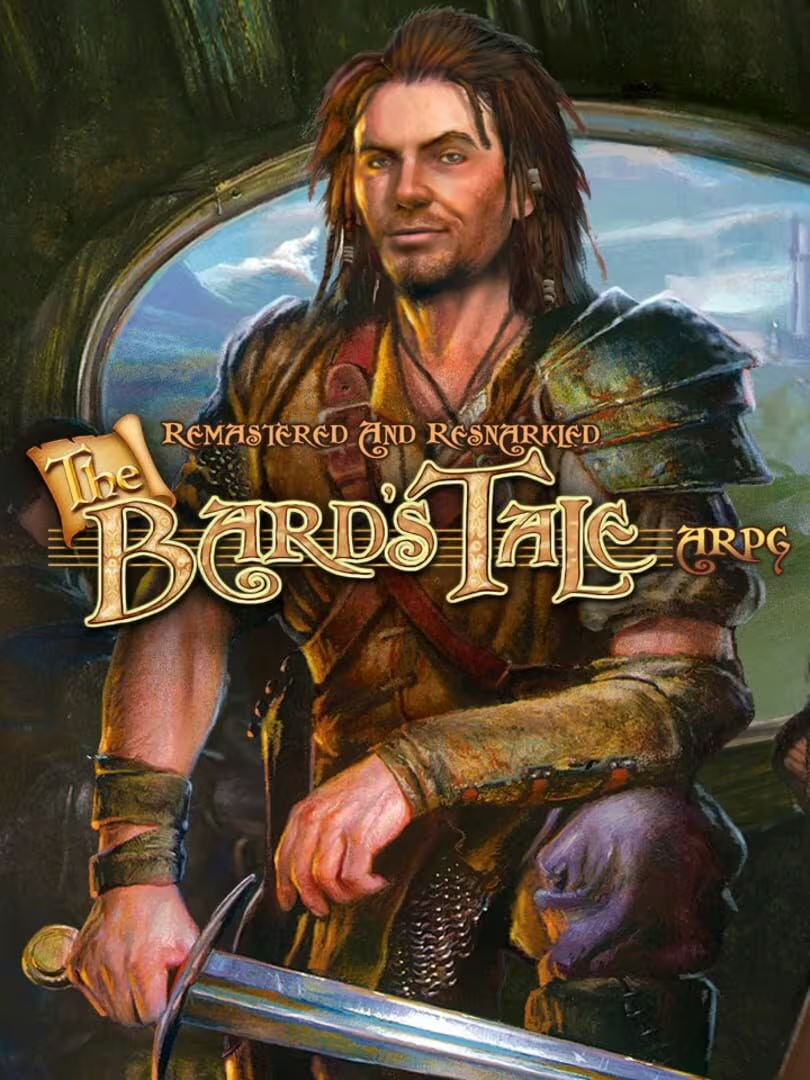
The Bard's Tale IV: Director's Cut
2019
Related articles
Quick resume
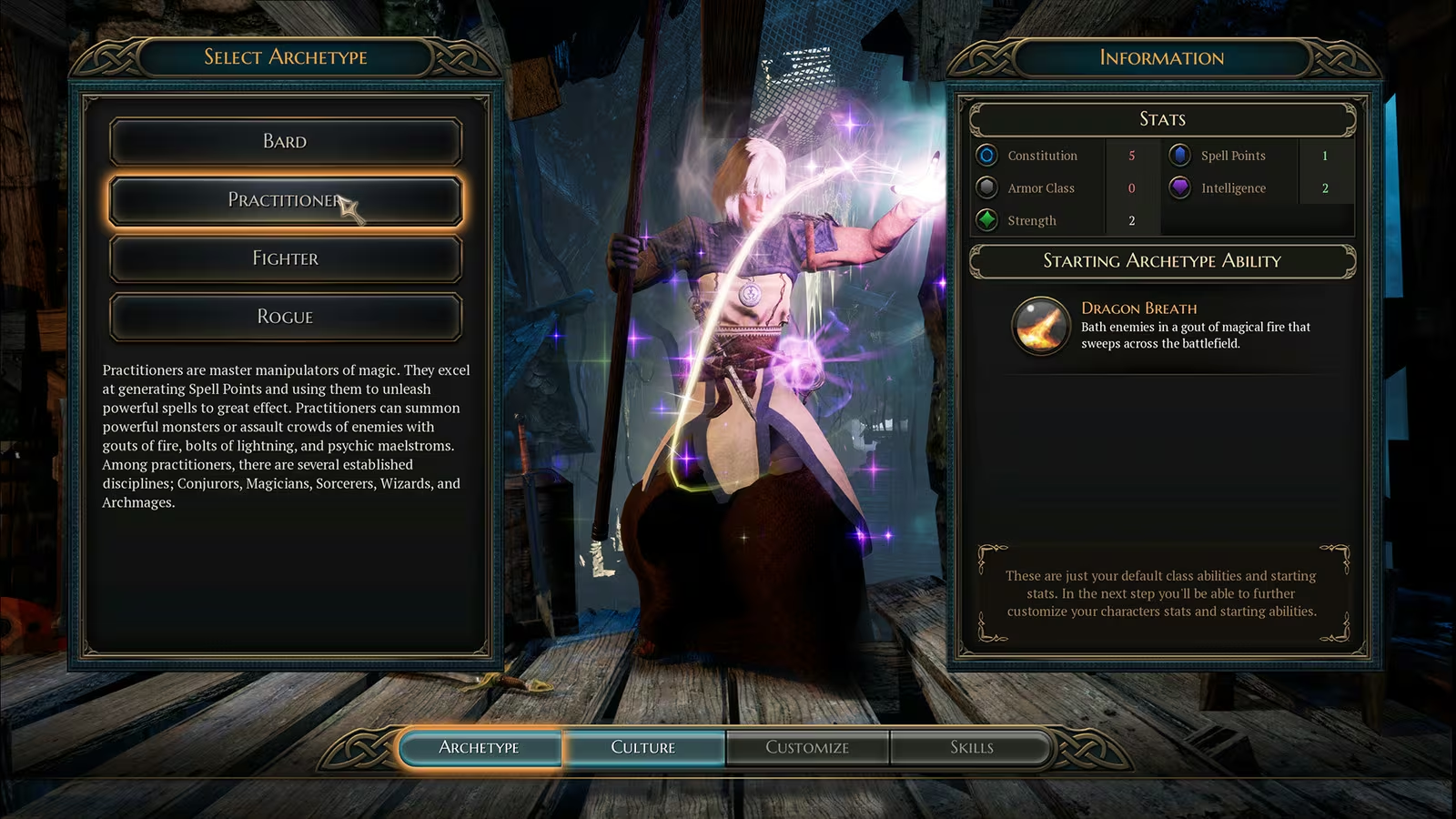
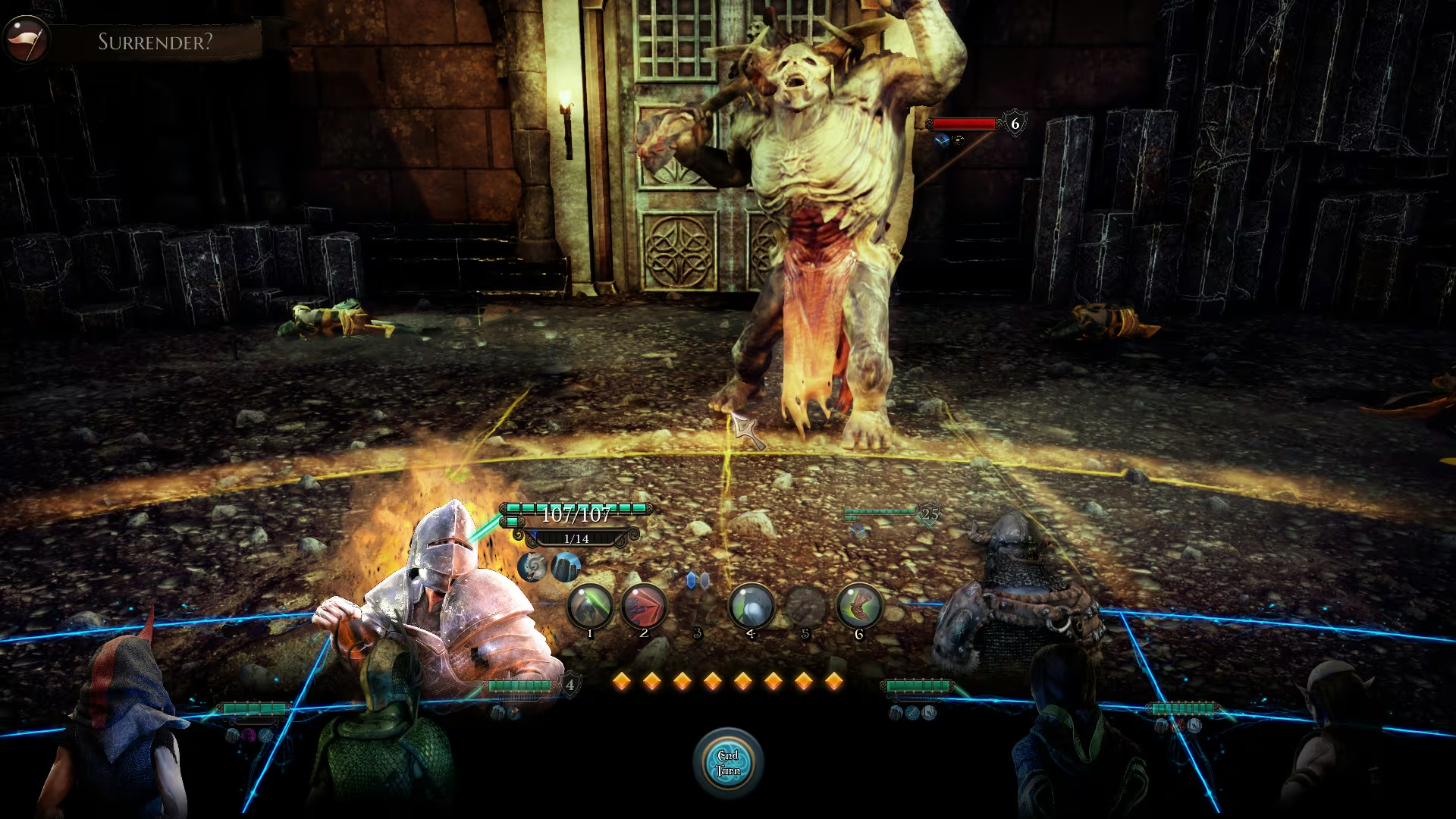
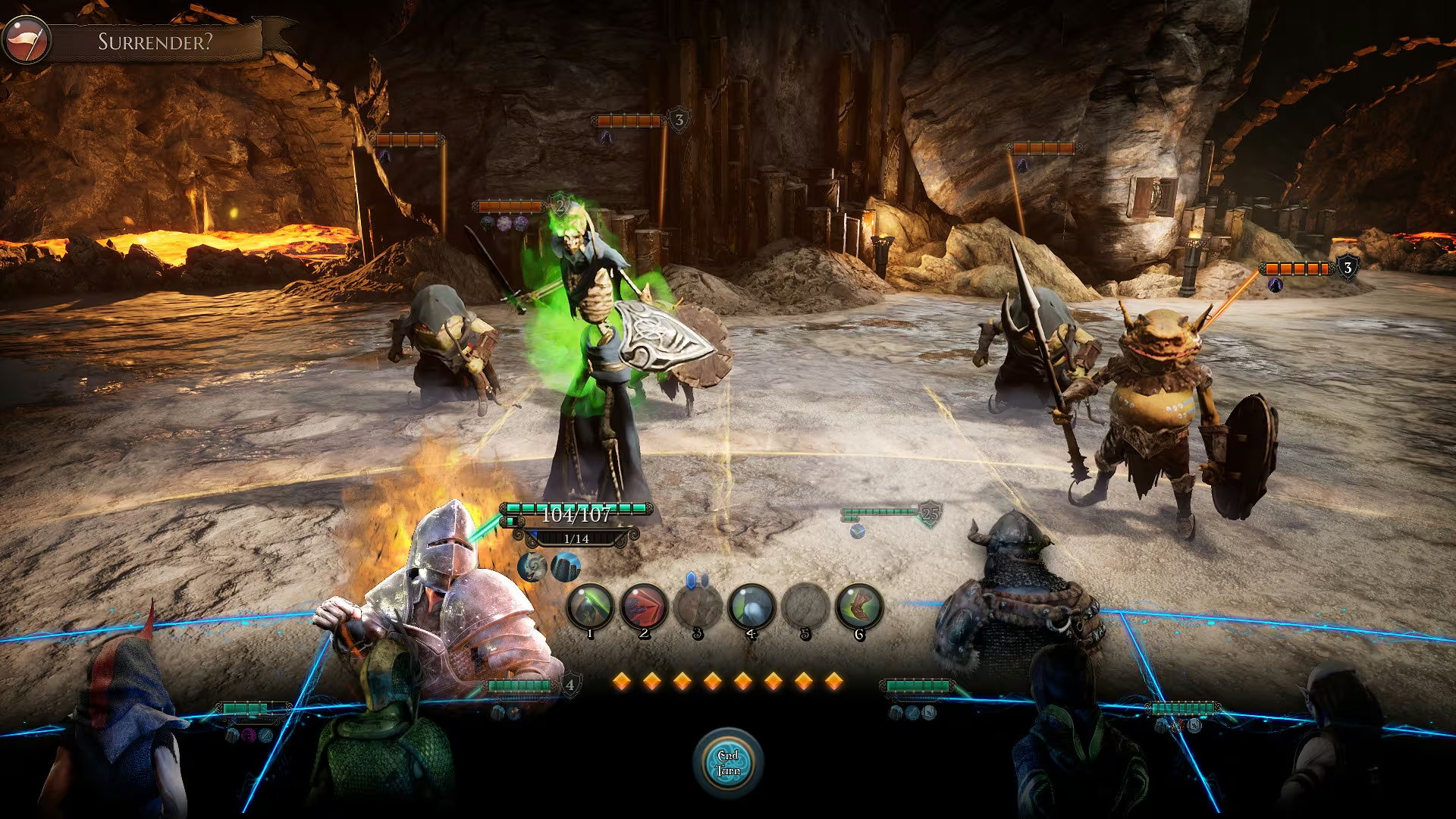
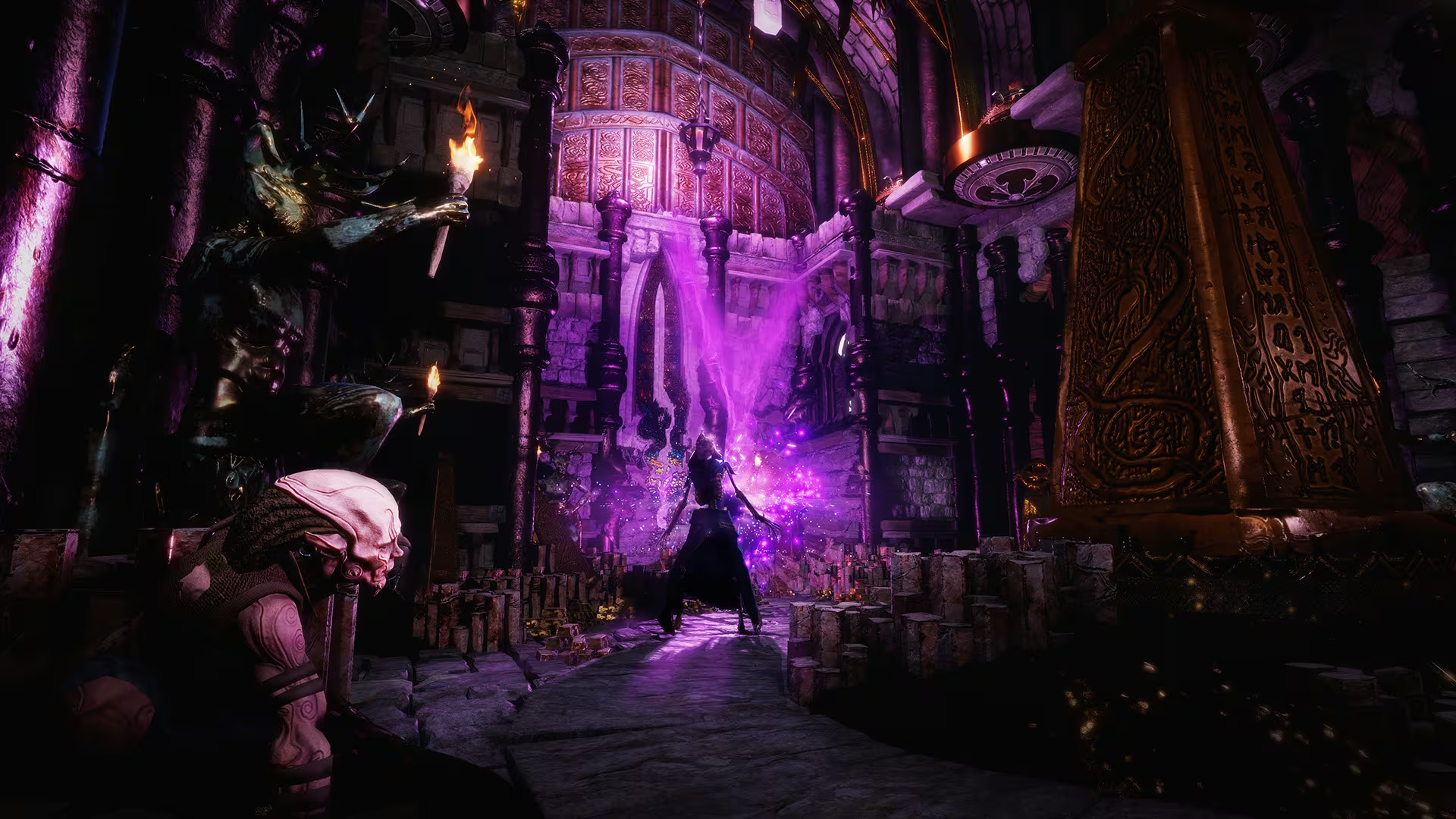
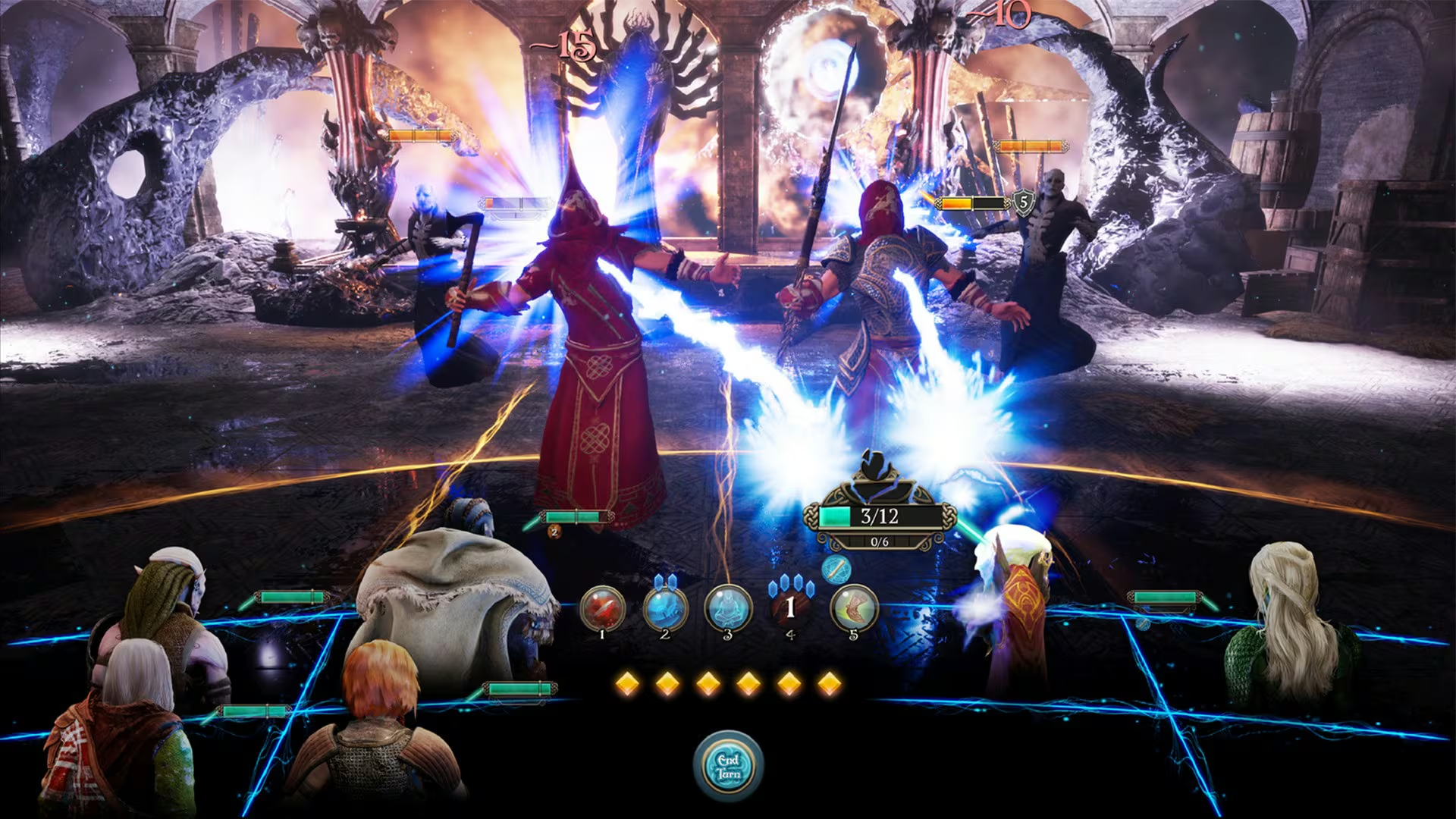
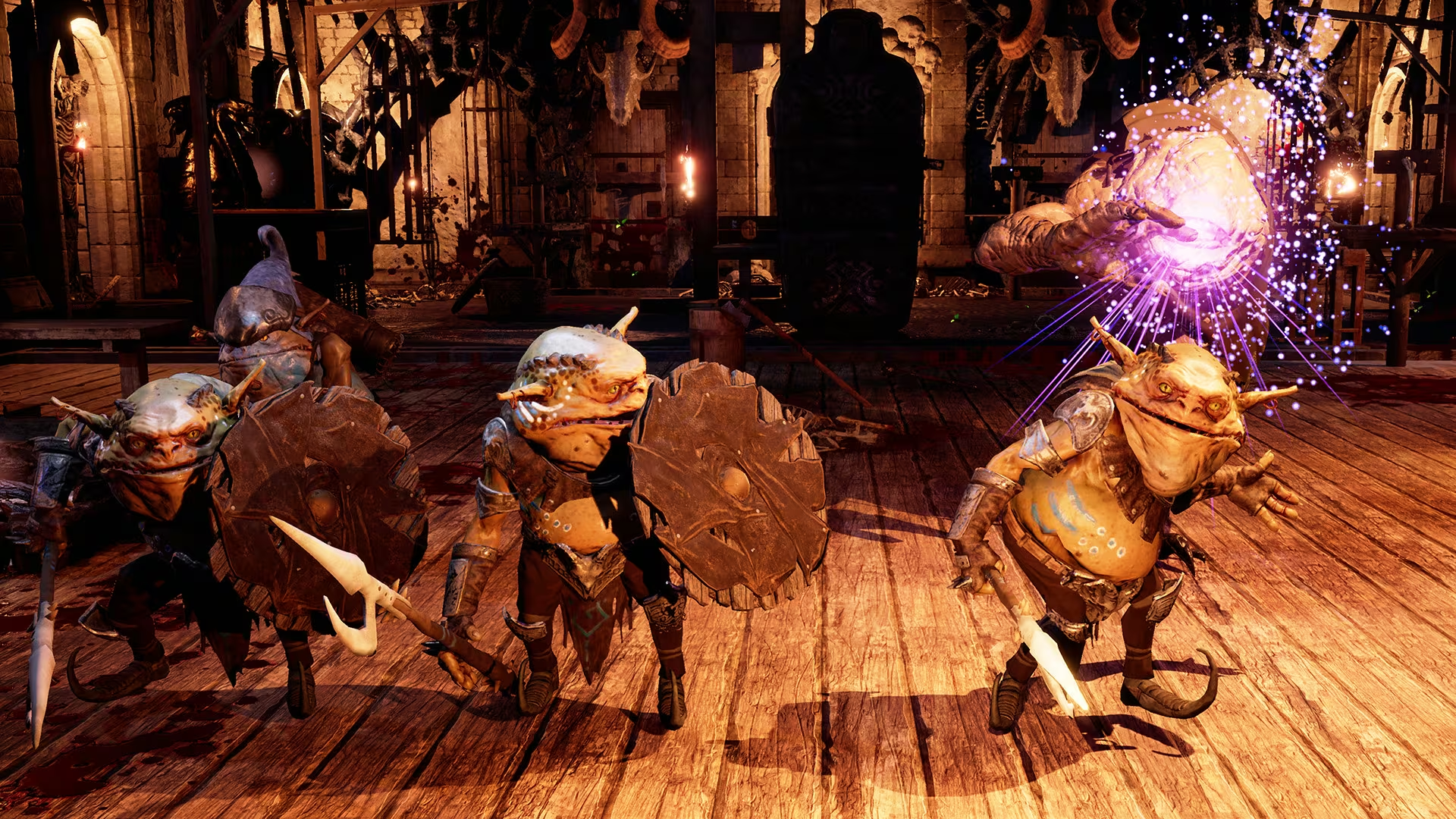
The Bard's Tale IV: Director's Cut is the triumphant return of one of the most iconic RPG series of all-time. Delve into a tactically rich combat system that rewards creativity, solve puzzles to gain treasure and advantages, and discover a beautifully crafted world.
Global score
78/100
Genres
Role-playing (RPG), Turn-based strategy (TBS)
Similar games
Pros
- Engaging tactical combat system
- Rich exploration and puzzles
- Excellent music and voice acting
- Nostalgic and immersive fantasy world
- Long playtime with replayability
Cons
- Some bugs and occasional crashes
- Limited character customization aesthetics
- Puzzles can be repetitive or tedious
- Inventory management can be cumbersome
- Story is sometimes simplistic
Analysis
A very typical example of its motivational profile. Motivations that often define this kind of title include Leadership, Survival, Violence, Strategy. Here, the score leans higher than usual among comparable games on Exploration, Fantasy, Escapism.
How to use the graph
Similar games map
Each dot is a game. They are arranged from the same motivation profile as in the “Motivations” section below. Closer dots usually mean more similar reasons to play (exploration, competition, relaxation, etc.)—not that one game is “better” than another.
- Larger dot with a light outline: the game you are viewing.
- Colour: groups of games with comparable motivation patterns (statistical clusters).
- Hover a dot to see the game name; click to open its page.
- Scroll or double-click the chart to zoom out and see more games.
Why don’t the axes read like a score? This view uses t-SNE: it only keeps who is close to whom. The scales are not “good to bad” or hours played—they separate groups on the map. Read distance between dots, not the axis numbers.
Motivations
-
Autonomy4
"Players can customize party composition, skill trees, and playstyle; multiple ways to approach combat and puzzles with options to skip puzzles or change movement style."
-
Competence4
"Combat is tactical and challenging, requiring strategic thinking and mastery; puzzles vary in difficulty and require problem solving."
-
Competition-3
"Focus is on personal progression and exploration rather than competing against others; no mention of multiplayer or leaderboards."
-
Continuation4
"Long playtime reported (70-178 hours), players express desire to replay and explore more; addictive and immersive experience."
-
Cooperation-2
"Single-player party-based game with no indication of multiplayer cooperation; party members interact but player controls all."
-
Creativity3
"Players can customize characters, builds, and party composition; crafting and item management add creative elements."
-
Domination-4
"No evidence of exerting control or superiority over others; interactions are cooperative within the party."
-
Escapism5
"Strong immersion in a fantasy world with rich lore, music, and exploration; players use it as a nostalgic and engaging escape."
-
Expectation-4
"Players engage voluntarily out of intrinsic interest and nostalgia; no indication of obligation or external pressure."
-
Experimenting3
"Players experiment with party builds and skill trees, though respeccing is limited; multiple ways to approach combat and puzzles."
-
Exploration5
"Heavy emphasis on exploration, secrets, and discovering hidden areas; metroidvania elements with backtracking and puzzle unlocking."
-
Expression2
"Some character customization and party composition; limited avatar aesthetics but some personalization available."
-
Fantasy5
"Strong fantasy setting with mythical creatures, magic, and Celtic/Gaelic themes; immersive fictional world."
-
Fellowship-3
"Primarily single-player experience with limited social interaction; party members have banter but no multiplayer community focus."
-
Growth4
"Character development through skill trees and equipment; players learn combat tactics and puzzle solving over time."
-
Health-4
"Sedentary gameplay typical of RPGs; no indication of physical activity or health-related features."
-
Idle-4
"Requires focused attention on combat, puzzles, and exploration; not designed for casual or background play."
-
Intimacy-3
"Limited emotional connections mainly through party member interactions; no evidence of close social relationships."
-
Leadership3
"Player leads and manages a party of characters with strategic decisions; no multiplayer leadership roles."
-
Progression4
"Strong item and skill progression; players collect loot, upgrade gear, and develop characters throughout the game."
-
Relaxation2
"Some players find it relaxing and immersive, but others note challenging combat and puzzles that require focus."
-
Sensation3
"Enjoyable music and sound design enhance sensory experience; graphics are decent but not cutting-edge."
-
Status-4
"No social status or recognition systems; focus is on individual experience without social evaluation."
-
Story3
"Narrative with characters and lore present; story is engaging though sometimes considered simplistic."
-
Strategy5
"Combat and puzzles require strategic thinking, planning, and problem solving; tactical depth emphasized."
-
Thrill2
"Some suspense in combat and exploration; not focused on high-risk thrills but occasional tense moments."
-
Value4
"Players report high value for time invested with long playtime and replayability; free Director's Cut update appreciated."
-
Violence3
"Combat involves fighting monsters and enemies; violence is present but not gratuitous or central focus."
-
Survival3
"Combat requires managing threats and resources; some difficulty modes emphasize survival tactics."
Last update: 29/04/2026