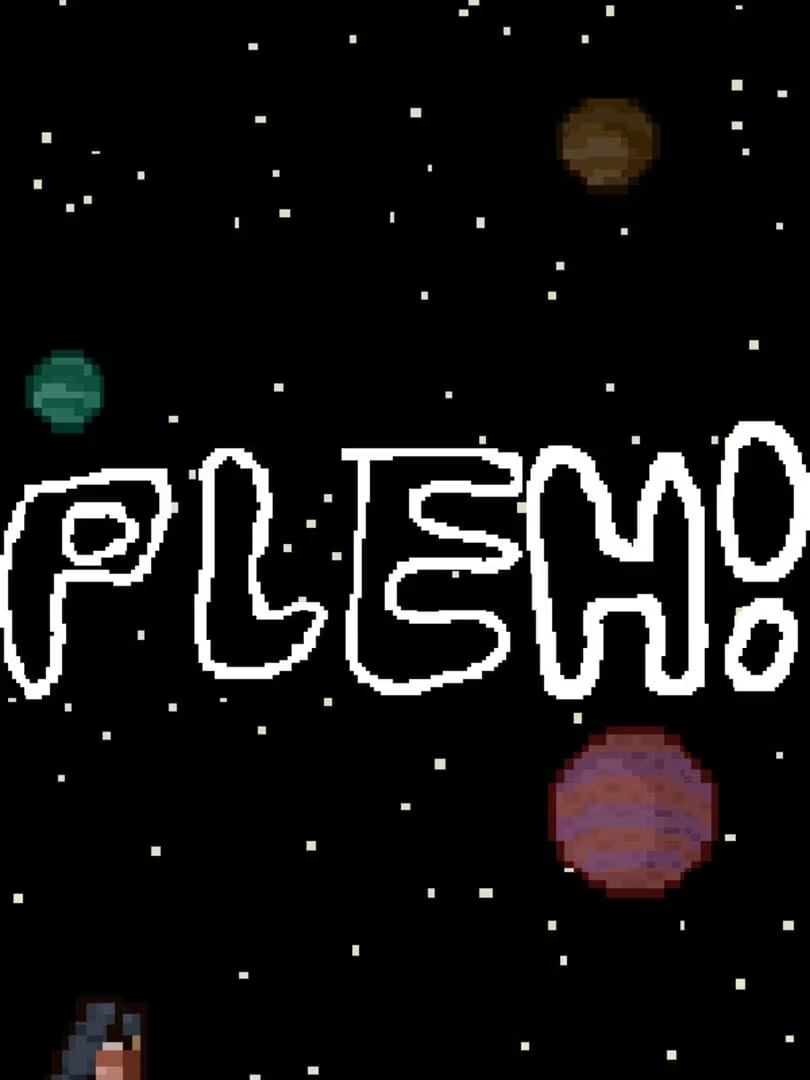
The Testing Chamber Thumbnail

The Testing Chamber similar games & best alternatives

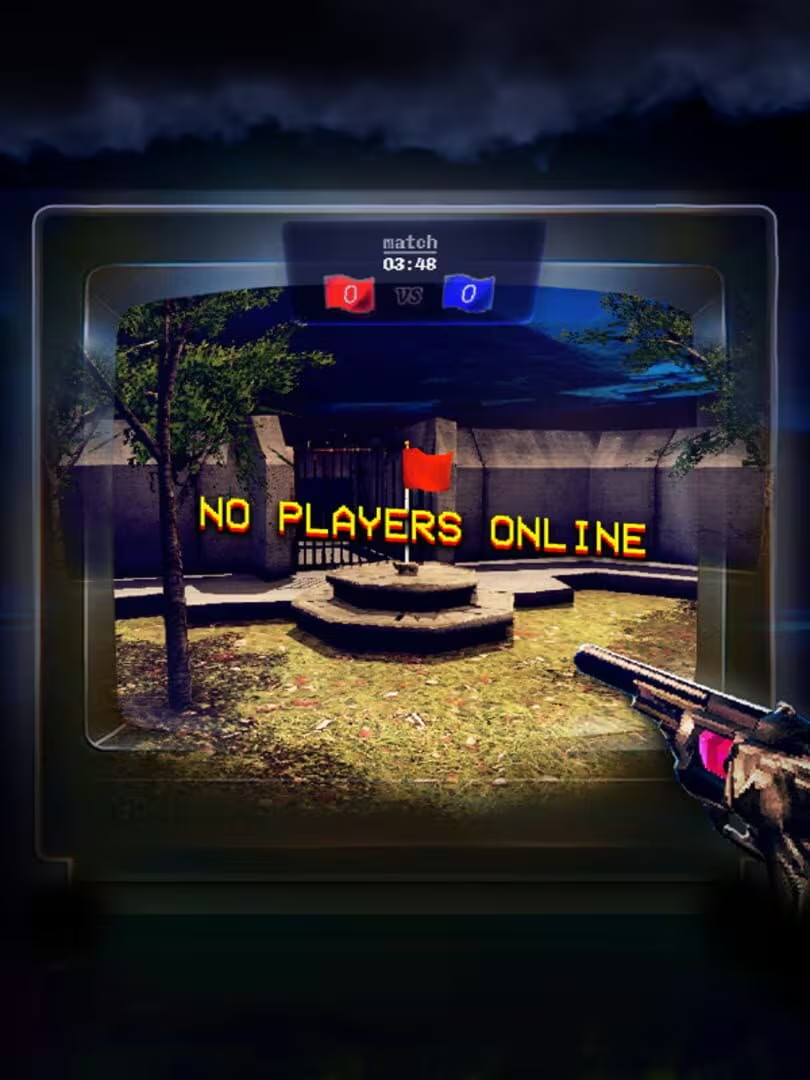
The Testing Chamber

PC (Microsoft Windows) • 2022

Related articles

Quick resume

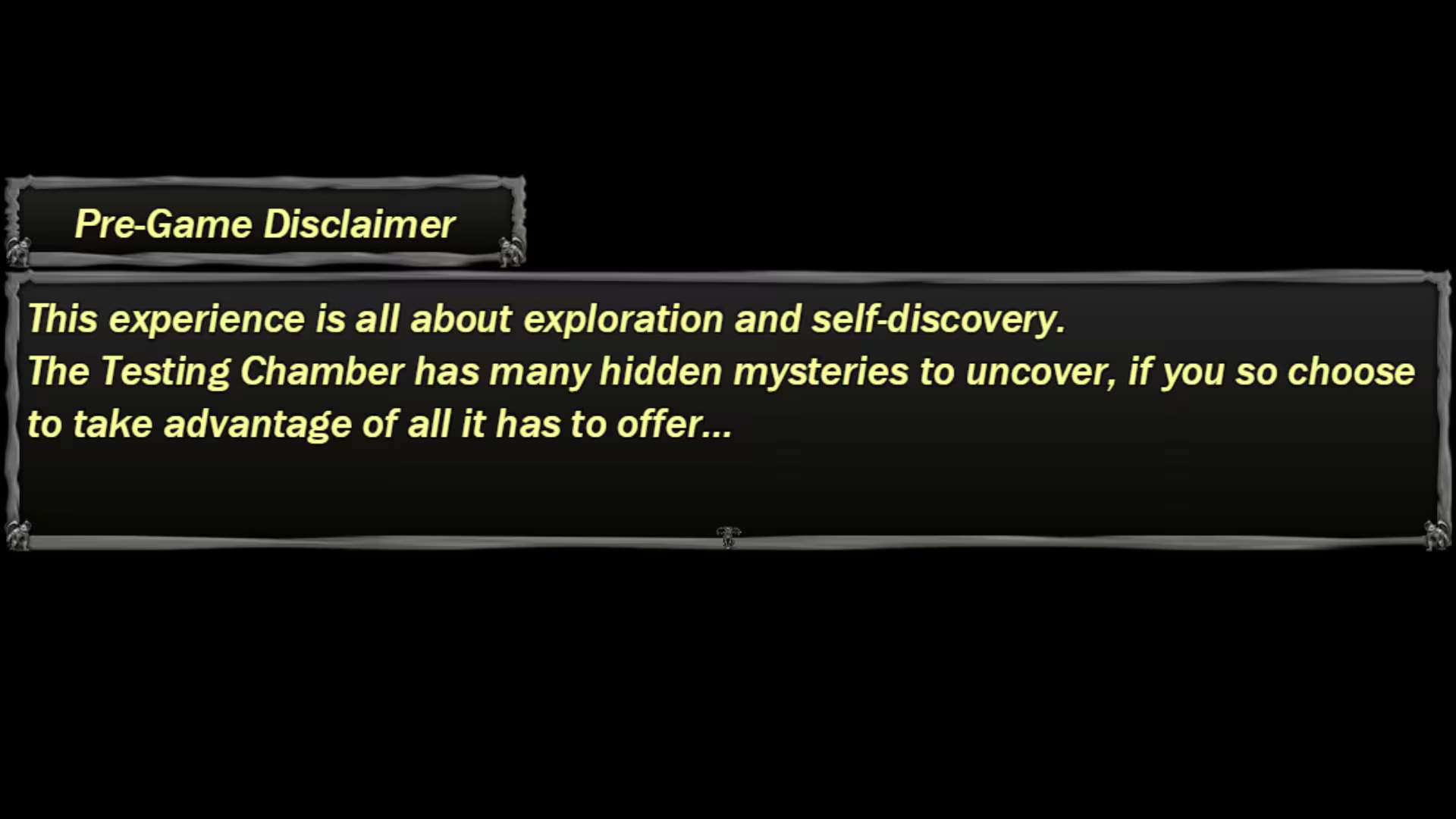
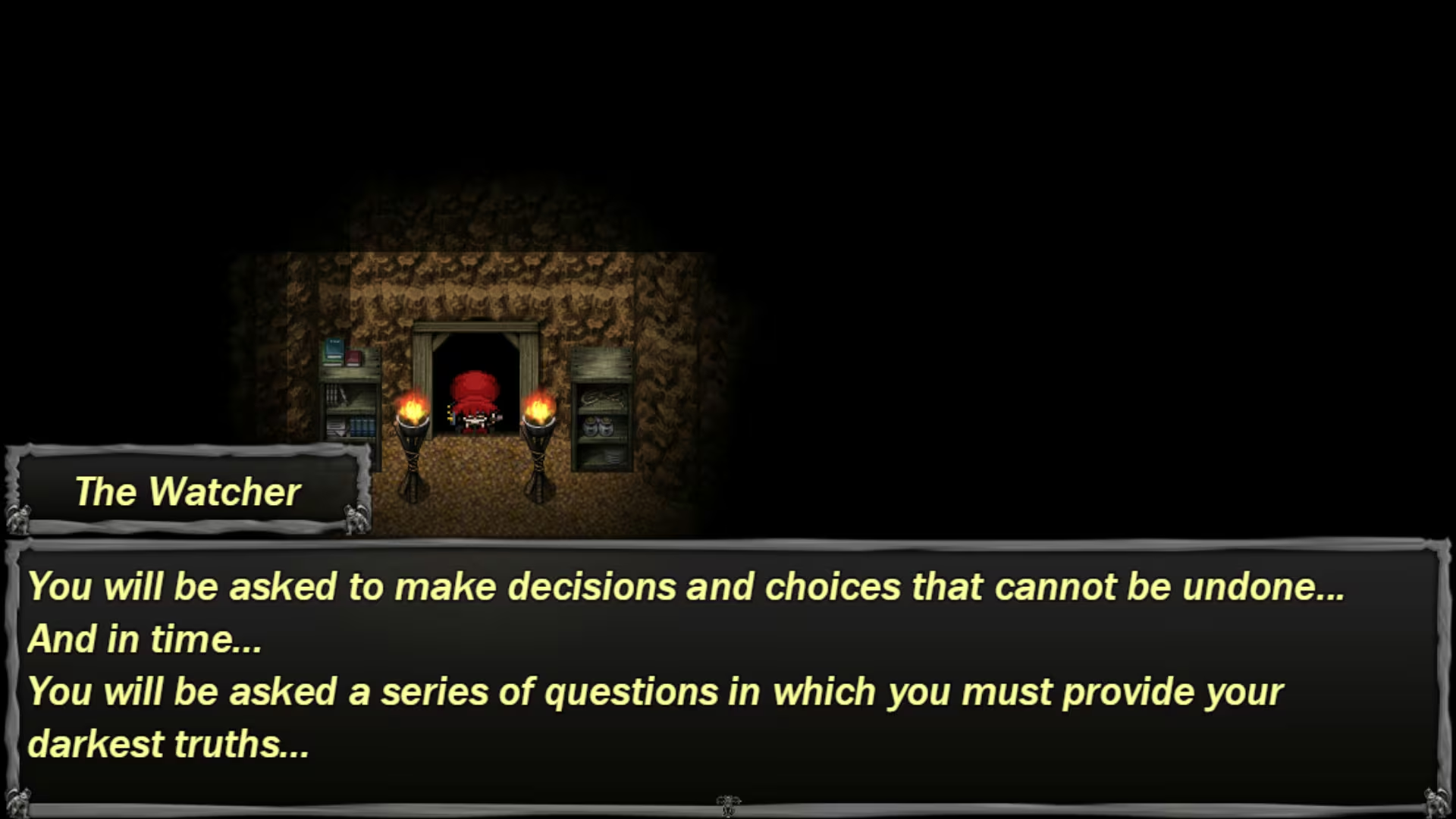
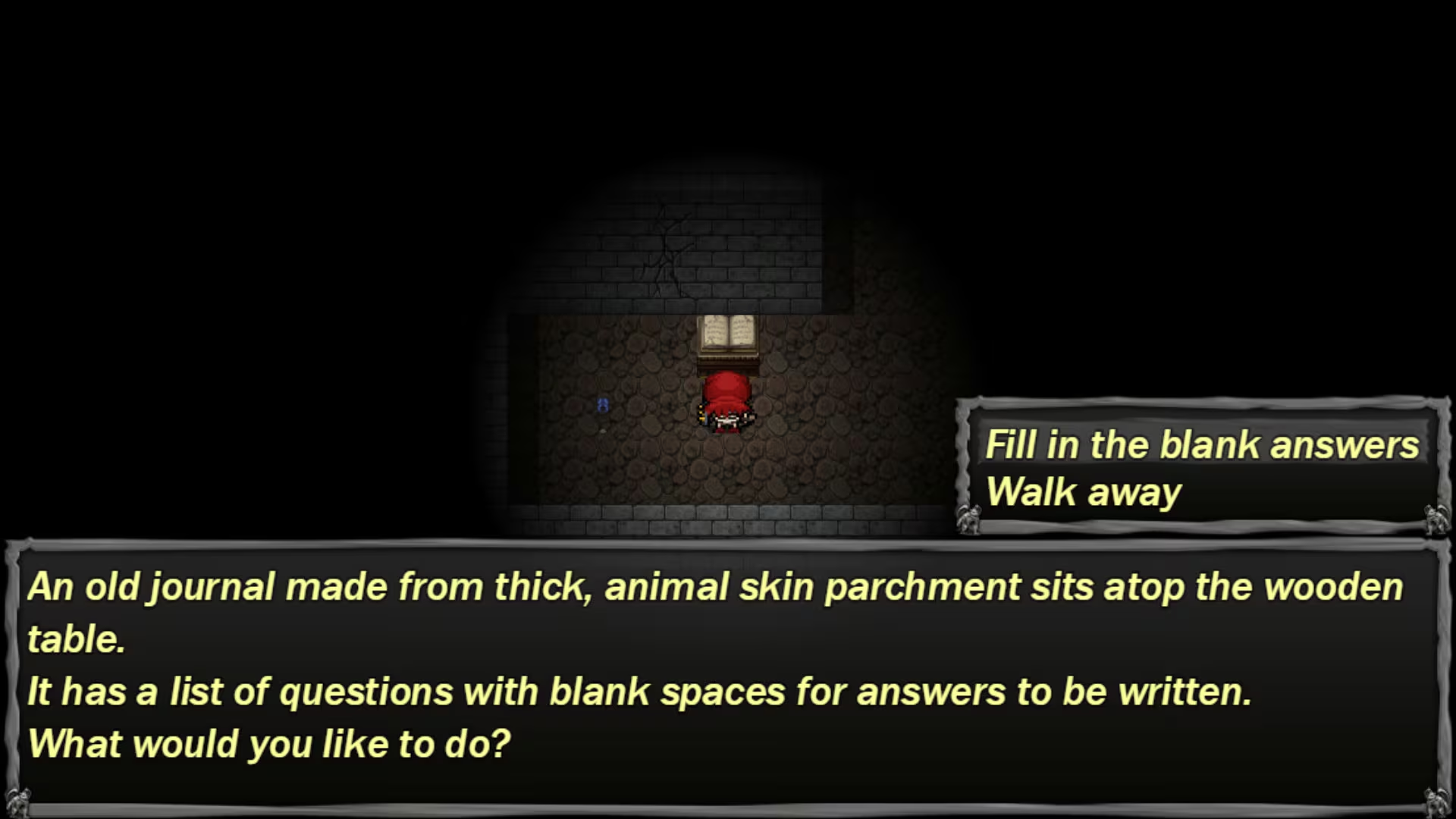
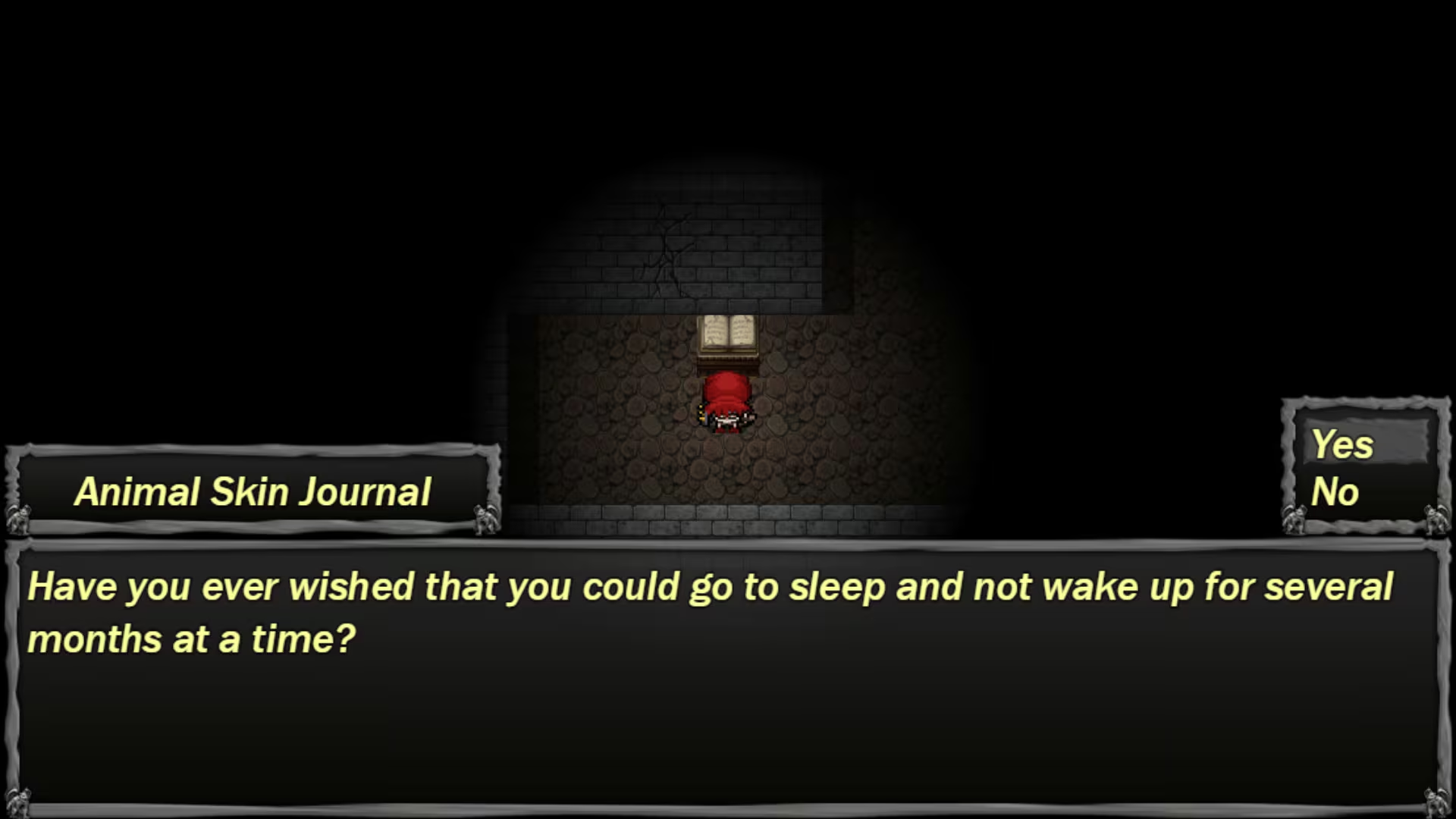
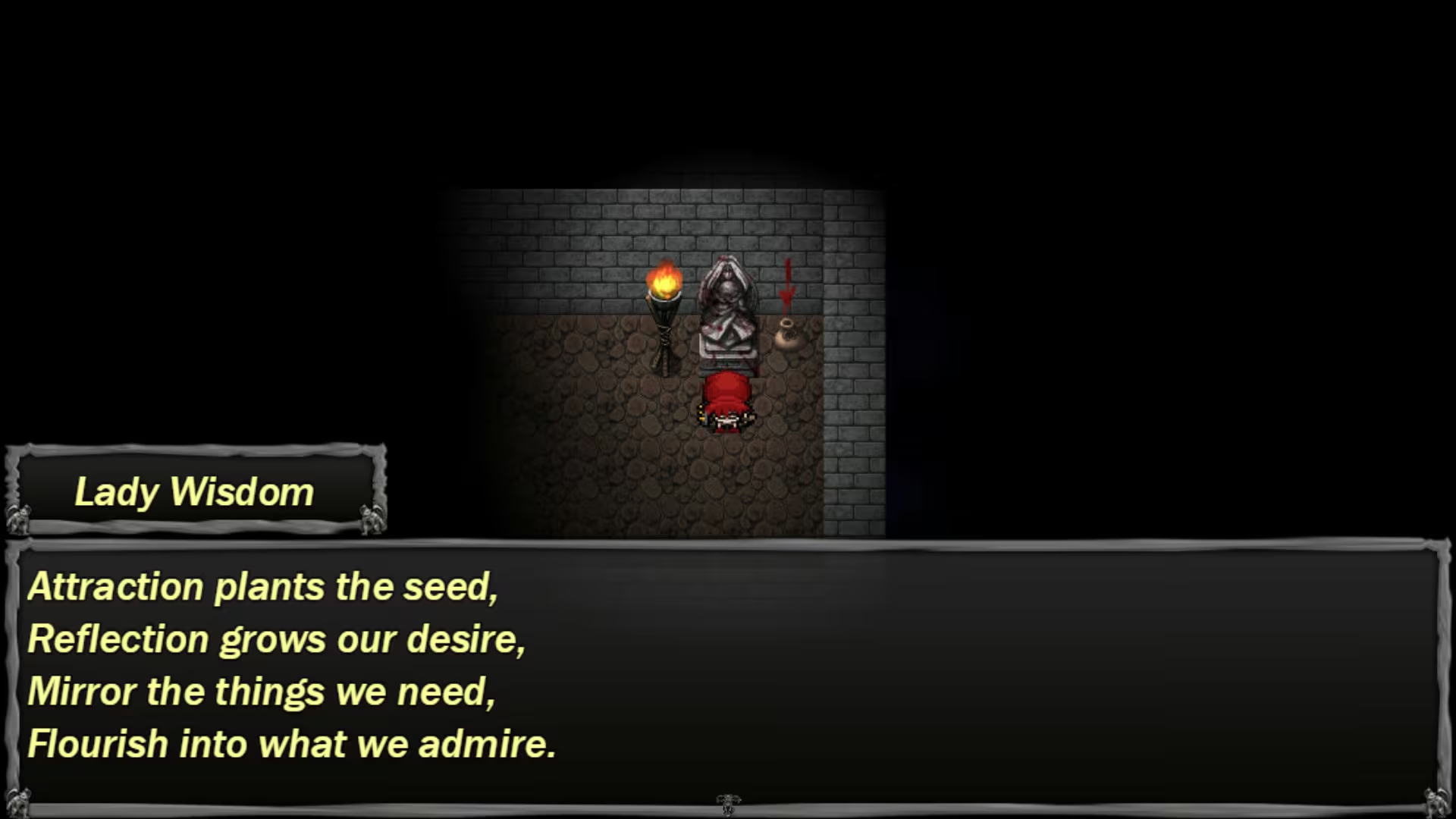
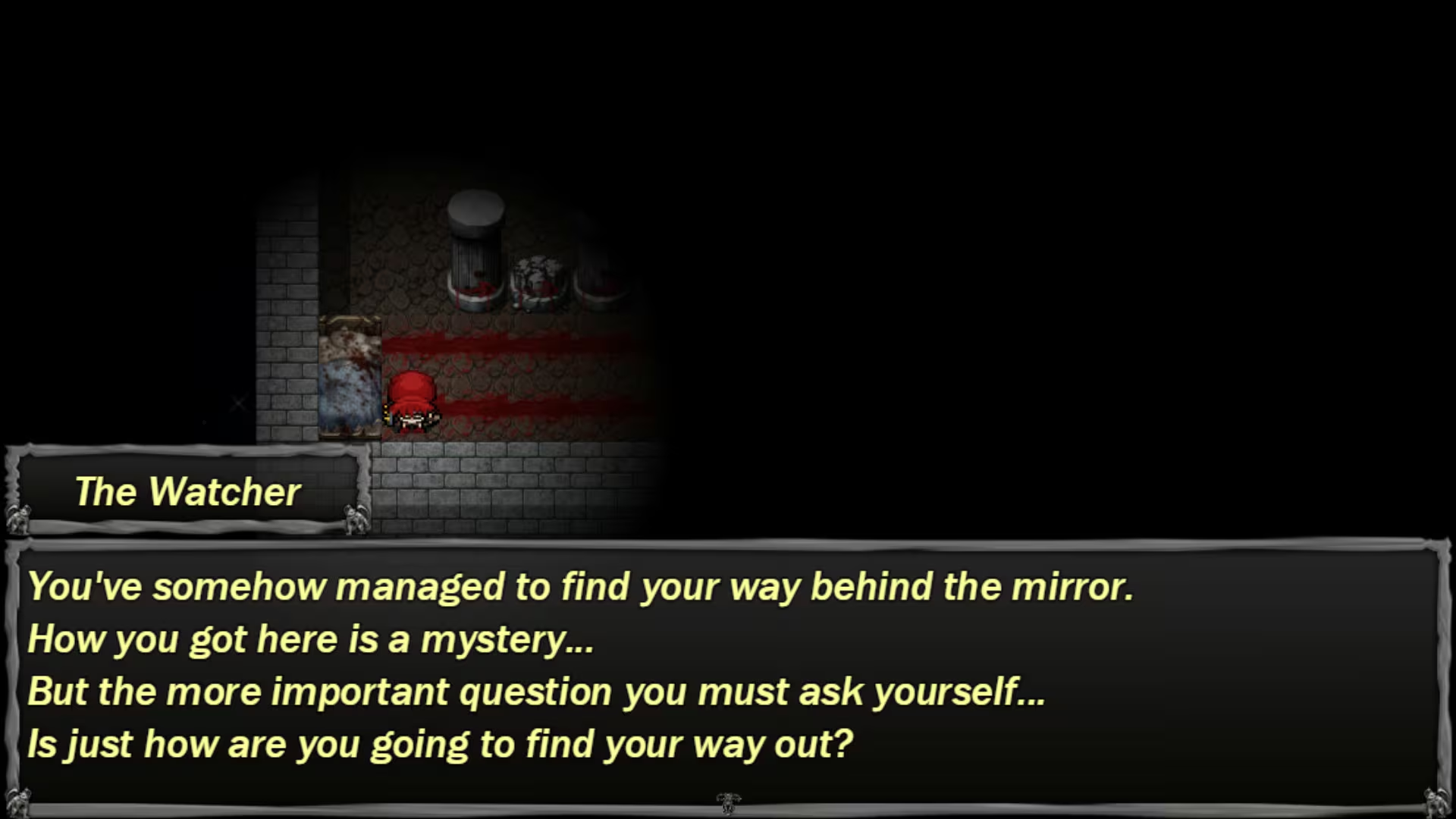
For every action, there is a reaction... For every choice, a result... Dive deep into your subconscious as you wander the halls of The Testing Chamber & join hundreds of thousands of other players in one of the biggest & most successful social experiments ever performed.

Global score

97/100

Genres

Role-playing (RPG), Simulator

Similar games

    Pros

    • Deep introspective questions
    • Meaningful narrative and multiple endings
    • Atmospheric music and art style
    • Encourages personal growth and reflection
    • Exploration and secret discovery

    Cons

    • Some players found pacing slow or repetitive
    • Minor technical issues like freezing
    • Lack of clarity on some secrets or puzzle solutions
    • Limited replay incentive for some
    • No multiplayer or social features

    Analysis

    Broadly representative of its motivational profile, with a few distinct shifts. Motivations that often define this kind of title include Survival, Violence, Fellowship, Expression. Here, the score leans higher than usual among comparable games on Intimacy, Growth. It leans lower than usual among comparable games on Fantasy.

    How to use the graph
    Similar games map

    Each dot is a game. They are arranged from the same motivation profile as in the “Motivations” section below. Closer dots usually mean more similar reasons to play (exploration, competition, relaxation, etc.)—not that one game is “better” than another.

    • Larger dot with a light outline: the game you are viewing.
    • Colour: groups of games with comparable motivation patterns (statistical clusters).
    • Hover a dot to see the game name; click to open its page.
    • Scroll or double-click the chart to zoom out and see more games.

    Why don’t the axes read like a score? This view uses t-SNE: it only keeps who is close to whom. The scales are not “good to bad” or hours played—they separate groups on the map. Read distance between dots, not the axis numbers.

    Motivations

    • Autonomy
      4

      "Players make meaningful choices and explore the world freely, reflecting personal decisions rather than following preset routines."

    • Competence
      2

      "The game challenges players with introspective questions and some light puzzles, requiring thoughtful engagement rather than repetitive tasks."

    • Competition
      -5

      "Focus is entirely on personal reflection and self-exploration without any comparison or competitive elements."

    • Continuation
      3

      "Players express desire to replay to find all secrets and endings, showing attachment and habitual engagement."

    • Cooperation
      -5

      "The experience is solitary and introspective, with no multiplayer or cooperative features."

    • Creativity
      3

      "Players explore and discover secrets, piecing together lore and interpreting stories, encouraging creative thought."

    • Domination
      -5

      "No elements of exerting control or superiority over others; the game fosters personal insight."

    • Escapism
      4

      "Players use the game as a means to reflect and escape from real-life stress, often citing mental health benefits."

    • Expectation
      -4

      "Players engage voluntarily out of personal interest and intrinsic motivation to understand themselves."

    • Experimenting
      3

      "The game encourages exploration of different choices and secrets, inviting players to try new paths."

    • Exploration
      4

      "Significant emphasis on discovering new areas, secrets, and lore within the game world."

    • Expression
      -3

      "Limited character customization; expression is more through personal choices and reflection than avatar personalization."

    • Fantasy
      1

      "The game has some fictional and surreal elements but is grounded in psychological and introspective themes."

    • Fellowship
      -4

      "The game is designed for solo play with minimal social interaction."

    • Growth
      5

      "Strong focus on personal development, self-reflection, and learning about oneself."

    • Health
      -5

      "No physical activity involved; sedentary gameplay."

    • Idle
      -4

      "Requires focused attention and thoughtful engagement rather than passive or background play."

    • Intimacy
      2

      "Emotional depth and self-intimacy are encouraged, though social intimacy is minimal."

    • Leadership
      -5

      "No leadership or group management elements present."

    • Progression
      2

      "Players collect items and unlock multiple endings, showing some accumulation and advancement."

    • Relaxation
      3

      "Atmospheric and contemplative experience balances tension with moments of calm reflection."

    • Sensation
      2

      "The game uses atmospheric music and visuals to create emotional and sensory engagement."

    • Status
      -5

      "No social recognition or status systems; focus is on personal insight."

    • Story
      4

      "Narrative immersion is strong with multiple endings and lore that connects to player choices."

    • Strategy
      1

      "Some light puzzle solving and decision making, but primarily focused on introspection rather than complex strategy."

    • Thrill
      1

      "Some suspenseful and eerie atmosphere but overall controlled and contemplative rather than high thrill."

    • Value
      4

      "Players feel the game offers meaningful return for time and money through its unique introspective experience."

    • Violence
      -3

      "Some disturbing imagery and mild horror elements, but no emphasis on combat or destruction."

    • Survival
      -5

      "No survival or threat avoidance mechanics; stable and safe environment for reflection."

    Last update: 29/04/2026