Pathologic 3 similar games & best alternatives
Pathologic 3
2026
Related articles
Quick resume
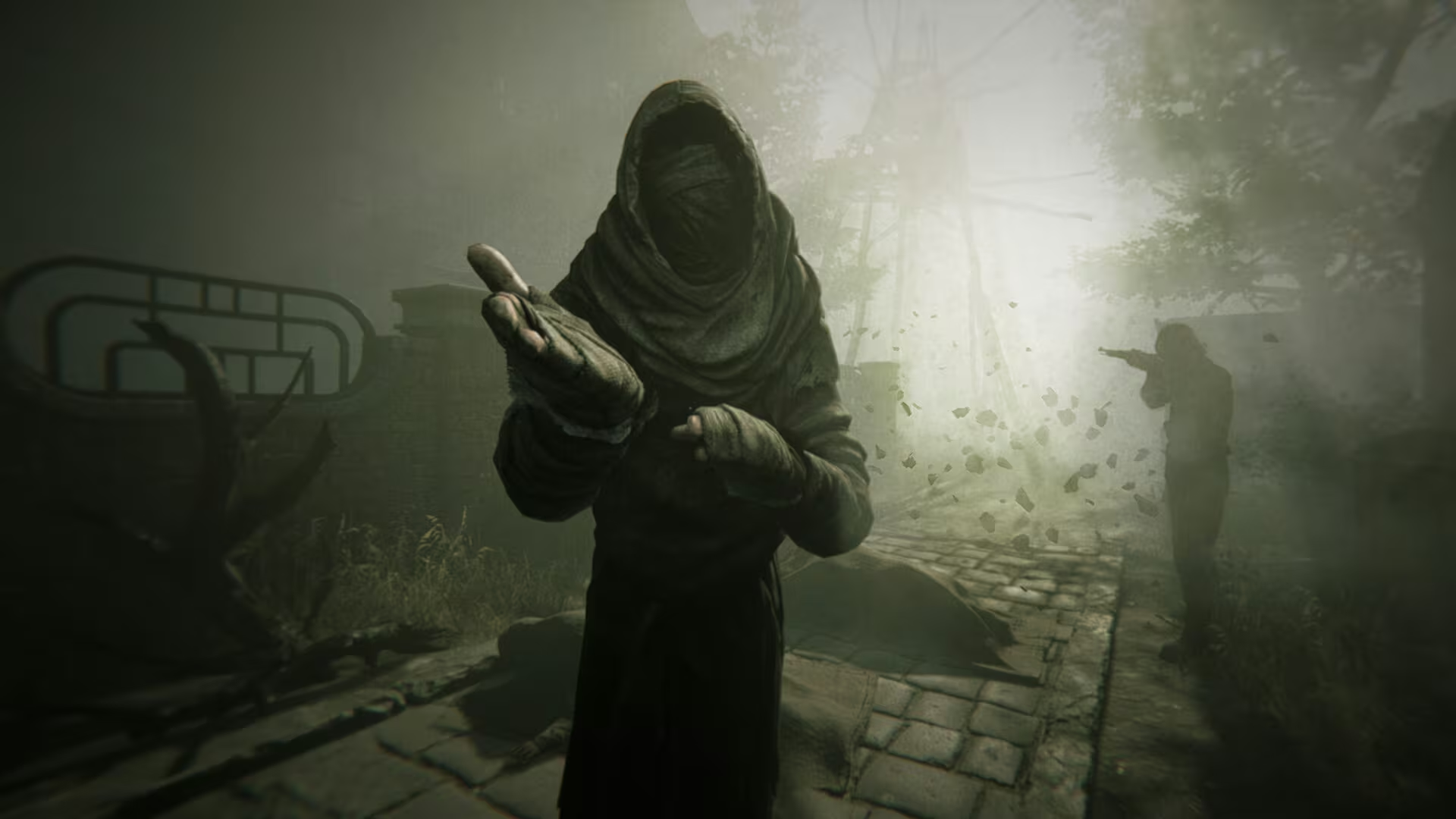
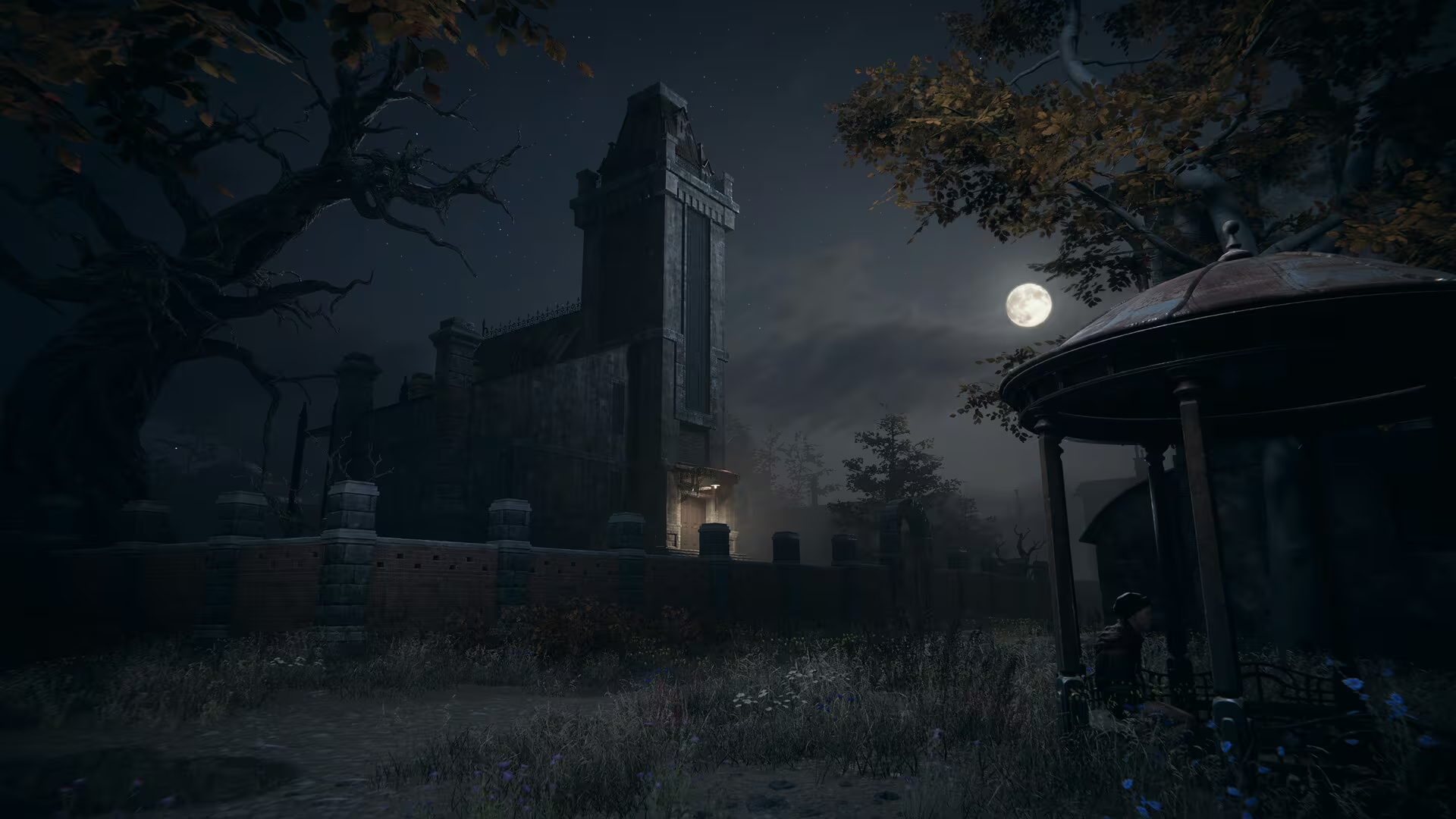
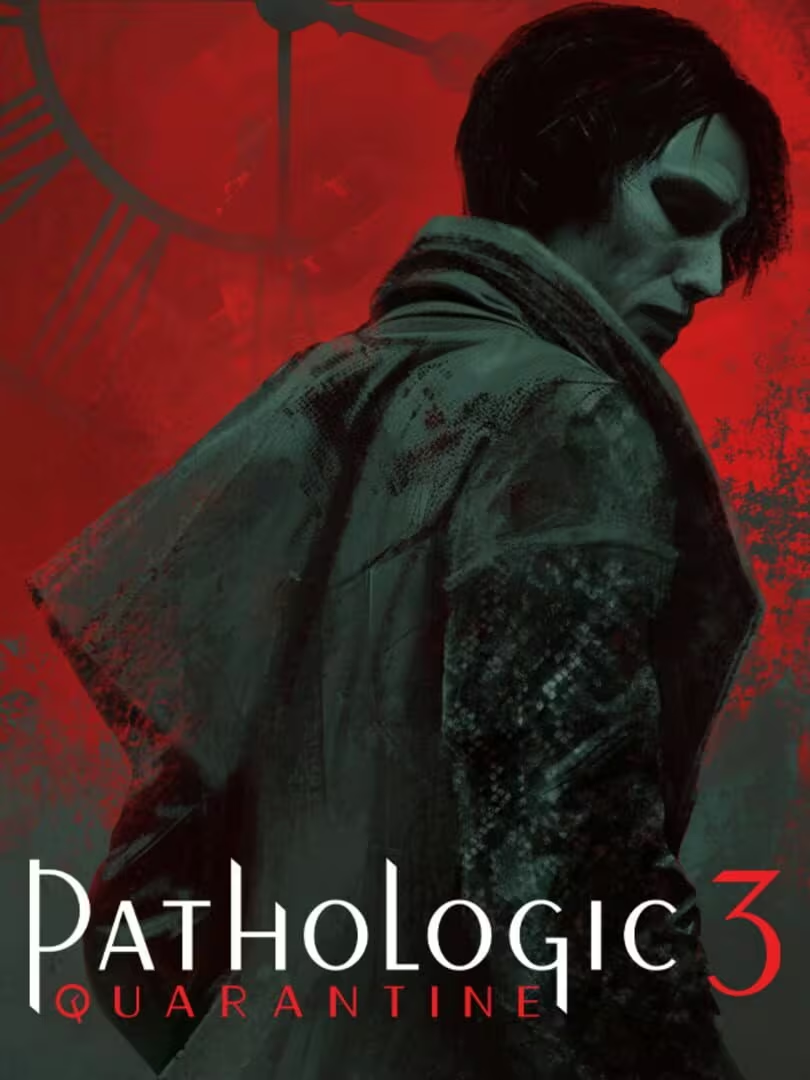
In this psychological horror game, you are a doctor with only 12 days to save a town from a mysterious plague. Make ruthless decisions and diagnose with precision. Shape the town's future and rewrite the past. Hold yourself together while it all falls apart.
Global score
81/100
Genres
Adventure, Indie, Role-playing (RPG), Simulator
Similar games
Pros
- Innovative time travel mechanics
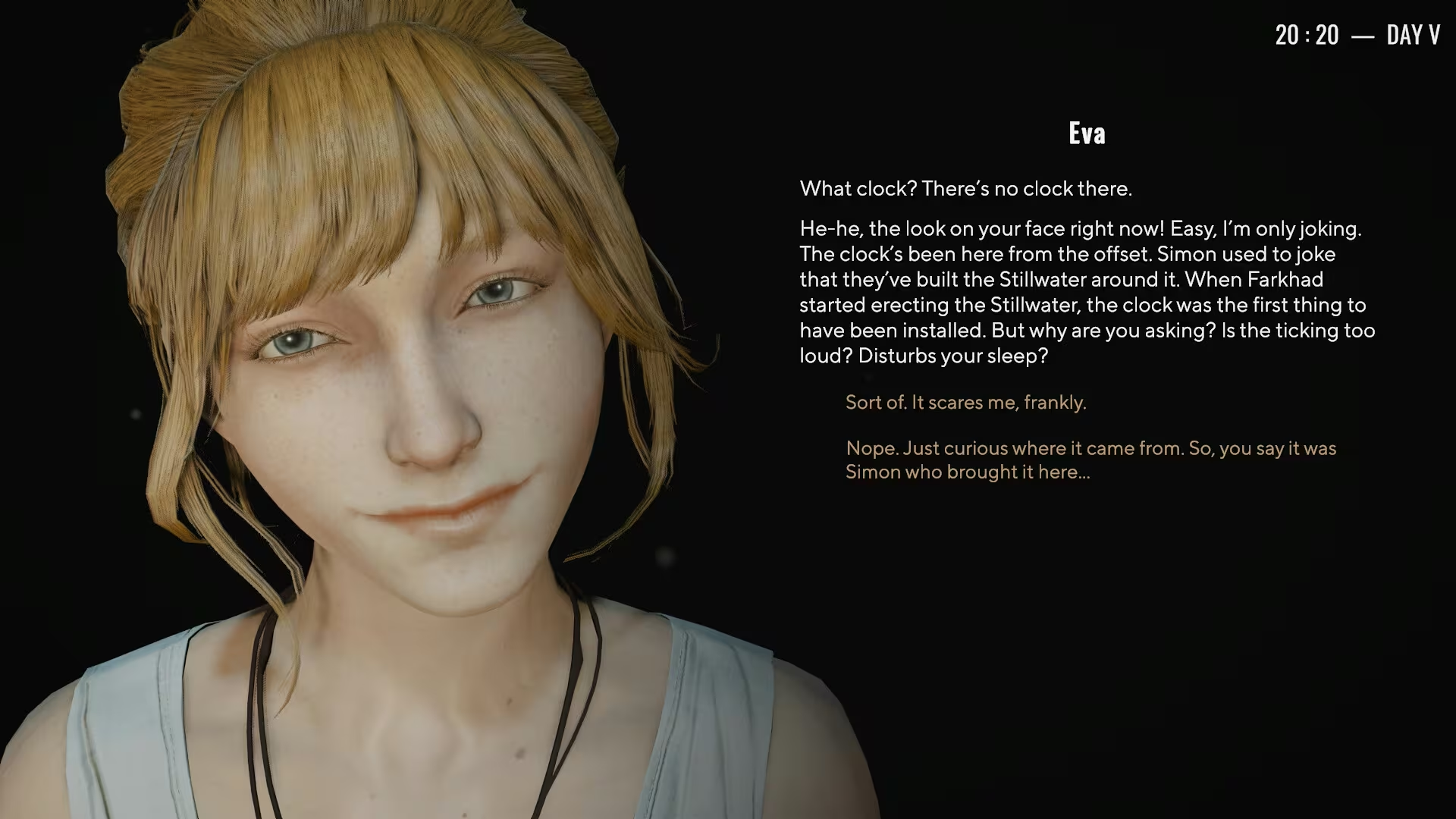
- Deep narrative and character writing
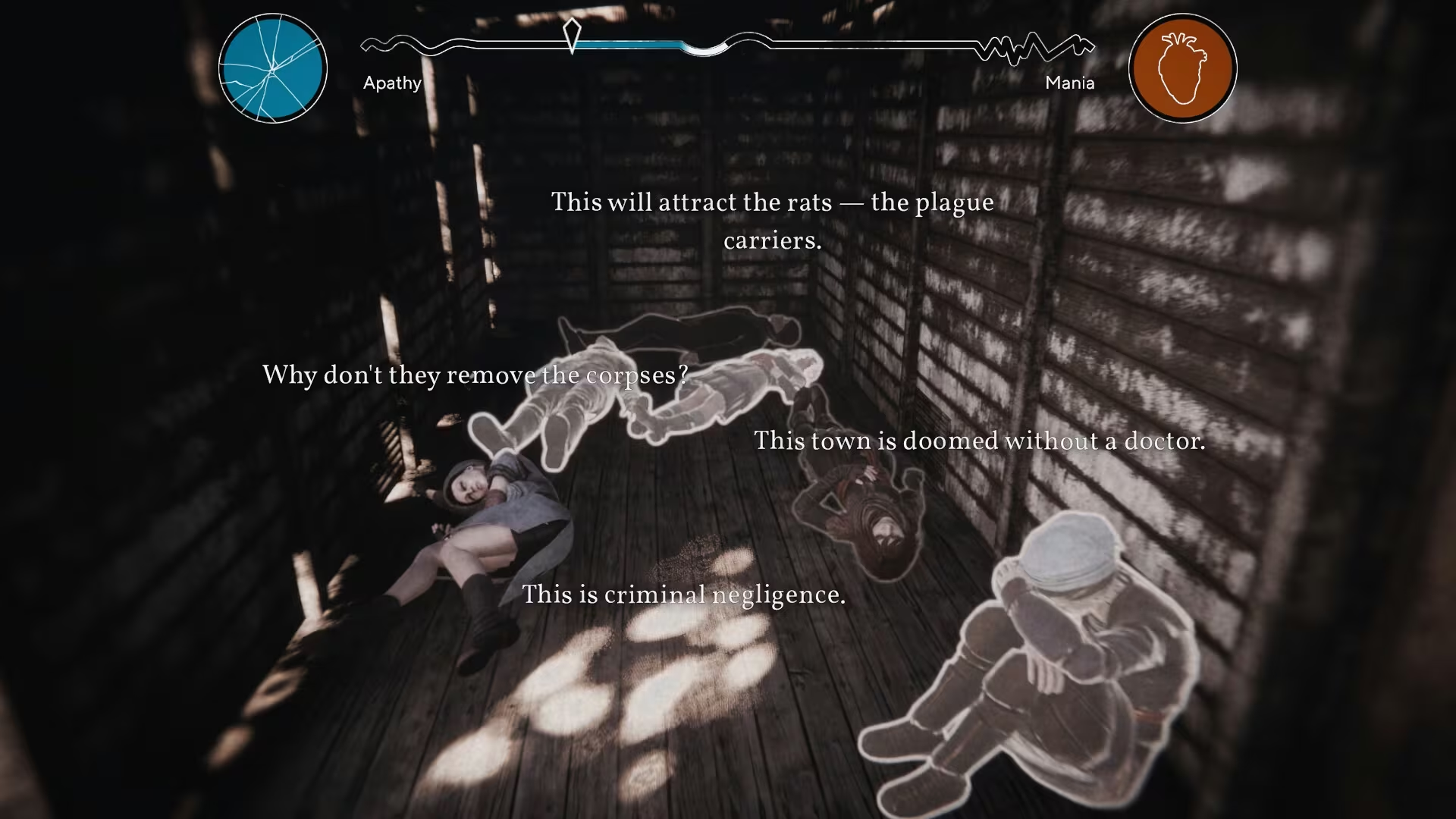
- Unique mental health management system
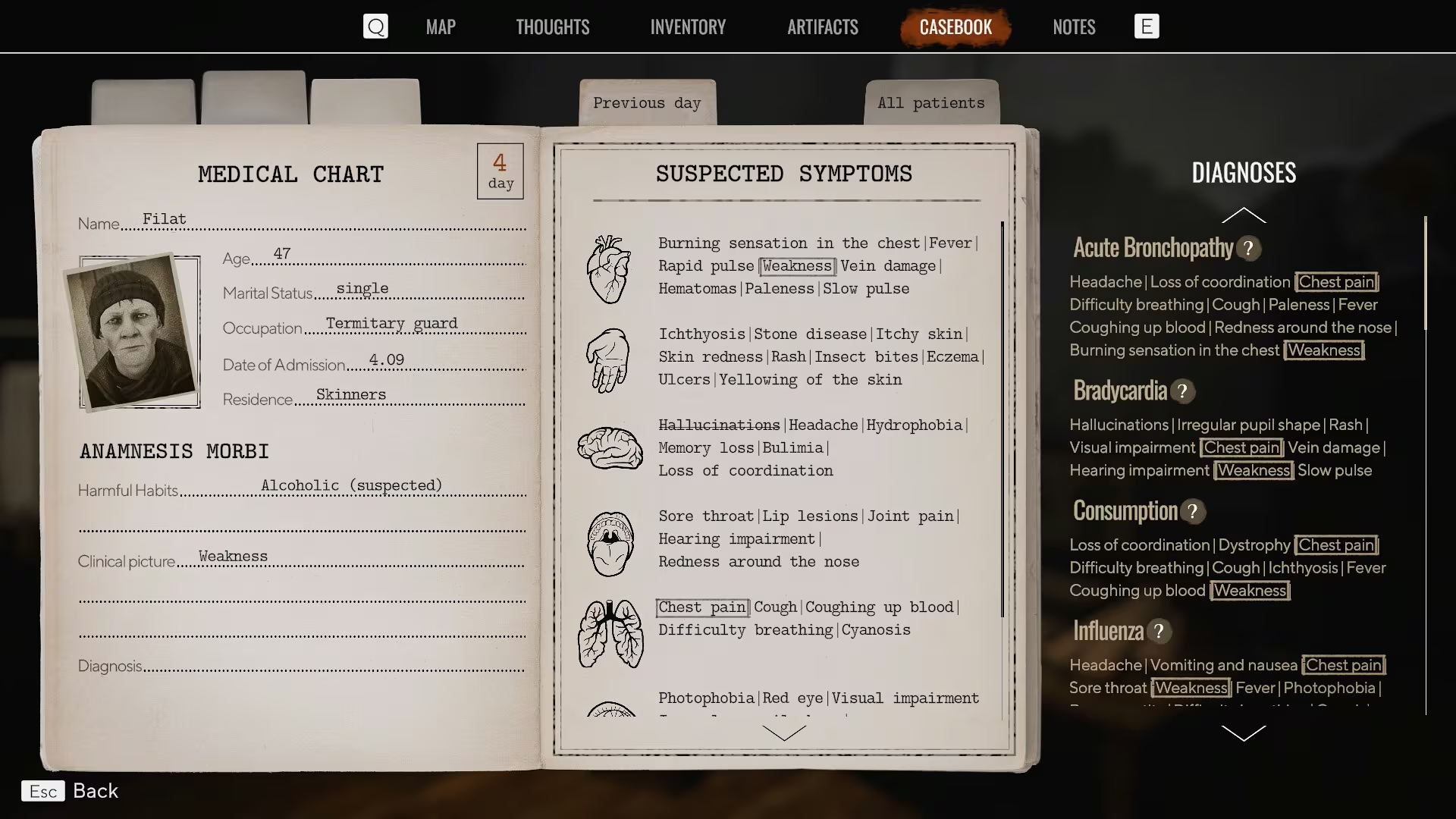
- Engaging detective and diagnosis gameplay
- Active developer support with frequent patches
Cons
- Technical bugs and softlocks at launch
- Some mechanics feel poorly balanced
- Fragmented map and intrusive fast travel
- Lack of voice acting and heavy reading
- Less challenging than previous entries for some players
Analysis
Less representative of its motivational profile, with noticeable differences. Motivations that often define this kind of title include Relaxation, Survival, Violence, Fellowship. Here, the score leans higher than usual among comparable games on Leadership. It leans lower than usual among comparable games on Violence, Expression.
How to use the graph
Similar games map
Each dot is a game. They are arranged from the same motivation profile as in the “Motivations” section below. Closer dots usually mean more similar reasons to play (exploration, competition, relaxation, etc.)—not that one game is “better” than another.
- Larger dot with a light outline: the game you are viewing.
- Colour: groups of games with comparable motivation patterns (statistical clusters).
- Hover a dot to see the game name; click to open its page.
- Scroll or double-click the chart to zoom out and see more games.
Why don’t the axes read like a score? This view uses t-SNE: it only keeps who is close to whom. The scales are not “good to bad” or hours played—they separate groups on the map. Read distance between dots, not the axis numbers.
Motivations
-
Autonomy4
"Players have significant control over actions and decisions, including managing infection rates, issuing decrees, and time travel to alter past and future events."
-
Competence3
"Game requires skillful management of multiple complex systems like mania/apathy, resource management, and diagnosis, though some mechanics are less punishing than previous entries."
-
Competition-5
"No evidence of competitive or ranked modes; focus is on personal progression and narrative experience."
-
Continuation4
"Players report long play sessions, deep engagement with story and mechanics, and habitual play to explore multiple endings."
-
Cooperation-5
"Single-player experience focused on individual investigation and decision-making without multiplayer or teamwork."
-
Creativity3
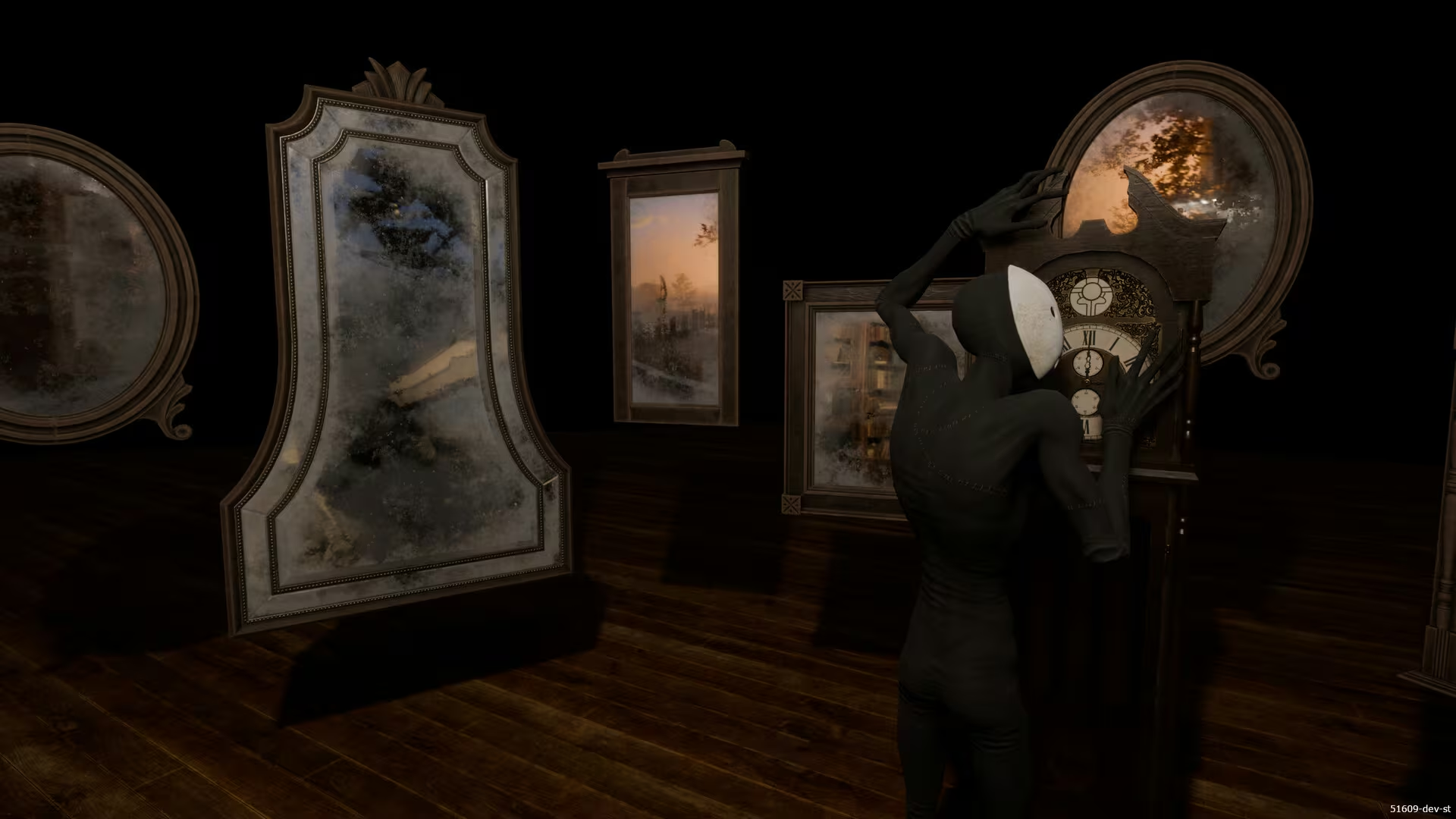
"Players experiment with time travel mechanics and multiple quest outcomes, though within a structured narrative framework."
-
Domination-5
"No indication of exerting control over other players; interactions are narrative and personal."
-
Escapism4
"Players use the game as an immersive, cerebral escape into a mysterious world with complex storytelling and atmosphere."
-
Expectation-4
"Players engage voluntarily out of interest and curiosity; no pressure or obligation noted."
-
Experimenting4
"Game encourages trying new approaches via time travel, multiple quest paths, and managing novel mechanics."
-
Exploration2
"Exploration is present but limited by fragmented map design; discovery occurs more through narrative and time manipulation."
-
Expression-3
"Limited character customization; focus is on narrative and role rather than avatar personalization."
-
Fantasy4
"Strong presence of imaginative fiction, surreal events, time travel, and psychological horror elements."
-
Fellowship-4
"Primarily a solitary experience with minimal social or community interaction."
-
Growth3
"Players learn complex mechanics, improve diagnosis skills, and deepen understanding of narrative layers."
-
Health-5
"No physical activity involved; gameplay is sedentary."
-
Idle-3
"Requires focused attention due to complex mechanics and time management; not suitable for casual or background play."
-
Intimacy-3
"Interactions are mostly surface-level narrative exchanges; no evidence of forming close relationships."
-
Leadership2
"Player issues decrees affecting town and manages infection, implying some leadership role within the narrative."
-
Progression3
"Players accumulate resources like amalgam and manage mental states; multiple endings reflect progression."
-
Relaxation-3
"Game is described as stressful and challenging, with tension from managing mania/apathy and time constraints."
-
Sensation3
"Strong atmospheric audio-visual design and emotional engagement provide sensory stimulation."
-
Status-4
"Focus is on personal narrative experience rather than social recognition or popularity."
-
Story5
"Narrative immersion is central, with complex characters, multiple endings, and layered storytelling."
-
Strategy4
"Requires planning, problem solving, and managing multiple interrelated systems including time travel and infection control."
-
Thrill3
"Suspense and tension arise from managing limited resources, mental health, and time travel consequences."
-
Value4
"Players perceive strong value in narrative depth, unique mechanics, and replayability despite some bugs."
-
Violence-3
"Combat is minimal and discouraged; focus is on diagnosis and management rather than destruction."
-
Survival2
"Survival elements replaced by mental health and infection management; still involves avoiding failure and resource scarcity."
Last update: 29/04/2026