Pathologic 3: Quarantine similar games & best alternatives
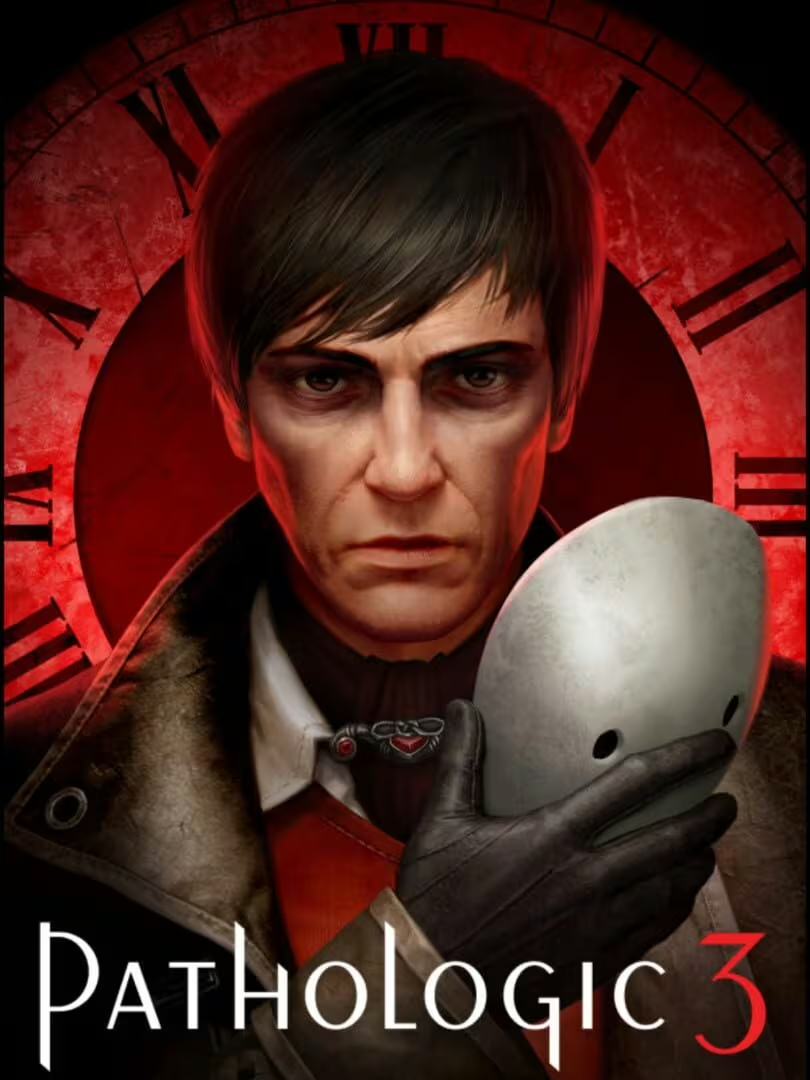
Pathologic 3: Quarantine
2025
Related articles
Quick resume
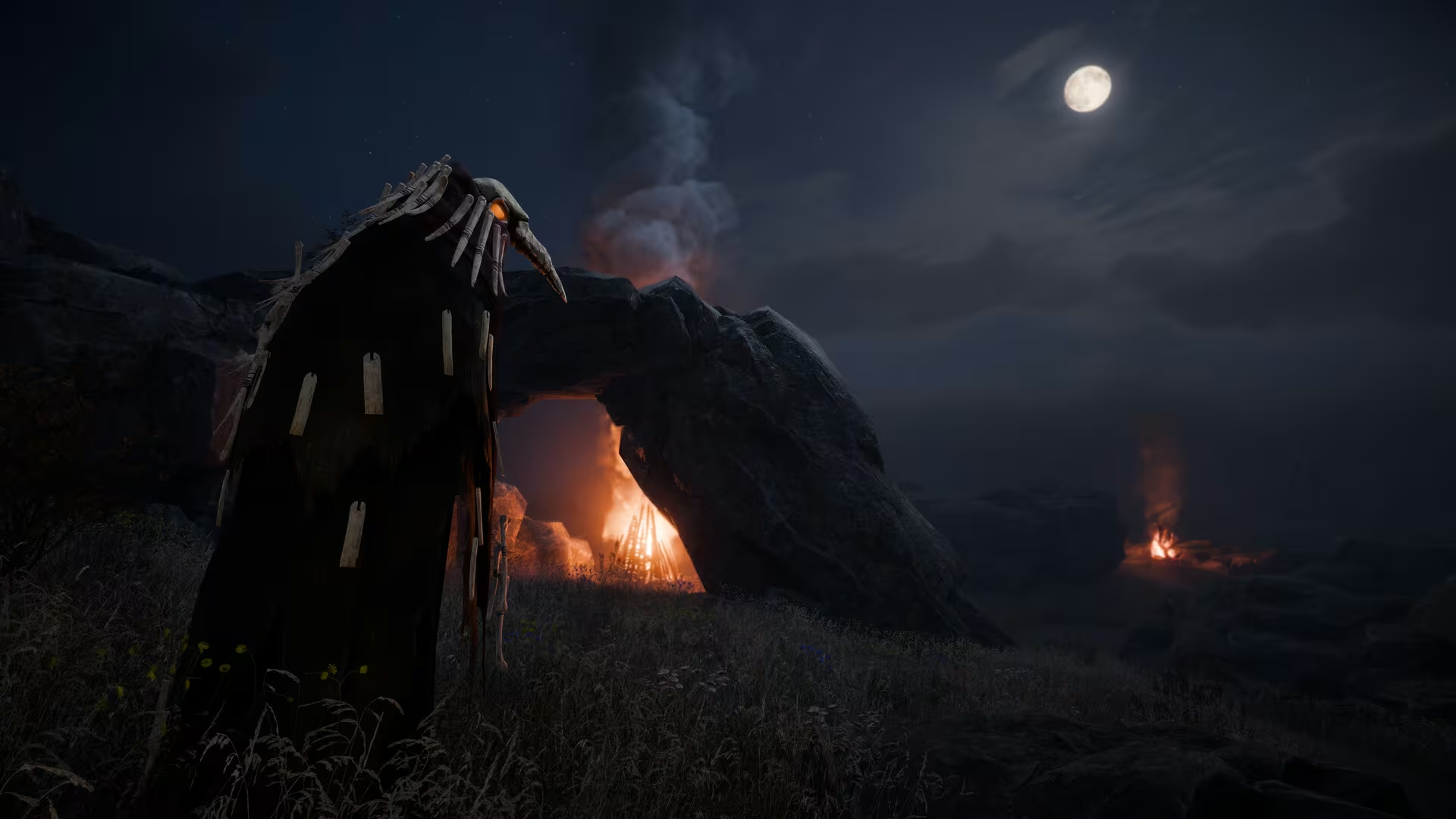
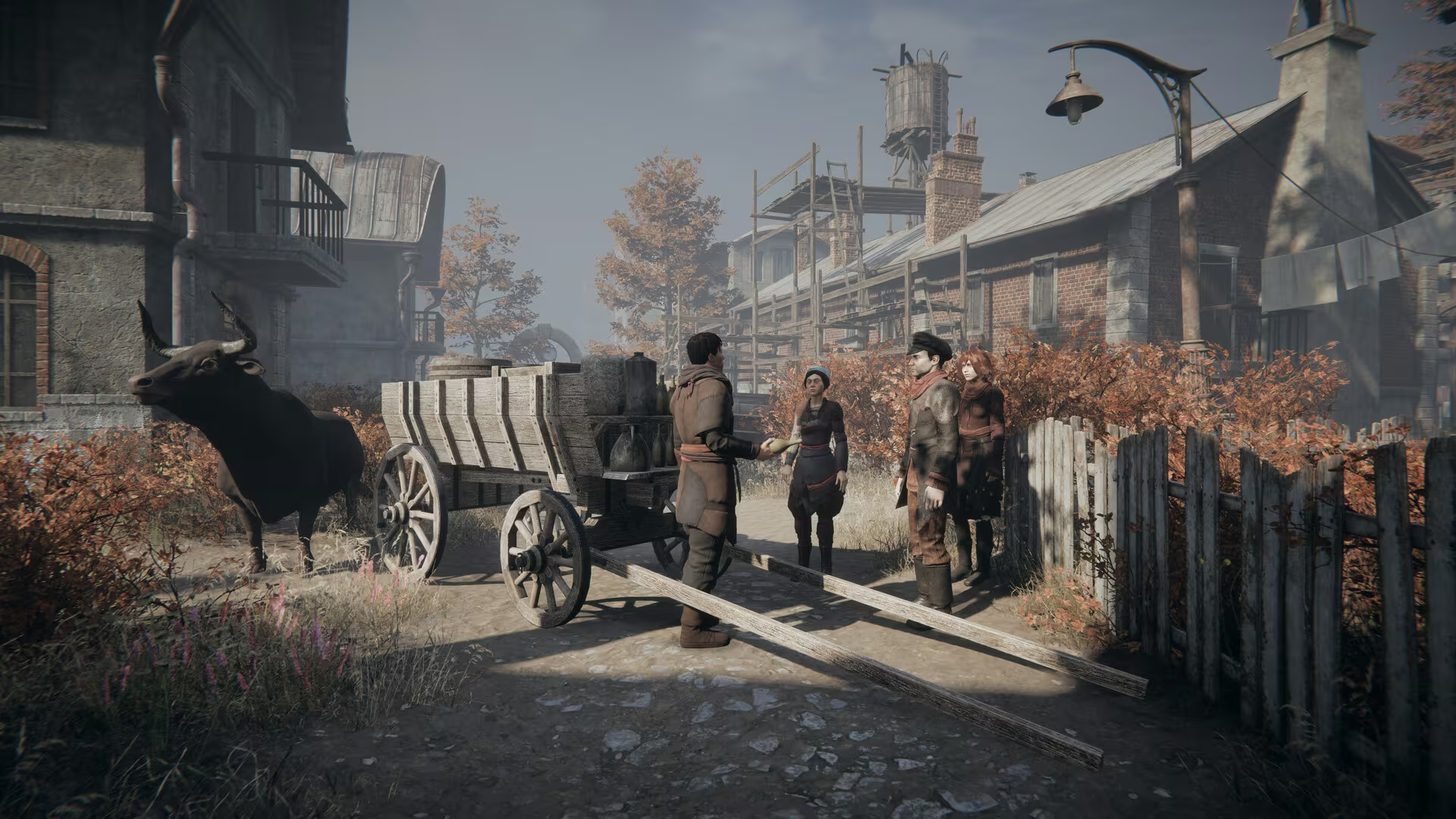
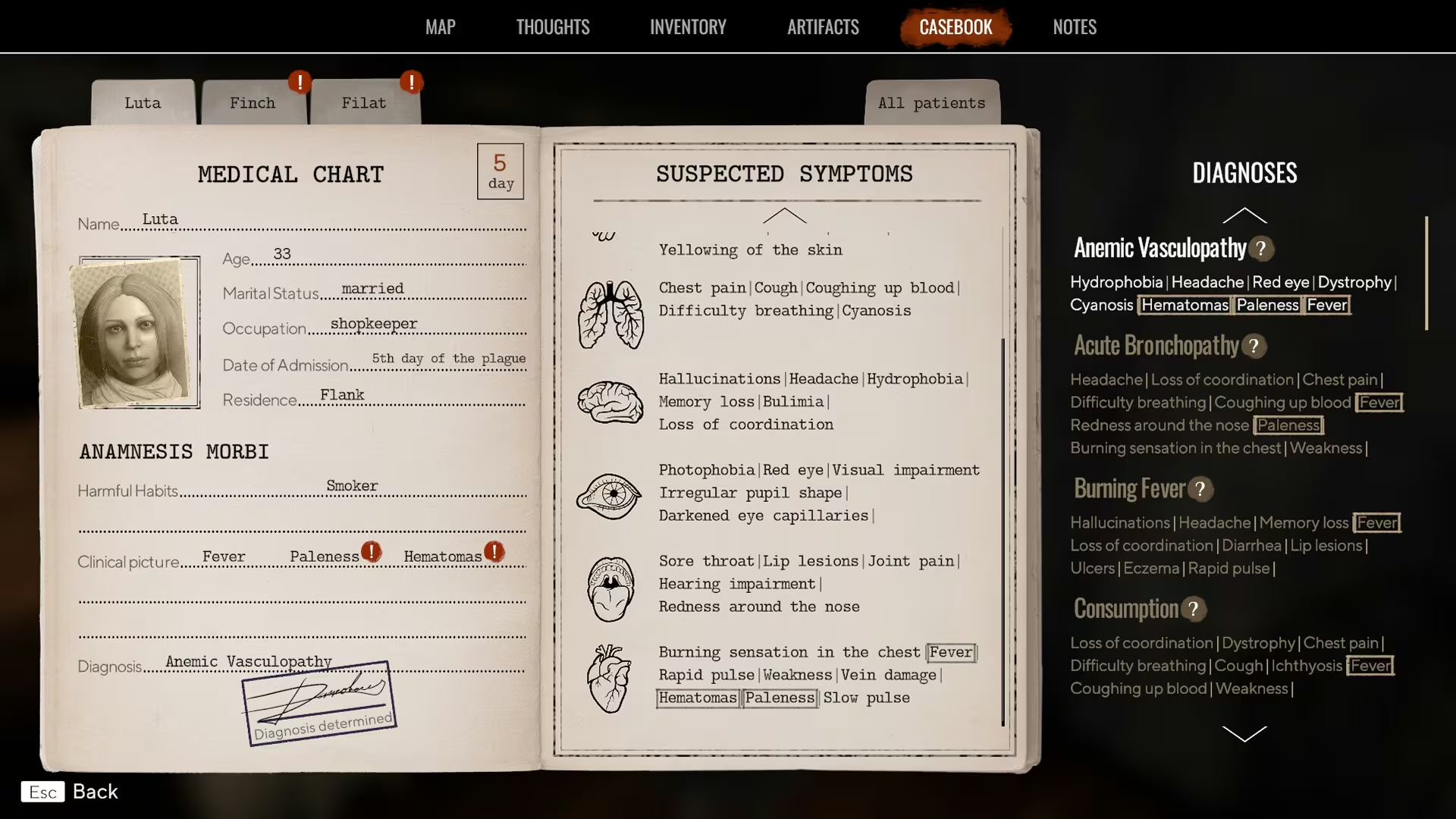
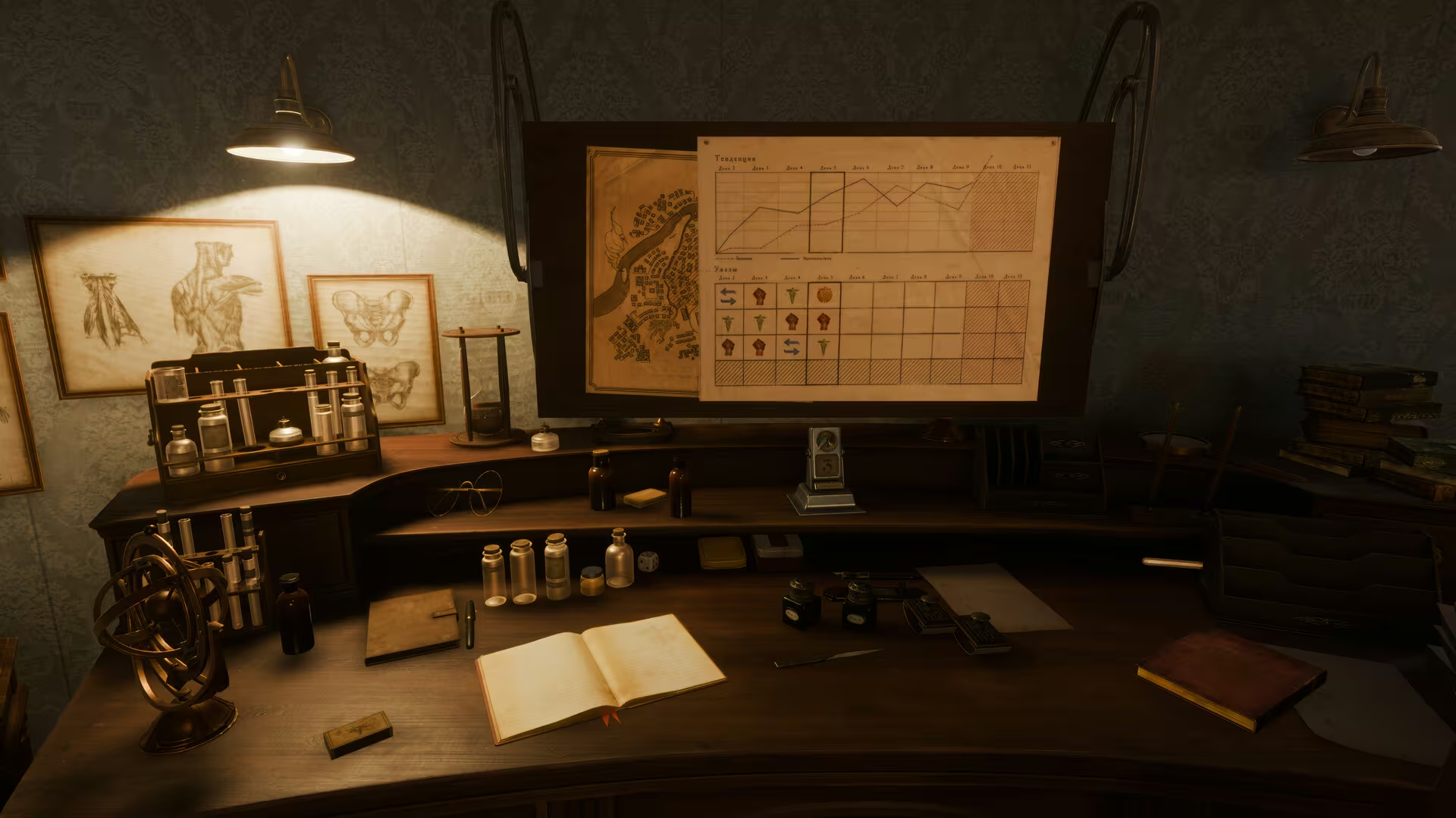
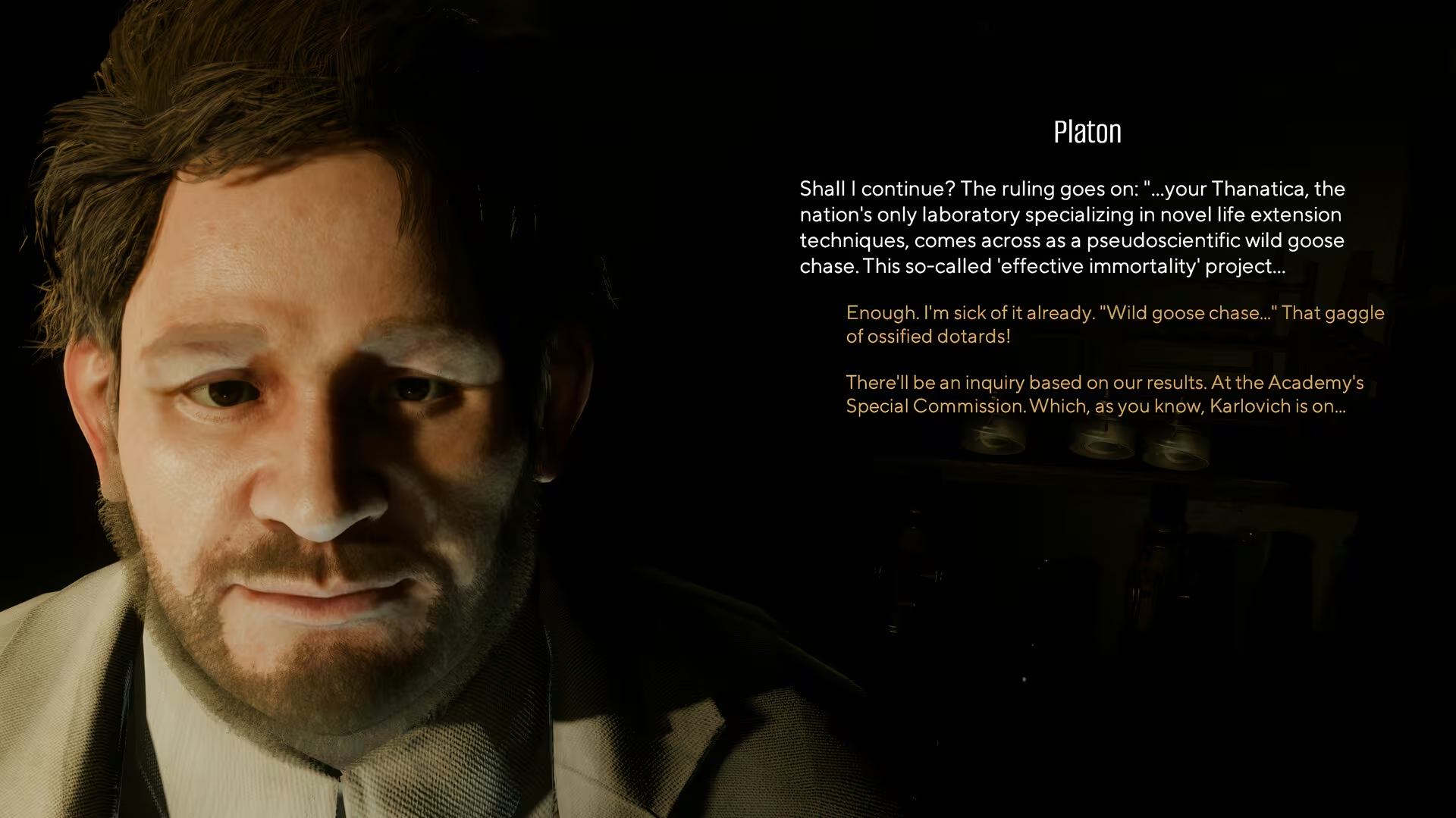
In this free prologue to a narrative-driven adventure, watch a mysterious plague break out in a small town. Learn what drove a celebrated academic to leave his acclaimed lab. Examine patients, uncover strange secrets, and make first steps towards immortality.
Global score
88/100
Genres
Adventure, Indie, Role-playing (RPG), Simulator, Free To Play
Similar games
Pros
- Innovative diagnosis and mental health mechanics
- Deep narrative immersion and complex characters
- Unique time travel and strategic decision systems
- Atmospheric audio-visual design
- Engaging and challenging gameplay
Cons
- Performance and optimization issues
- Segmented travel limits exploration and immersion
- Ui and control clunkiness
- Some mechanics feel underdeveloped or confusing
- Visual inconsistencies and voice acting changes
Analysis
Less representative of its motivational profile, with noticeable differences. Motivations that often define this kind of title include Leadership, Survival, Violence, Strategy. It leans lower than usual among comparable games on Exploration, Violence, Relaxation.
How to use the graph
Similar games map
Each dot is a game. They are arranged from the same motivation profile as in the “Motivations” section below. Closer dots usually mean more similar reasons to play (exploration, competition, relaxation, etc.)—not that one game is “better” than another.
- Larger dot with a light outline: the game you are viewing.
- Colour: groups of games with comparable motivation patterns (statistical clusters).
- Hover a dot to see the game name; click to open its page.
- Scroll or double-click the chart to zoom out and see more games.
Why don’t the axes read like a score? This view uses t-SNE: it only keeps who is close to whom. The scales are not “good to bad” or hours played—they separate groups on the map. Read distance between dots, not the axis numbers.
Motivations
-
Autonomy3
"Players have some control over decisions such as diagnoses, decrees, and time travel, but world traversal is restricted by a segmented fast travel system rather than free exploration."
-
Competence4
"The game features challenging diagnosis mechanics, managing mental states, and strategic decision-making that require skill and thoughtful engagement."
-
Competition-4
"Focus is on personal story progression and internal challenges rather than competing against other players or leaderboards."
-
Continuation4
"Players report long sessions, deep engagement, and anticipation for the full release, indicating strong desire to keep playing."
-
Cooperation-4
"Gameplay centers on individual tasks such as diagnosing patients and managing resources, with minimal multiplayer or cooperative elements."
-
Creativity4
"Players engage in investigative diagnosis, managing mental states, and issuing decrees, reflecting creative problem-solving within the game systems."
-
Domination-3
"Interactions emphasize complex narrative and personal influence rather than exerting power or superiority over others."
-
Escapism4
"The surreal, psychological horror setting and immersive narrative provide strong escape from real life."
-
Expectation-3
"Players express intrinsic interest and personal desire to explore the unique story and mechanics without external pressure."
-
Experimenting3
"Players try new mechanics like time travel, diagnosis, and mental state balancing, exploring novel gameplay systems."
-
Exploration-3
"The segmented travel system limits free exploration; players move between fixed districts rather than open-world roaming."
-
Expression-2
"Limited evidence of character or environment customization; focus is on narrative and gameplay systems rather than self-expression."
-
Fantasy4
"Strong elements of surrealism, psychological horror, and supernatural themes create an imaginative fictional experience."
-
Fellowship-4
"Gameplay and narrative focus on individual experience with minimal social or community interaction."
-
Growth3
"Players develop skills in diagnosis, resource management, and strategic decision-making, reflecting learning and personal development."
-
Health-4
"Gameplay involves sedentary play with some depiction of drug use and mental health struggles rather than physical activity."
-
Idle-3
"Requires focused attention on complex mechanics and narrative; not designed for casual or background play."
-
Intimacy-3
"Interactions are mostly surface-level or narrative-driven without forming close emotional relationships."
-
Leadership3
"Players issue decrees and manage town resources, reflecting leadership and decision-making roles."
-
Progression3
"Players accumulate knowledge, diagnoses, and resources, progressing through story and gameplay systems."
-
Relaxation-3
"The game induces sustained tension and stress through challenging mechanics and oppressive atmosphere."
-
Sensation3
"Strong atmospheric audio-visual design and emotional intensity provide sensory stimulation and engagement."
-
Status-4
"Focus is on personal narrative and internal challenges rather than social recognition or popularity."
-
Story5
"Narrative immersion is central, with complex characters, non-linear storytelling, and deep lore."
-
Strategy4
"Players engage in mental challenge through diagnosis, resource management, and balancing mental states."
-
Thrill3
"Gameplay includes suspense, risk of sudden death, and tension from managing mental health and hostile environments."
-
Value3
"Players perceive good return on time invested through engaging mechanics and narrative depth."
-
Violence-2
"While combat exists, emphasis is on diagnosis and management rather than destruction or combat enjoyment."
-
Survival4
"Players must manage mental health and resources to avoid failure and death, reflecting survival challenges."
Last update: 29/04/2026