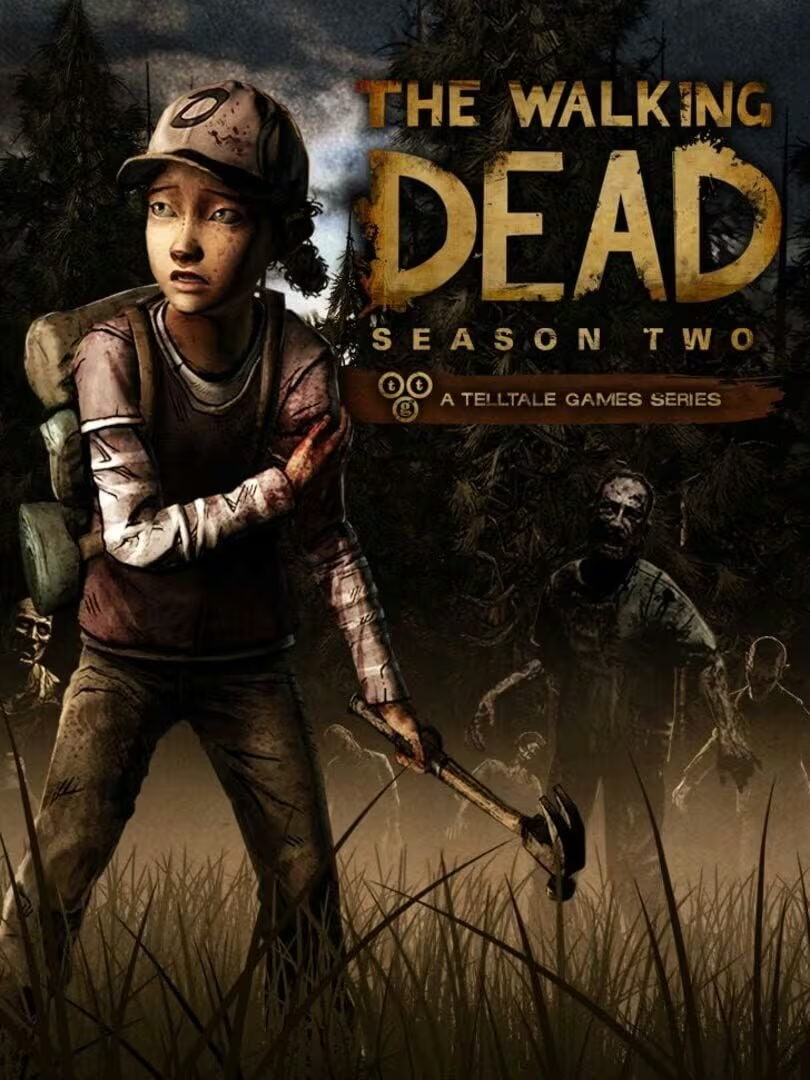
The Walking Dead: The Telltale Definitive Series Thumbnail

The Walking Dead: The Telltale Definitive Series similar games & best alternatives

The Walking Dead: The Telltale Definitive Series

PC (Microsoft Windows), Xbox One, PlayStation 4 • 2020

Related articles

Quick resume

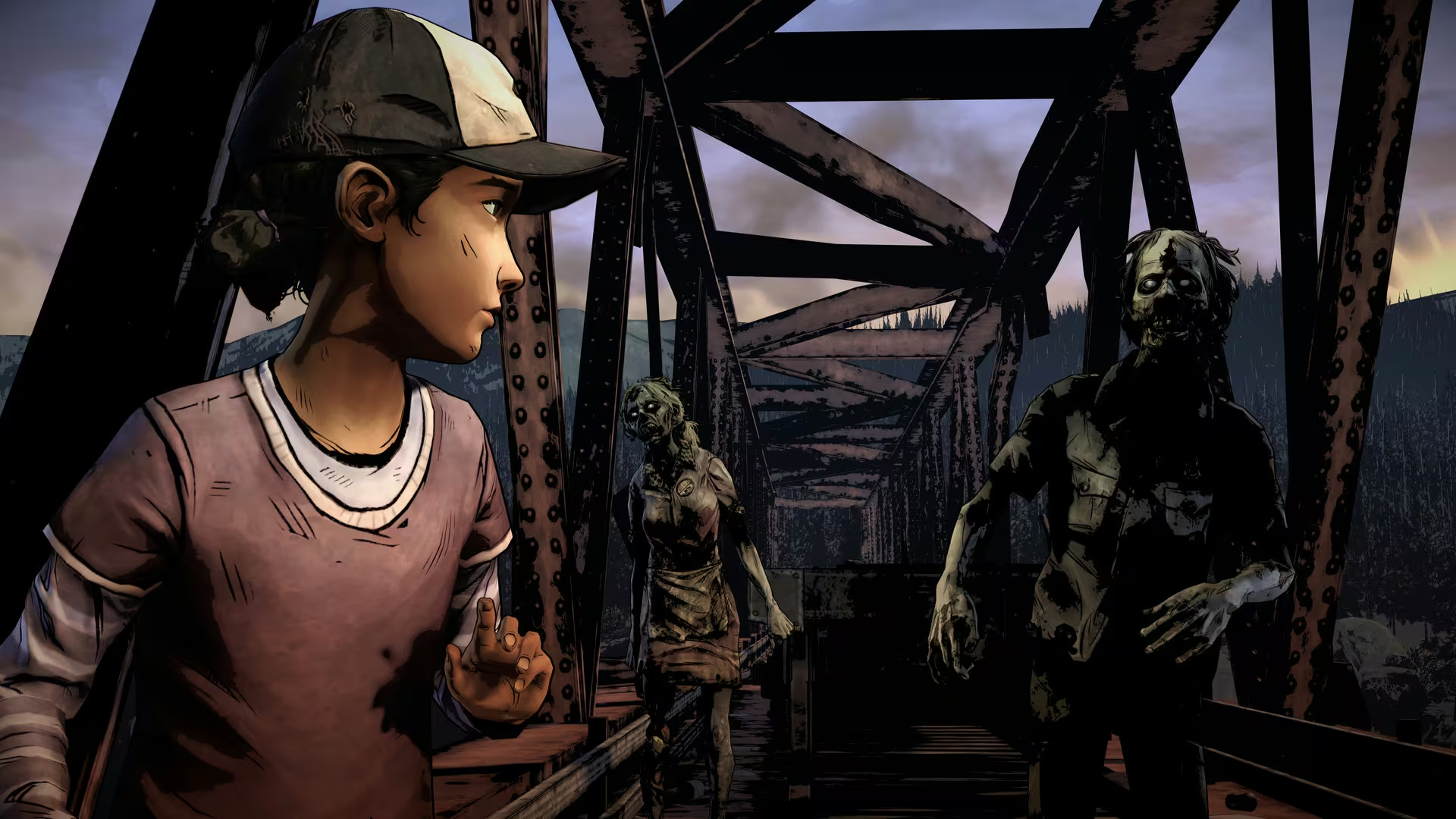
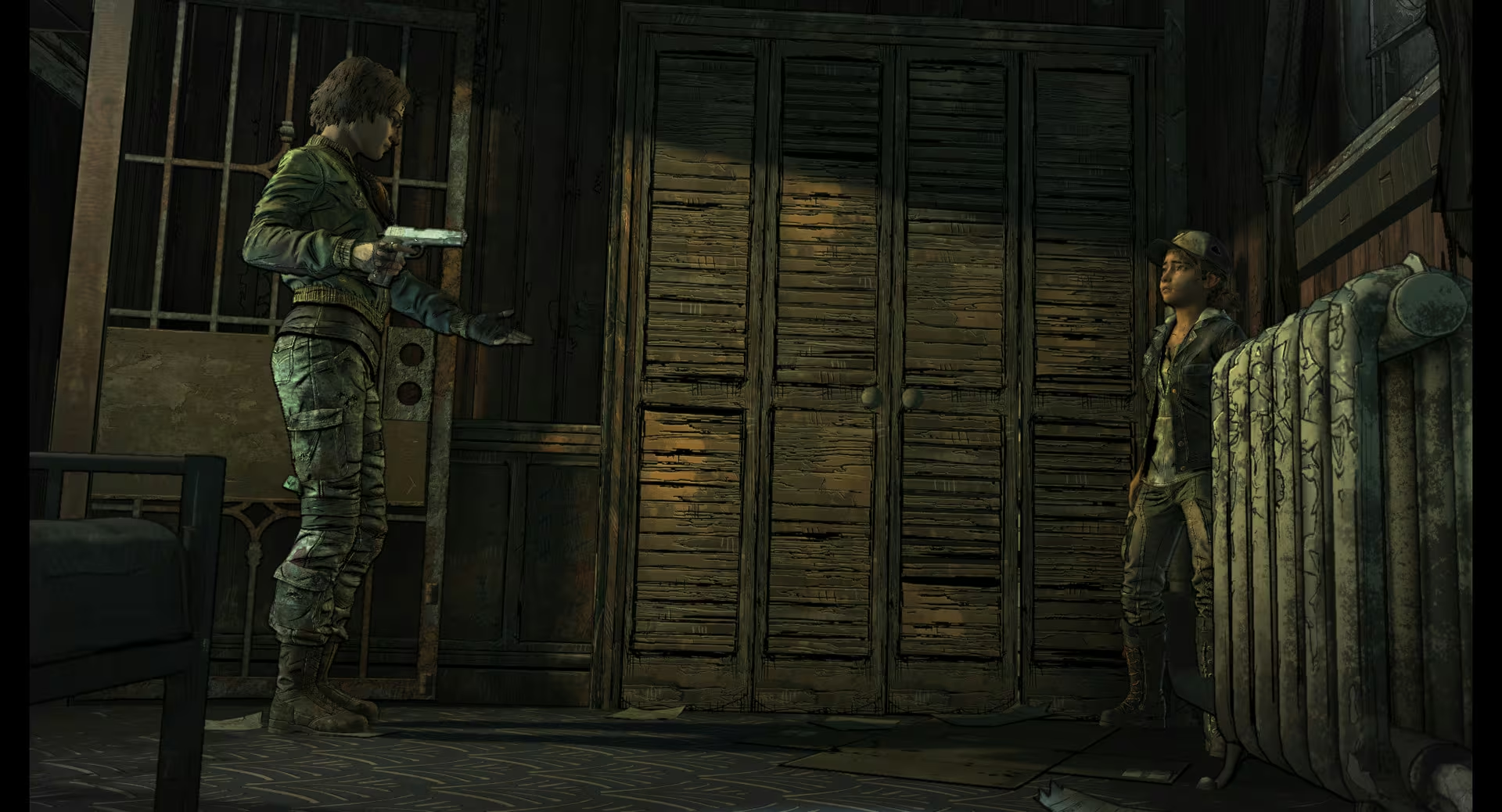
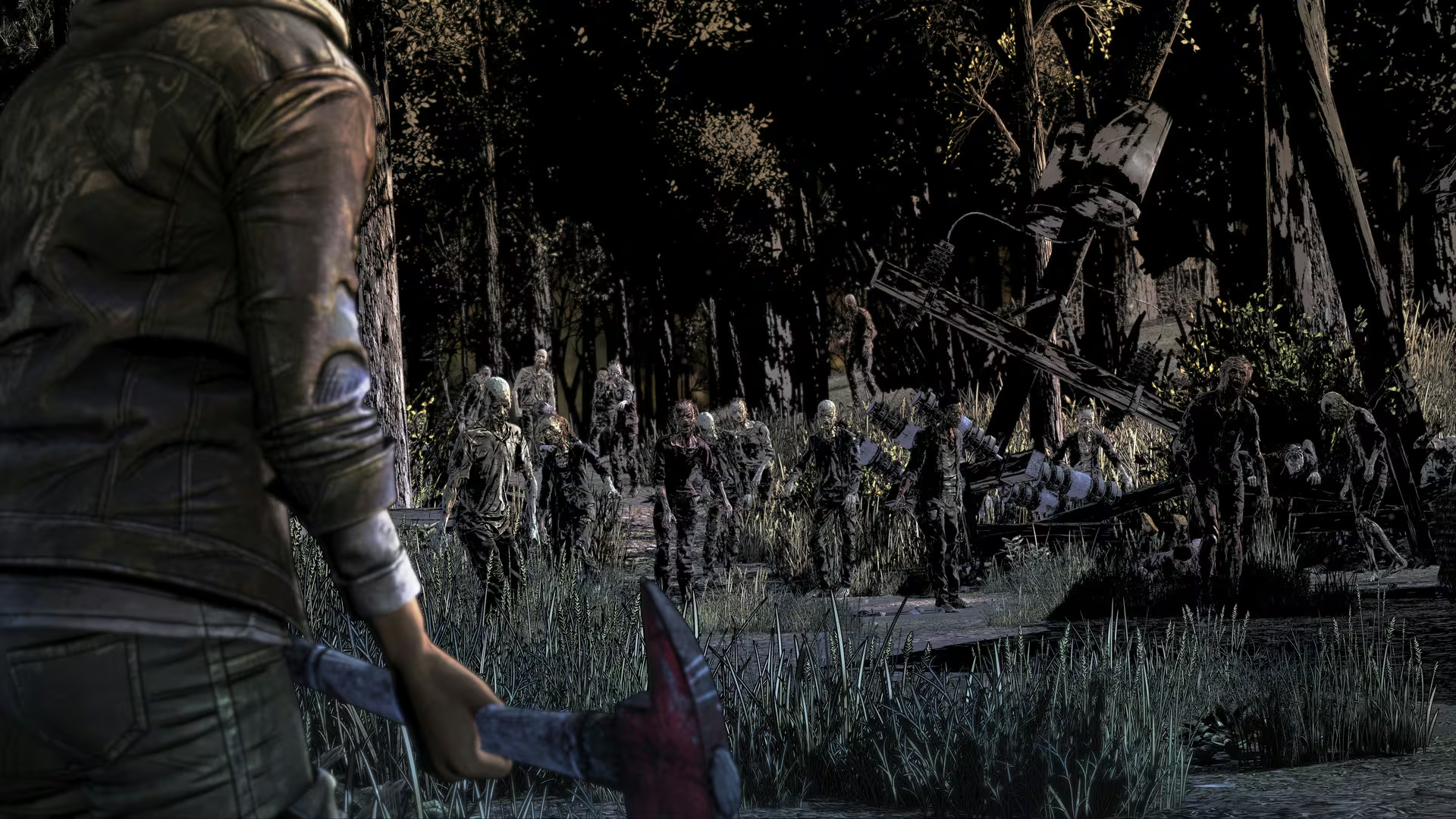
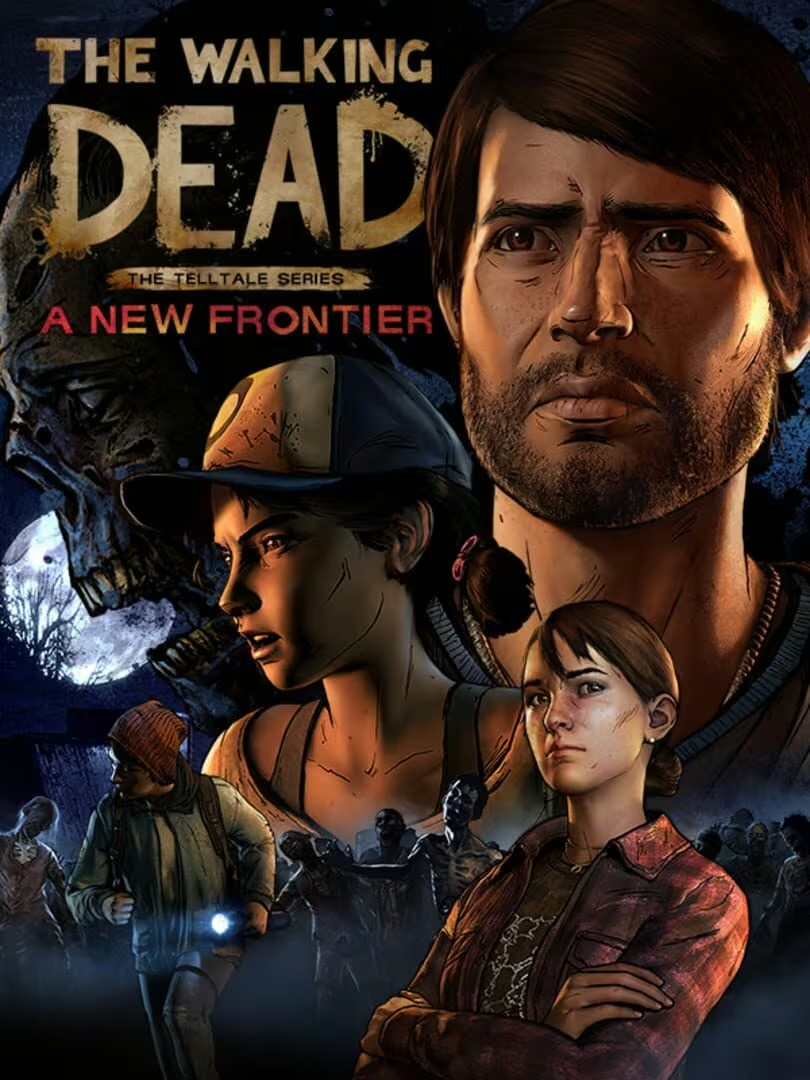
The Walking Dead: The Telltale Definitive Series contains all 4 Seasons, 400 Days, and The Walking Dead: Michonne, which includes over 50 hours of gameplay across 23 unique episodes.

Global score

97/100

Genres

Adventure, Point-and-click

Similar games

    Pros

    • Emotional and immersive storytelling
    • Deep character development
    • Meaningful player choices
    • Complete series in one package
    • Enhanced graphics and extras

    Cons

    • Some choices have limited long-term impact
    • Season 3 considered weakest by many
    • Gameplay mechanics are simple and repetitive
    • Technical glitches reported
    • Linear narrative limits exploration

    Analysis

    Less representative of its motivational profile, with noticeable differences. Motivations that often define this kind of title include Leadership, Survival, Violence, Strategy. Here, the score leans higher than usual among comparable games on Intimacy, Story. It leans lower than usual among comparable games on Competition.

    How to use the graph
    Similar games map

    Each dot is a game. They are arranged from the same motivation profile as in the “Motivations” section below. Closer dots usually mean more similar reasons to play (exploration, competition, relaxation, etc.)—not that one game is “better” than another.

    • Larger dot with a light outline: the game you are viewing.
    • Colour: groups of games with comparable motivation patterns (statistical clusters).
    • Hover a dot to see the game name; click to open its page.
    • Scroll or double-click the chart to zoom out and see more games.

    Why don’t the axes read like a score? This view uses t-SNE: it only keeps who is close to whom. The scales are not “good to bad” or hours played—they separate groups on the map. Read distance between dots, not the axis numbers.

    Motivations

    • Autonomy
      3

      "Players make meaningful choices affecting dialogue and character relationships, though major plot outcomes are often fixed."

    • Competence
      2

      "Gameplay involves quick time events and decision making, requiring some skill but largely narrative-driven with limited mechanical challenge."

    • Competition
      -5

      "Focus is on personal story experience without competitive elements or comparison to others."

    • Continuation
      4

      "Players report long play sessions, emotional attachment, and repeated replays of the series."

    • Cooperation
      -3

      "Primarily single-player narrative experience with limited multiplayer or cooperative gameplay."

    • Creativity
      1

      "Players influence story through choices but do not create or modify game content."

    • Domination
      -5

      "No evidence of exerting control or superiority over others; focus is on personal narrative."

    • Escapism
      5

      "Strong emotional immersion and escape into a fictional post-apocalyptic world."

    • Expectation
      -4

      "Players engage voluntarily out of intrinsic interest and emotional investment."

    • Experimenting
      3

      "Players try different dialogue choices and story paths to explore alternate outcomes."

    • Exploration
      1

      "Some exploration of environments and story branches, but largely linear narrative progression."

    • Expression
      1

      "Limited character customization; expression mainly through choice of dialogue and decisions."

    • Fantasy
      4

      "Set in a fictional zombie apocalypse world with strong narrative fiction elements."

    • Fellowship
      -3

      "Experience is largely solitary with emotional connection to characters rather than social community."

    • Growth
      4

      "Players develop understanding of story, characters, and moral dilemmas; emotional and cognitive growth."

    • Health
      -5

      "Sedentary gameplay with no physical activity involved."

    • Idle
      -3

      "Requires focused attention on story and choices, not suitable for background play."

    • Intimacy
      4

      "Strong emotional bonds formed with characters and narrative relationships."

    • Leadership
      3

      "Players lead characters through decisions impacting group survival and dynamics."

    • Progression
      3

      "Narrative progression through episodes and seasons with character development and story advancement."

    • Relaxation
      3

      "Emotional engagement balanced with narrative pacing; some tension but also catharsis."

    • Sensation
      2

      "Visual style and soundtrack provide emotional and sensory stimulation, but not intense sensory thrills."

    • Status
      -4

      "Focus is on personal story experience rather than social recognition or status."

    • Story
      5

      "Highly praised for deep narrative immersion, character development, and emotional storytelling."

    • Strategy
      2

      "Requires some planning and decision-making but limited complex strategic gameplay."

    • Thrill
      3

      "Contains suspenseful and emotional moments creating tension and relief."

    • Value
      4

      "Players report high value for money due to complete series, emotional impact, and replayability."

    • Violence
      3

      "Contains combat and violent themes consistent with zombie apocalypse setting."

    • Survival
      4

      "Central theme of survival in hostile environment with resource and moral management."

    Where to buy

    Last update: 29/04/2026