Mind Scanners Thumbnail

Mind Scanners similar games & best alternatives
Mind Scanners

PC (Microsoft Windows), Mac, Xbox One, Xbox Series X|S, Nintendo Switch • 2021

Related articles

Quick resume

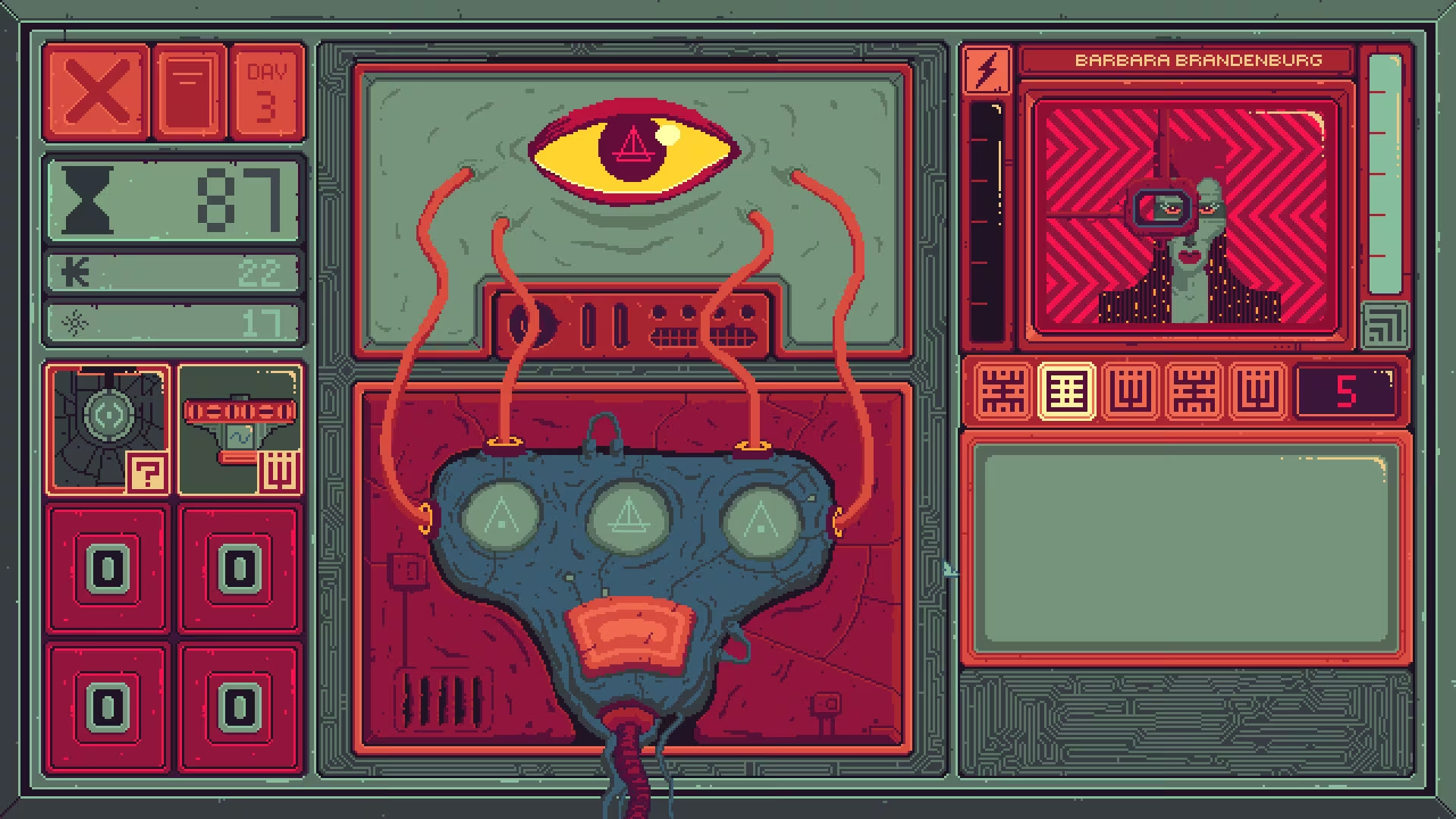
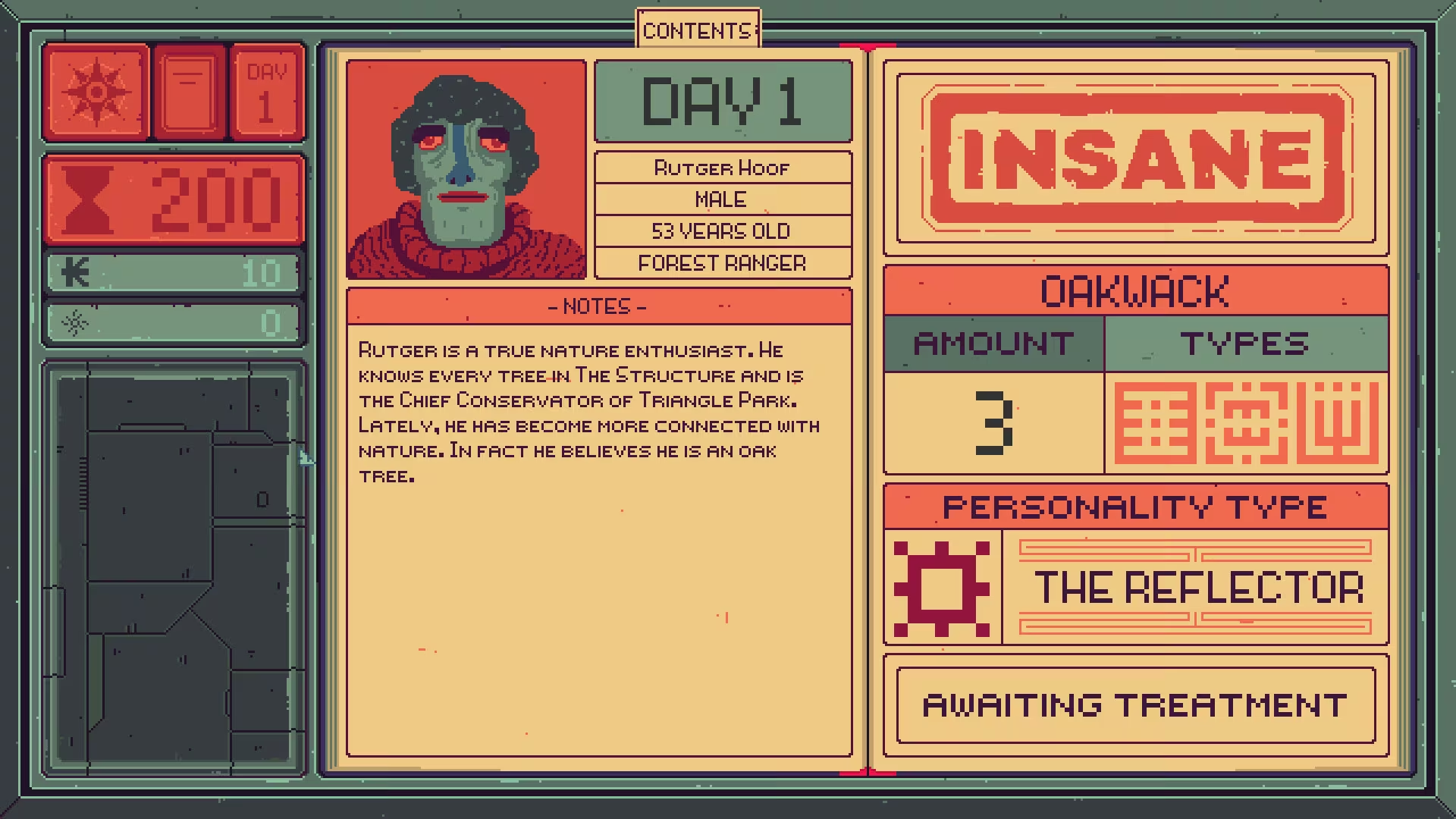
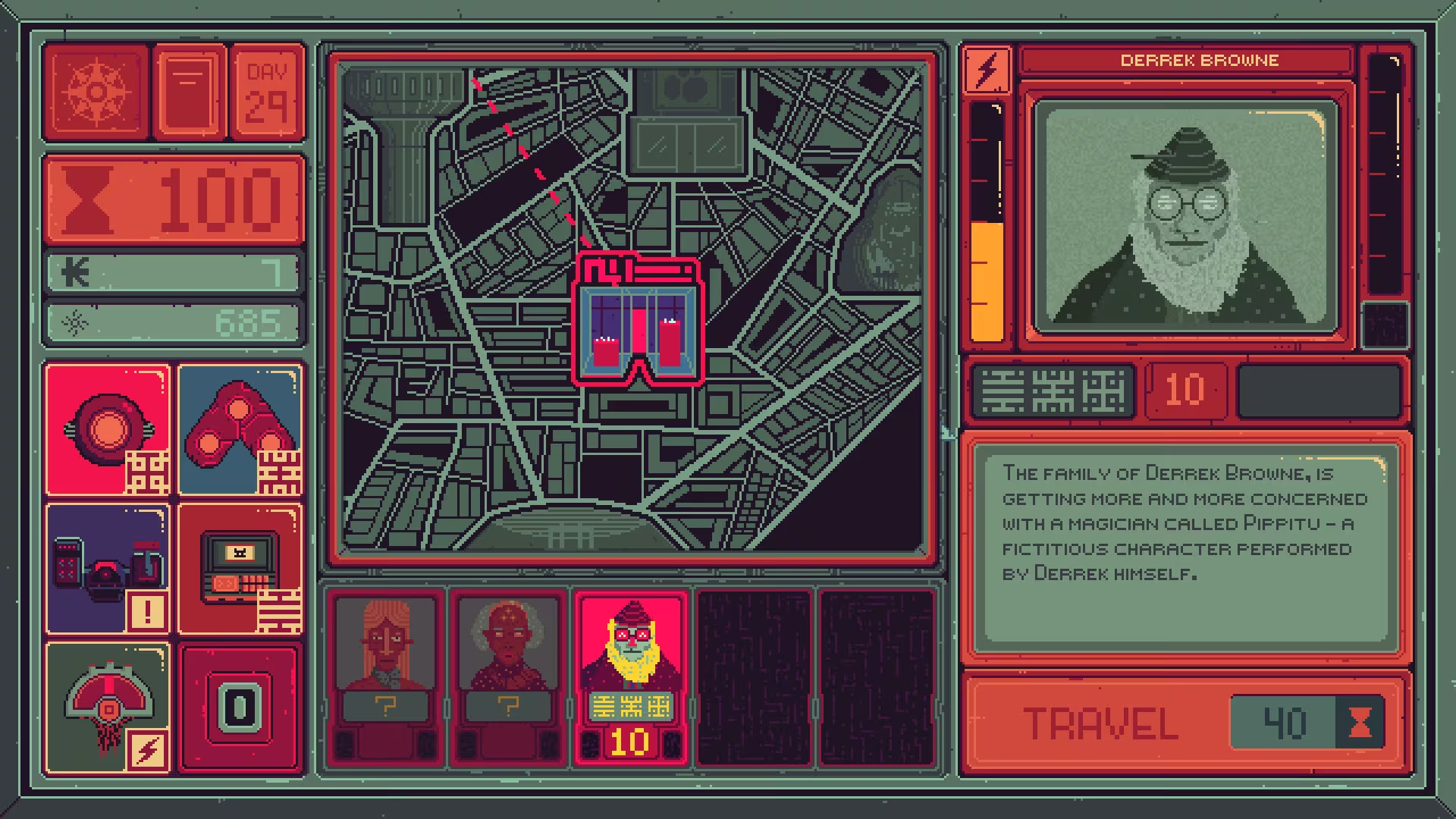
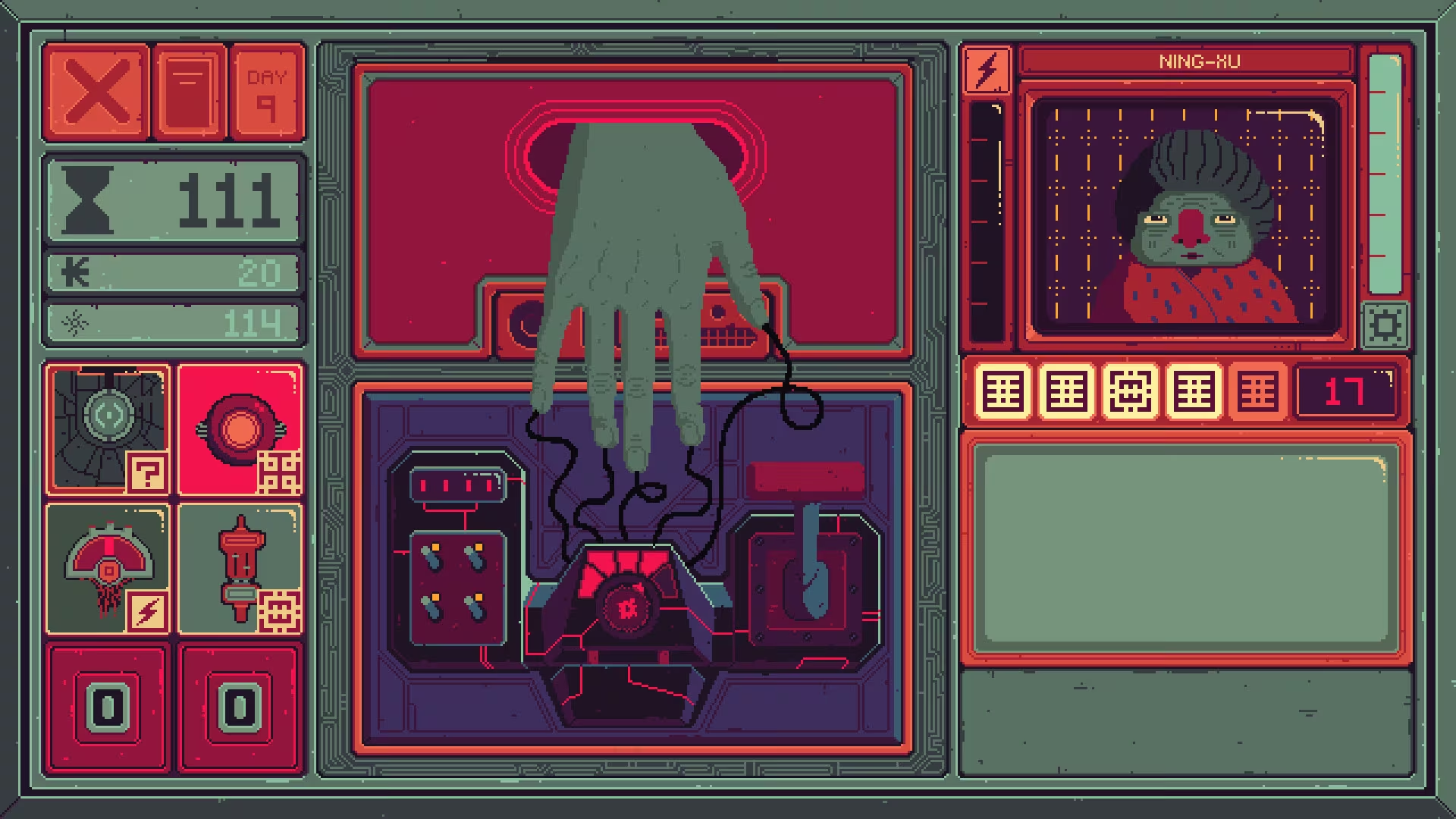
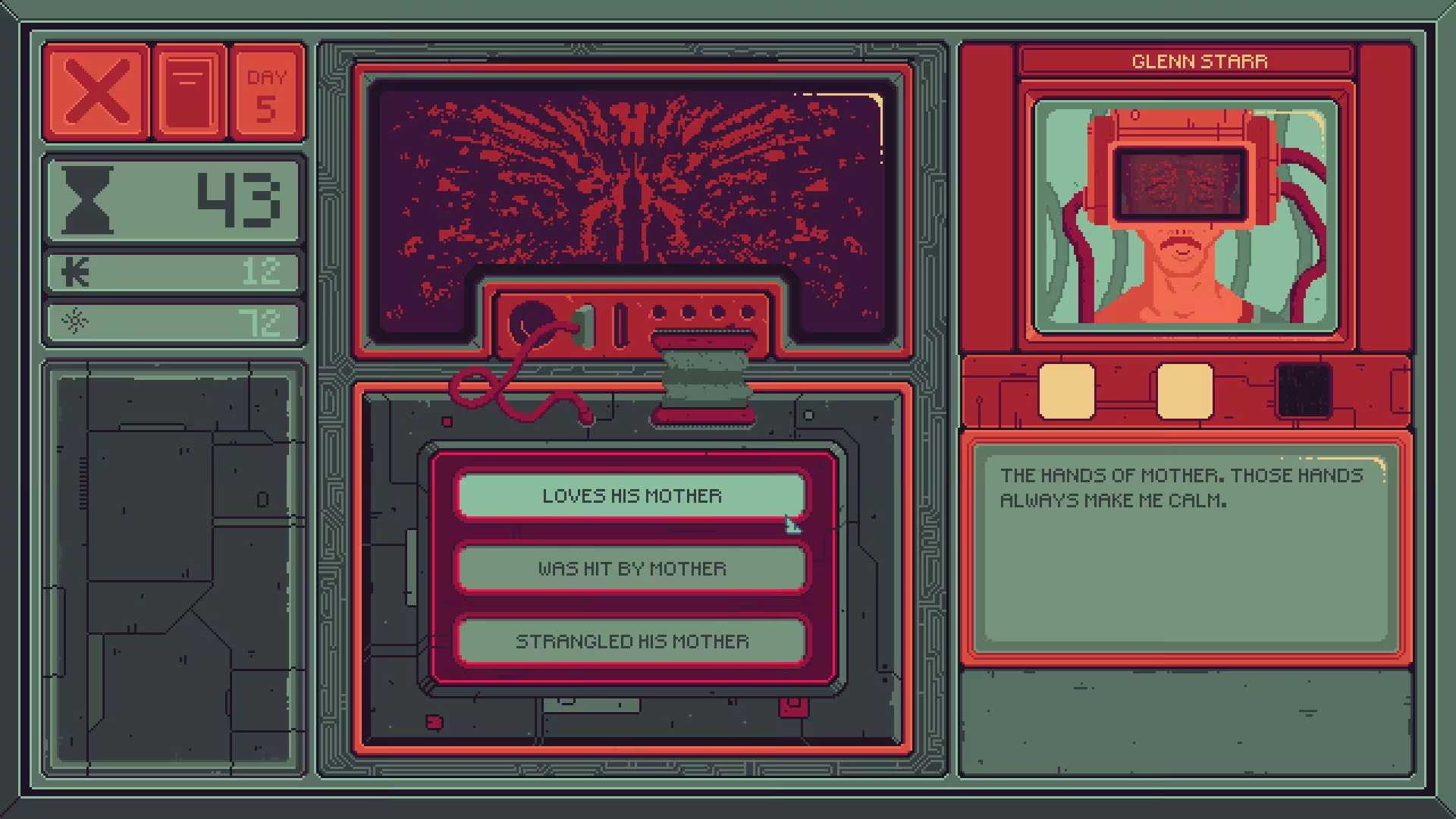
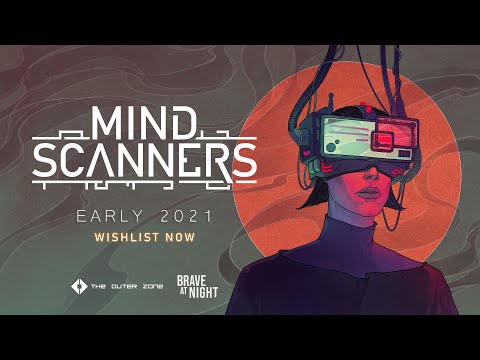
Greetings. Your Mind Scanner request has been approved. Your duty is to diagnose and treat the citizens of The Structure. The patient list is long so don't waste your time. We’ll let you see your daughter soon...

Global score

77/100

Genres

Adventure, Role-playing (RPG), Simulator, Strategy, Point-and-click

Similar games

    Pros

    • Engaging dystopian narrative
    • Unique pixel art and soundtrack
    • Challenging and varied mini-games
    • Multiple endings and replayability
    • Thought-provoking moral choices

    Cons

    • Gameplay can become repetitive
    • Limited tutorials for mini-games
    • Some story elements feel shallow
    • Lack of multiplayer or social features
    • Controls can feel clunky on some platforms

    Analysis

    Broadly representative of its motivational profile, with a few distinct shifts. Motivations that often define this kind of title include Relaxation, Survival, Violence, Fellowship. Here, the score leans higher than usual among comparable games on Intimacy. It leans lower than usual among comparable games on Violence, Thrill.

    How to use the graph
    Similar games map

    Each dot is a game. They are arranged from the same motivation profile as in the “Motivations” section below. Closer dots usually mean more similar reasons to play (exploration, competition, relaxation, etc.)—not that one game is “better” than another.

    • Larger dot with a light outline: the game you are viewing.
    • Colour: groups of games with comparable motivation patterns (statistical clusters).
    • Hover a dot to see the game name; click to open its page.
    • Scroll or double-click the chart to zoom out and see more games.

    Why don’t the axes read like a score? This view uses t-SNE: it only keeps who is close to whom. The scales are not “good to bad” or hours played—they separate groups on the map. Read distance between dots, not the axis numbers.

    Motivations

    • Autonomy
      3

      "Players make meaningful choices about patient treatment methods and moral alignment, though within a structured dystopian setting."

    • Competence
      4

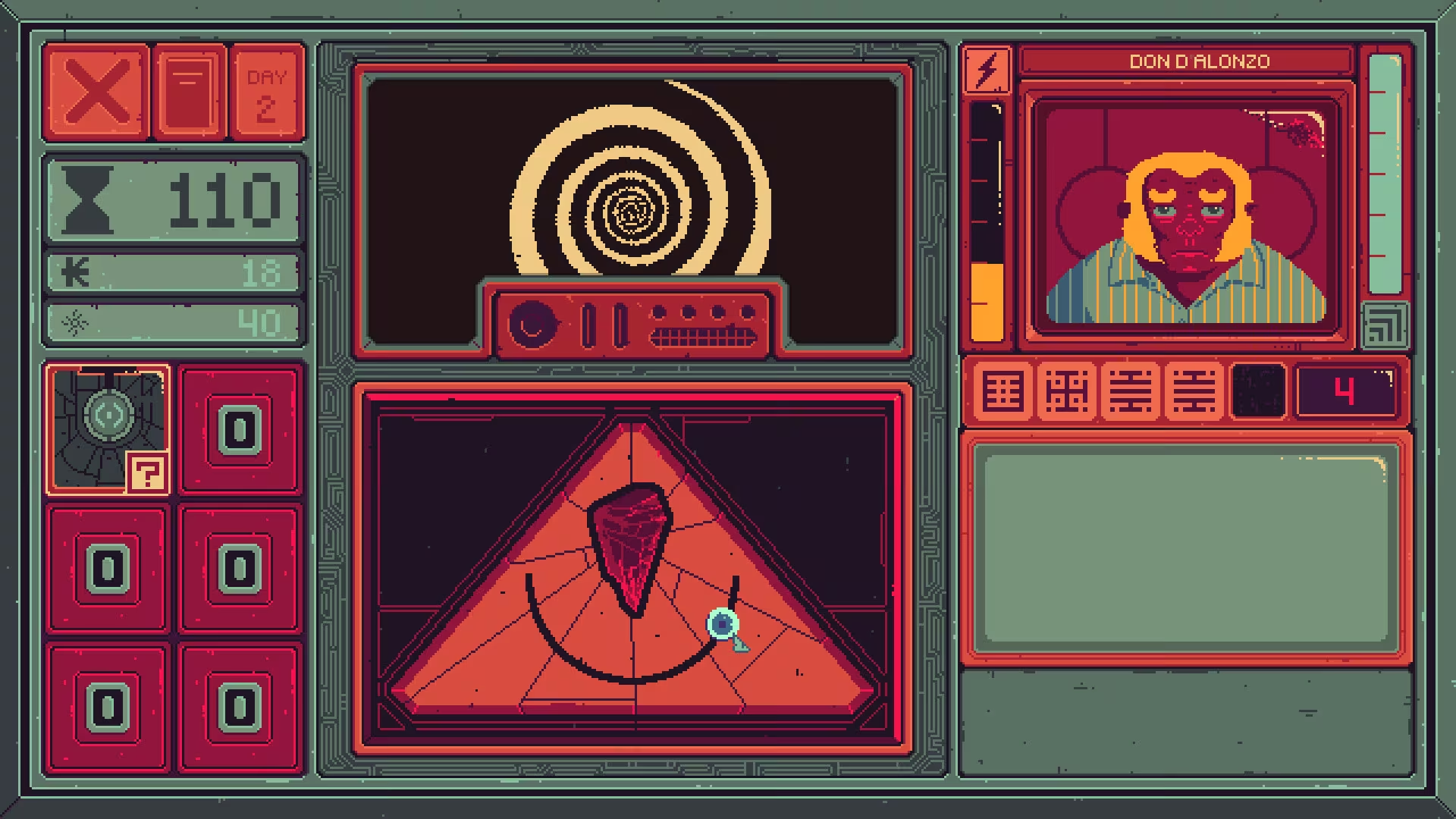
      "Mini-games require skill and improve with practice; players receive feedback and face increasing difficulty."

    • Competition
      -4

      "Focus is on individual performance and decision-making without direct player-vs-player competition."

    • Continuation
      3

      "Multiple endings and replayability encourage continued play, though some find mini-games repetitive."

    • Cooperation
      -3

      "Gameplay centers on individual tasks and choices; limited multiplayer or teamwork elements."

    • Creativity
      2

      "Players customize treatment approaches and tool usage, but within predefined mini-games and mechanics."

    • Domination
      -4

      "Interactions emphasize empathy and moral choices rather than exerting power over others."

    • Escapism
      4

      "Dystopian setting and immersive narrative provide strong escapism from real life."

    • Expectation
      -4

      "Players engage voluntarily driven by curiosity and interest rather than obligation or external pressure."

    • Experimenting
      3

      "Players explore different treatment strategies and moral paths, experimenting with outcomes."

    • Exploration
      2

      "Players discover new patients and story elements, though within a limited environment."

    • Expression
      -2

      "Limited character customization; expression mainly through choices and narrative rather than appearance."

    • Fantasy
      3

      "Fictional dystopian world with sci-fi elements and imaginative devices."

    • Fellowship
      -3

      "Primarily a single-player experience with minimal social or community interaction."

    • Growth
      3

      "Players develop skills in mini-games and understanding of narrative and moral complexity."

    • Health
      -4

      "Sedentary gameplay with no physical activity or health-related mechanics."

    • Idle
      -3

      "Requires focused attention and active engagement during mini-games and decision-making."

    • Intimacy
      2

      "Emotional connections form with characters through story and treatment outcomes."

    • Leadership
      -3

      "Players act individually without leading or managing groups."

    • Progression
      3

      "Players unlock new tools and upgrades to improve treatment capabilities."

    • Relaxation
      -2

      "Time pressure and challenging mini-games create tension rather than relaxation."

    • Sensation
      3

      "Engaging pixel art, sound design, and music provide sensory stimulation."

    • Status
      -3

      "No social status or recognition systems; focus is on personal achievement."

    • Story
      4

      "Strong narrative immersion with character-driven stories and multiple endings."

    • Strategy
      3

      "Players plan treatment approaches balancing time, resources, and moral choices."

    • Thrill
      2

      "Time constraints and moral dilemmas create moderate suspense and tension."

    • Value
      3

      "Players perceive good value in story, gameplay, and replayability for the price."

    • Violence
      -3

      "Gameplay focuses on treatment and care rather than combat or destruction."

    • Survival
      2

      "Players manage resources and time to avoid failure and progress through days."

    Last update: 29/04/2026