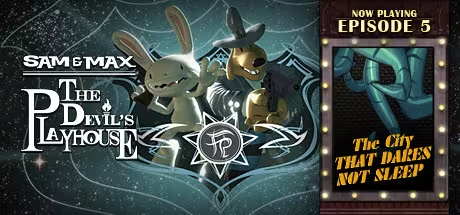
Sam & Max: The Devil's Playhouse Thumbnail

Sam & Max: The Devil's Playhouse similar games & best alternatives

Sam & Max: The Devil's Playhouse

PC (Microsoft Windows), Mac, Xbox One, PlayStation 4, Nintendo Switch • 2024

Related articles

Quick resume

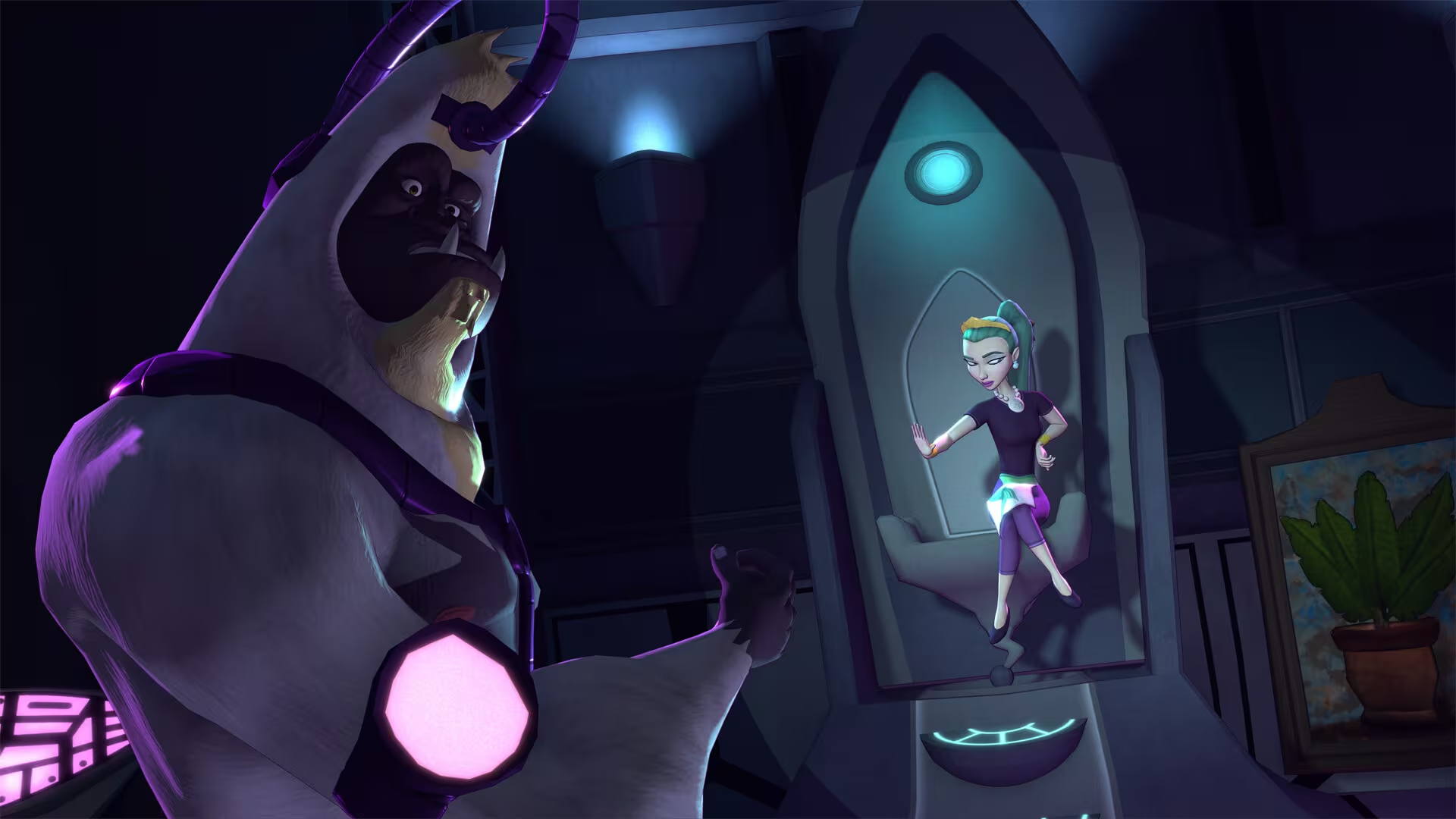
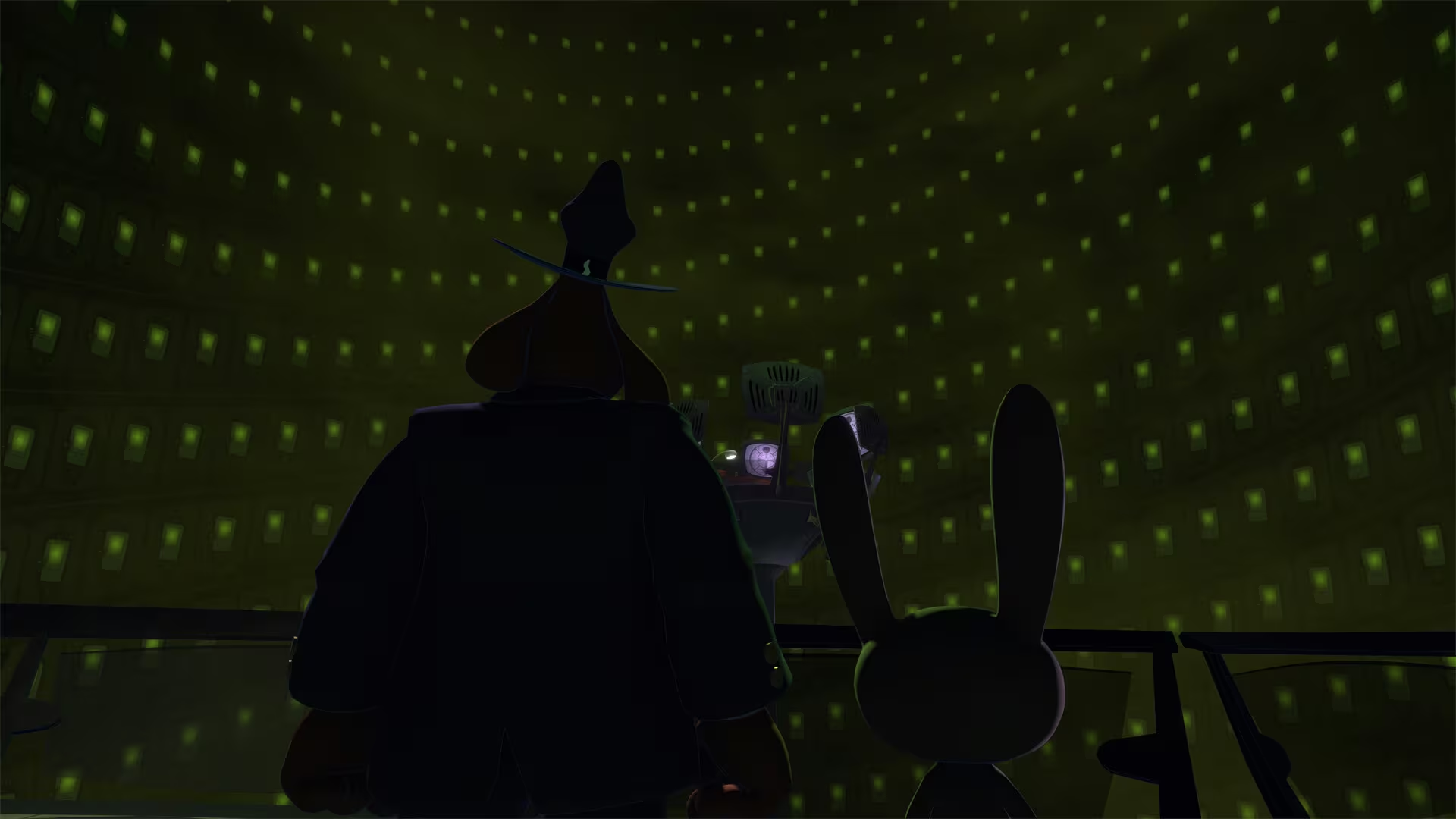
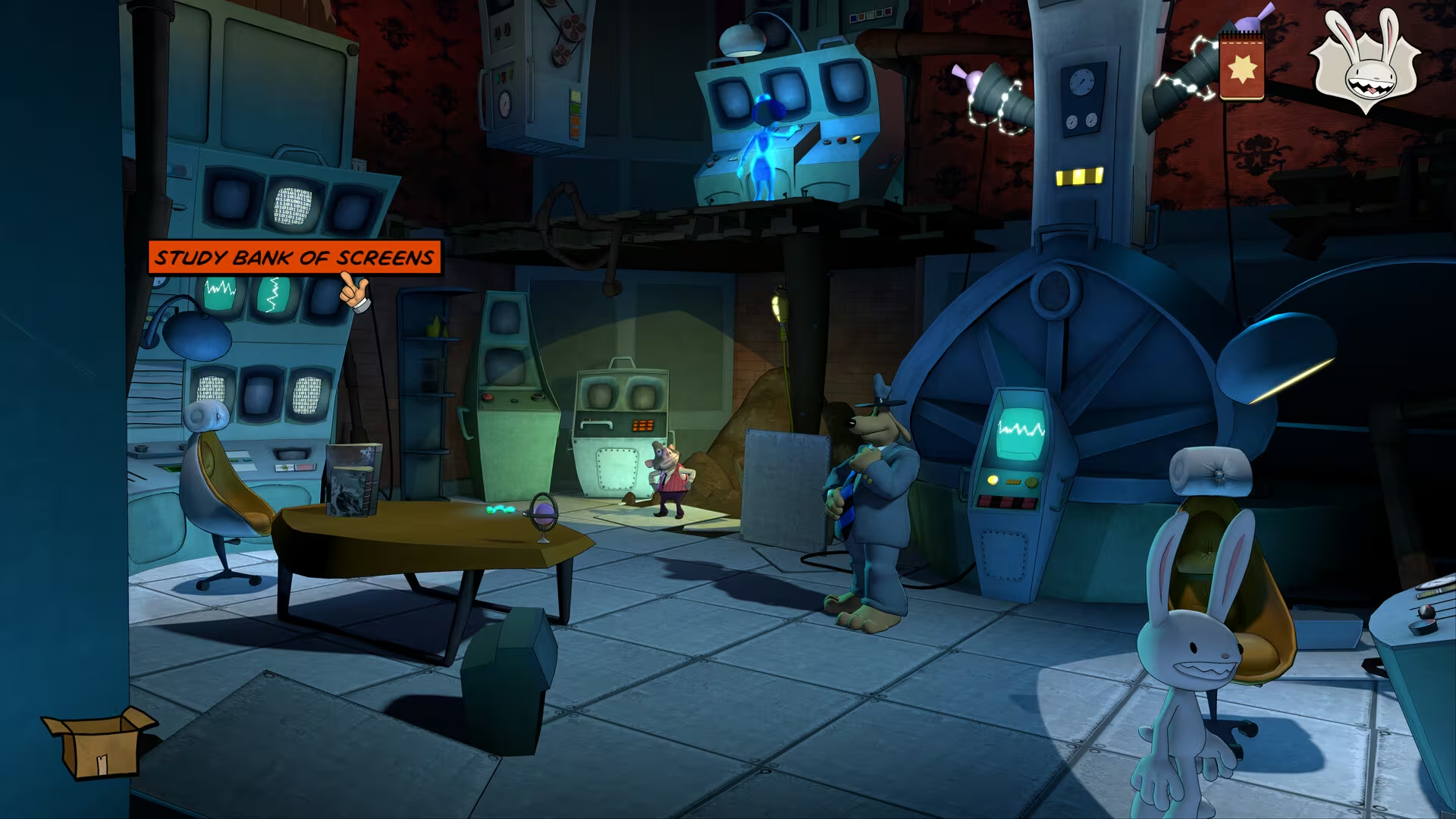
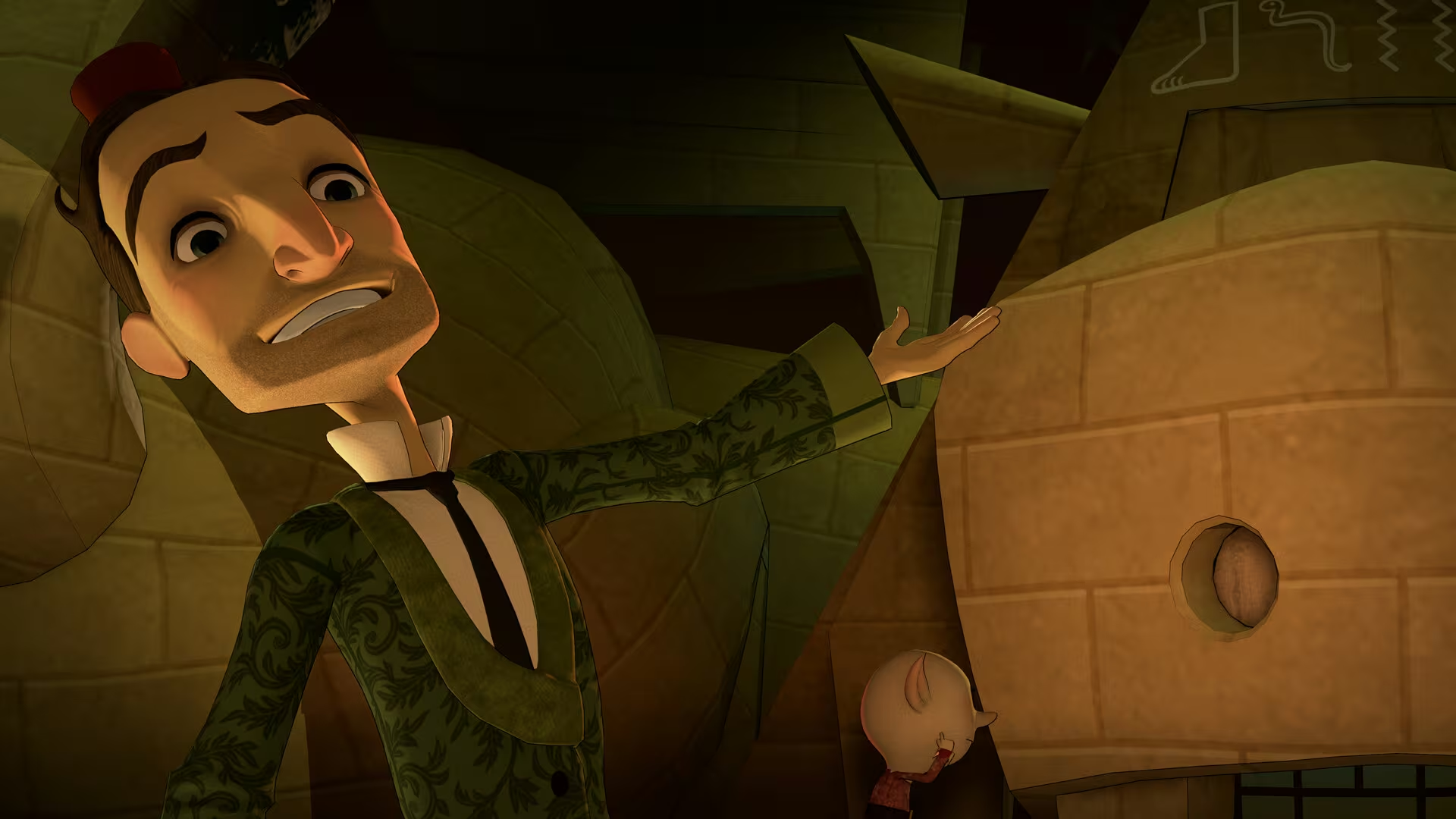
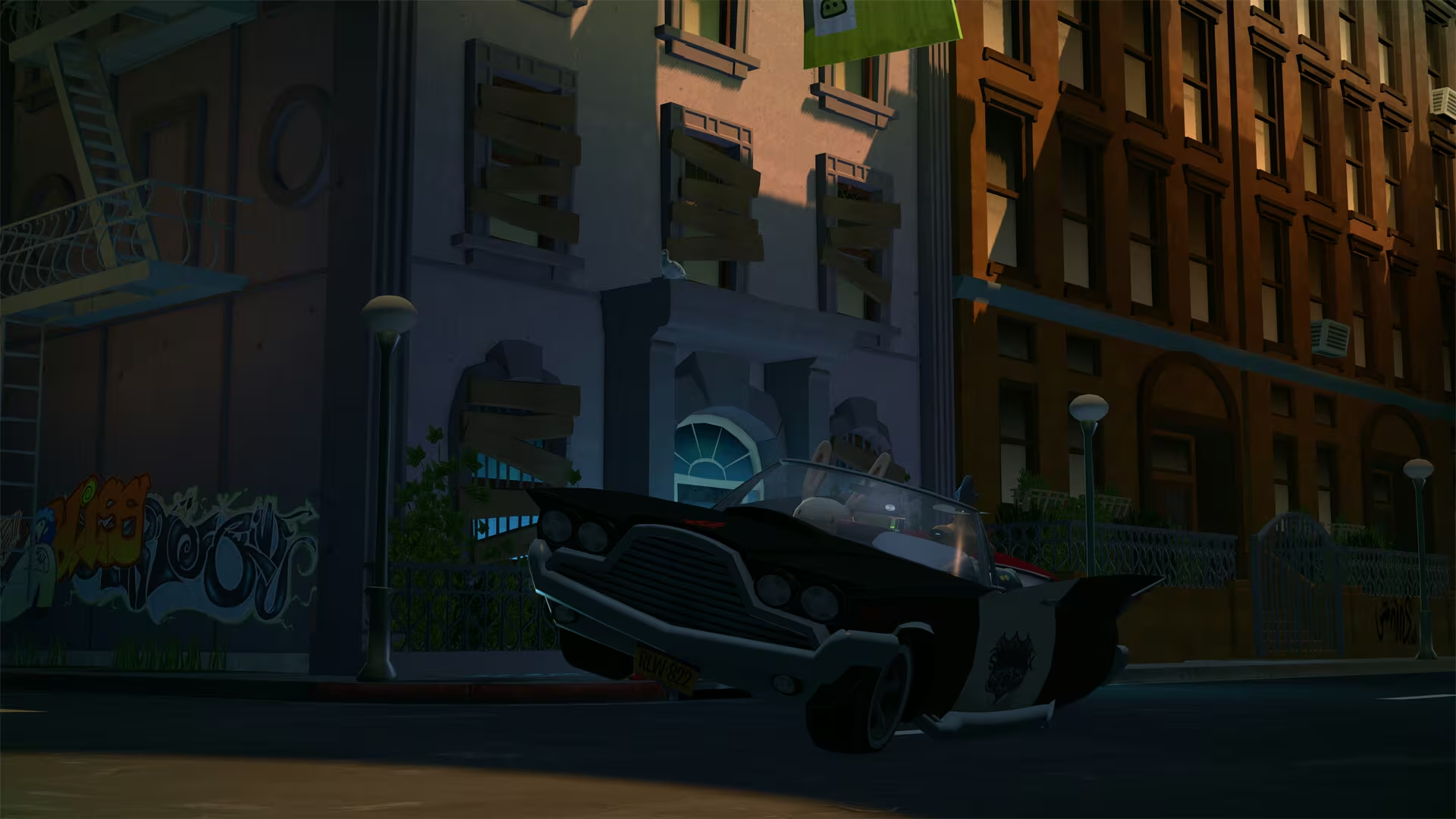
The last game in the episodic Sam & Max trilogy, beautifully remastered! As the intergalactic villains who seek the Devil’s Toybox close in and Max’s psychic abilities grow beyond his control, the Freelance Police will come up against their most frightening adversary yet: the power of Max’s mind.

Global score

99/100

Genres

Adventure, Indie, Puzzle, Point-and-click

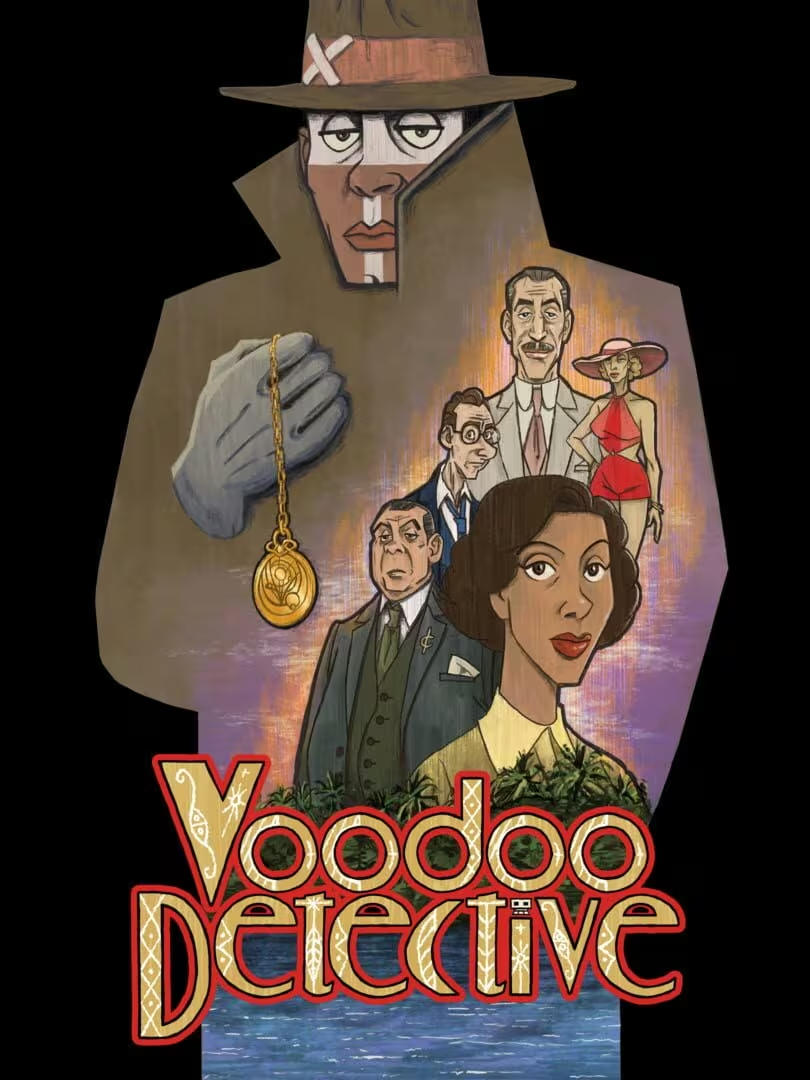
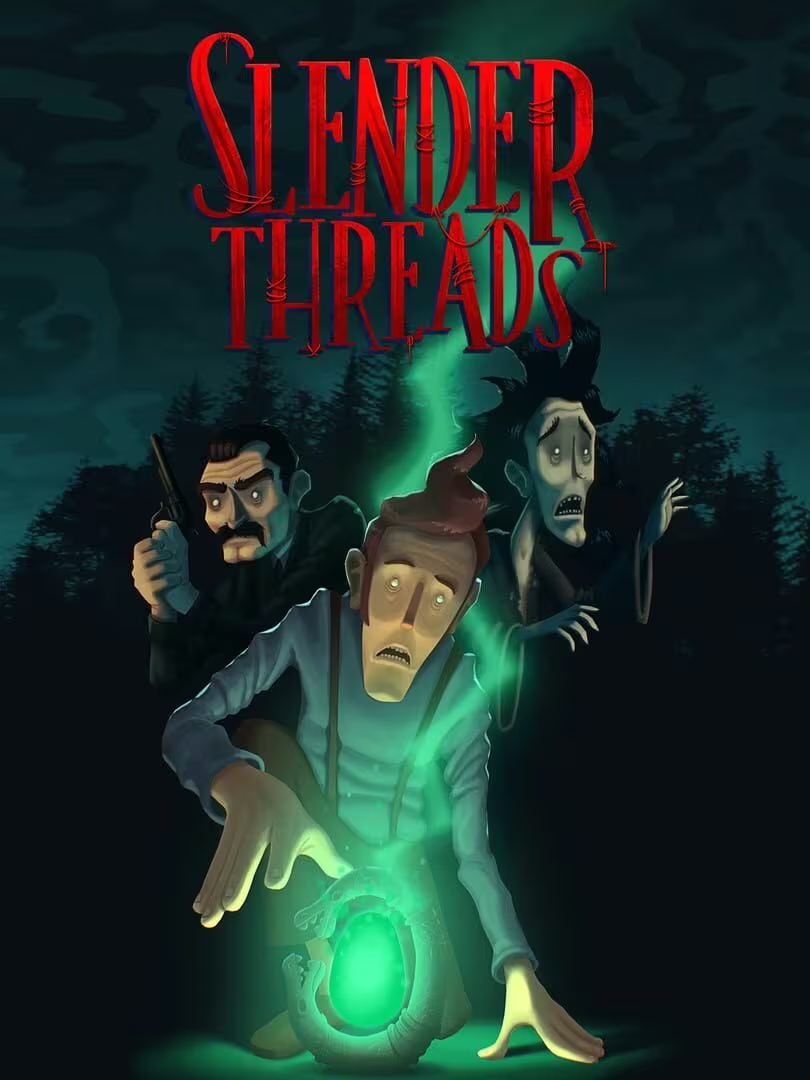
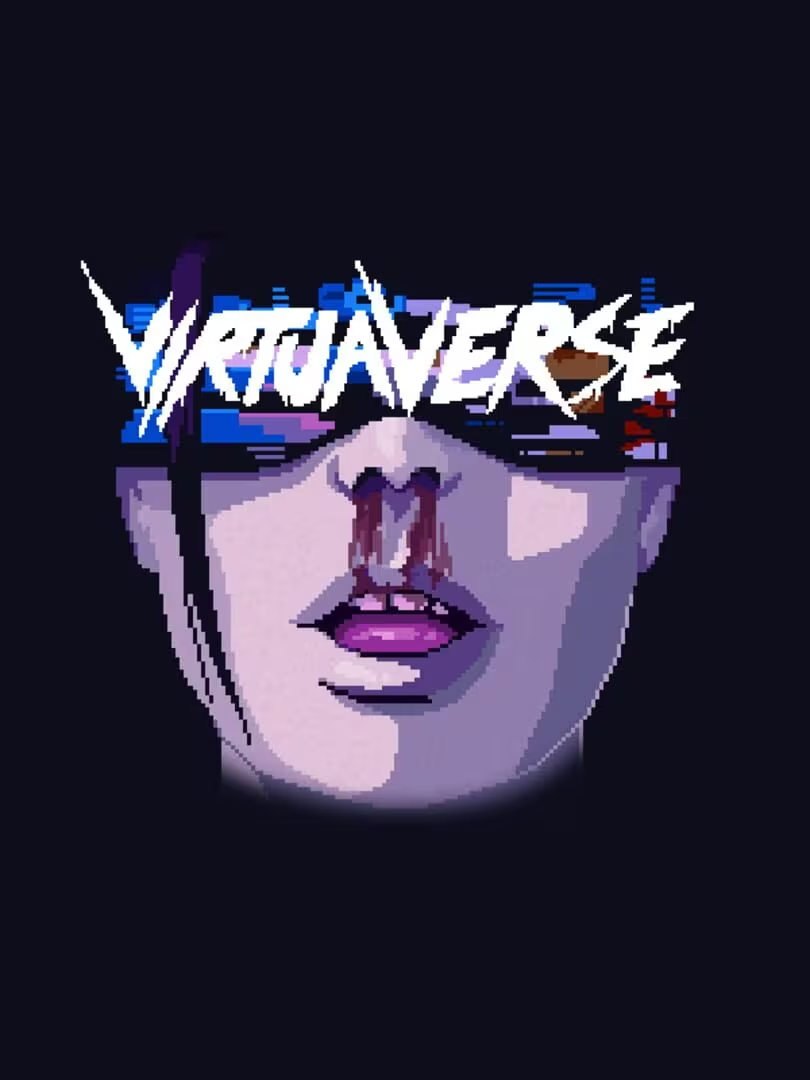
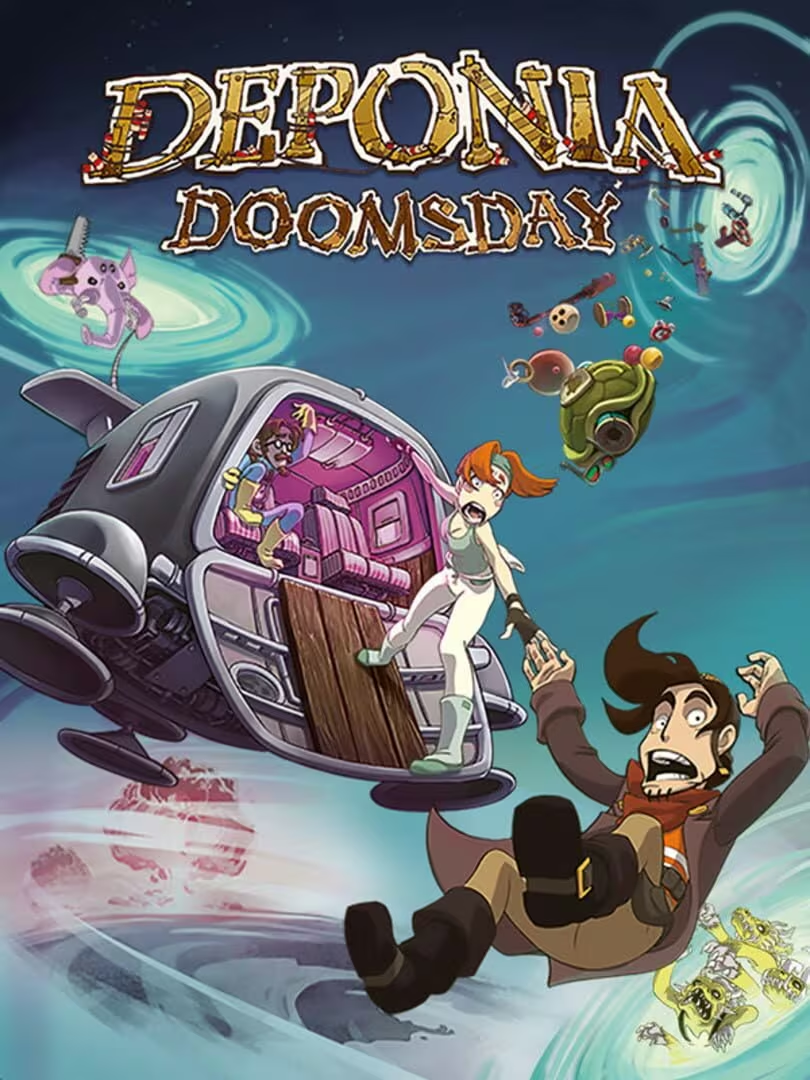
Similar games

    Pros

    • Engaging and humorous story
    • Well-polished remaster with improved graphics and audio
    • Creative and varied puzzles
    • Strong emotional and narrative depth
    • Faithful to original with added content

    Cons

    • Some minor bugs and performance issues
    • Puzzle difficulty may frustrate some players
    • Episodic pacing uneven at times
    • Lack of multiplayer or social features
    • Controls can feel clunky for some

    Analysis

    Broadly representative of its motivational profile, with a few distinct shifts. Motivations that often define this kind of title include Survival, Violence, Fellowship, Expression. Here, the score leans higher than usual among comparable games on Expression, Thrill, Continuation.

    How to use the graph
    Similar games map

    Each dot is a game. They are arranged from the same motivation profile as in the “Motivations” section below. Closer dots usually mean more similar reasons to play (exploration, competition, relaxation, etc.)—not that one game is “better” than another.

    • Larger dot with a light outline: the game you are viewing.
    • Colour: groups of games with comparable motivation patterns (statistical clusters).
    • Hover a dot to see the game name; click to open its page.
    • Scroll or double-click the chart to zoom out and see more games.

    Why don’t the axes read like a score? This view uses t-SNE: it only keeps who is close to whom. The scales are not “good to bad” or hours played—they separate groups on the map. Read distance between dots, not the axis numbers.

    Motivations

    • Autonomy
      3

      "Players have freedom to explore, solve puzzles with psychic powers, and choose dialogue options, indicating control over actions."

    • Competence
      3

      "The game offers challenging puzzles and problem-solving that require skill and thinking, with feedback through puzzle completion."

    • Competition
      -5

      "The game is a single-player narrative adventure with no competitive elements or player comparison."

    • Continuation
      4

      "Reviews mention long play sessions, strong attachment to the story and characters, and habitual replaying of the trilogy."

    • Cooperation
      -5

      "The game is designed for solo play with no multiplayer or cooperative gameplay."

    • Creativity
      4

      "Players engage in creative puzzle solving using unique psychic powers and explore a richly imaginative world."

    • Domination
      -5

      "No evidence of exerting control or superiority over others; gameplay is focused on individual experience."

    • Escapism
      4

      "Players use the game to escape reality through humor, narrative immersion, and imaginative scenarios."

    • Expectation
      -4

      "Players engage out of intrinsic interest and love for the series, with no indication of obligation or pressure."

    • Experimenting
      4

      "The game encourages trying new puzzle mechanics and experimenting with Max's psychic abilities."

    • Exploration
      3

      "Players discover new areas, secrets, and narrative elements within a varied and evolving game world."

    • Expression
      2

      "Some customization in dialogue choices and character interactions, but limited cosmetic personalization."

    • Fantasy
      5

      "Strong emphasis on imaginative fiction, anthropomorphic characters, and surreal narrative elements."

    • Fellowship
      -4

      "Focus is on solo play and individual story experience with minimal social interaction."

    • Growth
      3

      "Players develop problem-solving skills and learn new mechanics throughout the game."

    • Health
      -5

      "No physical activity or health-related gameplay elements; typical sedentary gaming experience."

    • Idle
      -4

      "Requires focused attention on puzzles and narrative; not designed for casual or background play."

    • Intimacy
      -4

      "Limited social connections; interactions are mostly with game characters rather than real people."

    • Leadership
      -5

      "No leadership or group management elements; gameplay is individual and story-driven."

    • Progression
      3

      "Players progress through story episodes, unlock new abilities, and collect items relevant to puzzles."

    • Relaxation
      3

      "Balanced challenge with humor and engaging story provides a flow experience with tension release."

    • Sensation
      3

      "Enhanced visuals, remastered audio, and humorous writing provide sensory and emotional enjoyment."

    • Status
      -5

      "No social status or recognition systems; achievements are personal and not publicly ranked."

    • Story
      5

      "Strong narrative immersion with engaging plot, character development, and emotional depth."

    • Strategy
      3

      "Requires logical thinking and puzzle-solving strategies, though not highly complex or competitive."

    • Thrill
      2

      "Some suspense and emotional moments, but overall a comedic and lighthearted tone."

    • Value
      4

      "Players perceive good value for money with remastered content, added features, and replayability."

    • Violence
      -3

      "Minimal violence; gameplay focuses on puzzle-solving and story rather than combat or destruction."

    • Survival
      -4

      "Stable game environment with no survival or resource management challenges."

    Last update: 29/04/2026