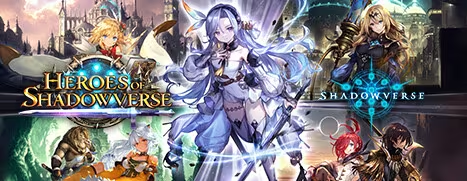
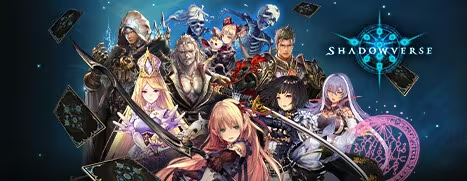
Shadowverse CCG Thumbnail

Shadowverse CCG similar games & best alternatives

Shadowverse CCG

PC (Microsoft Windows), iOS, Mac, Android • 2016

Related articles

Quick resume

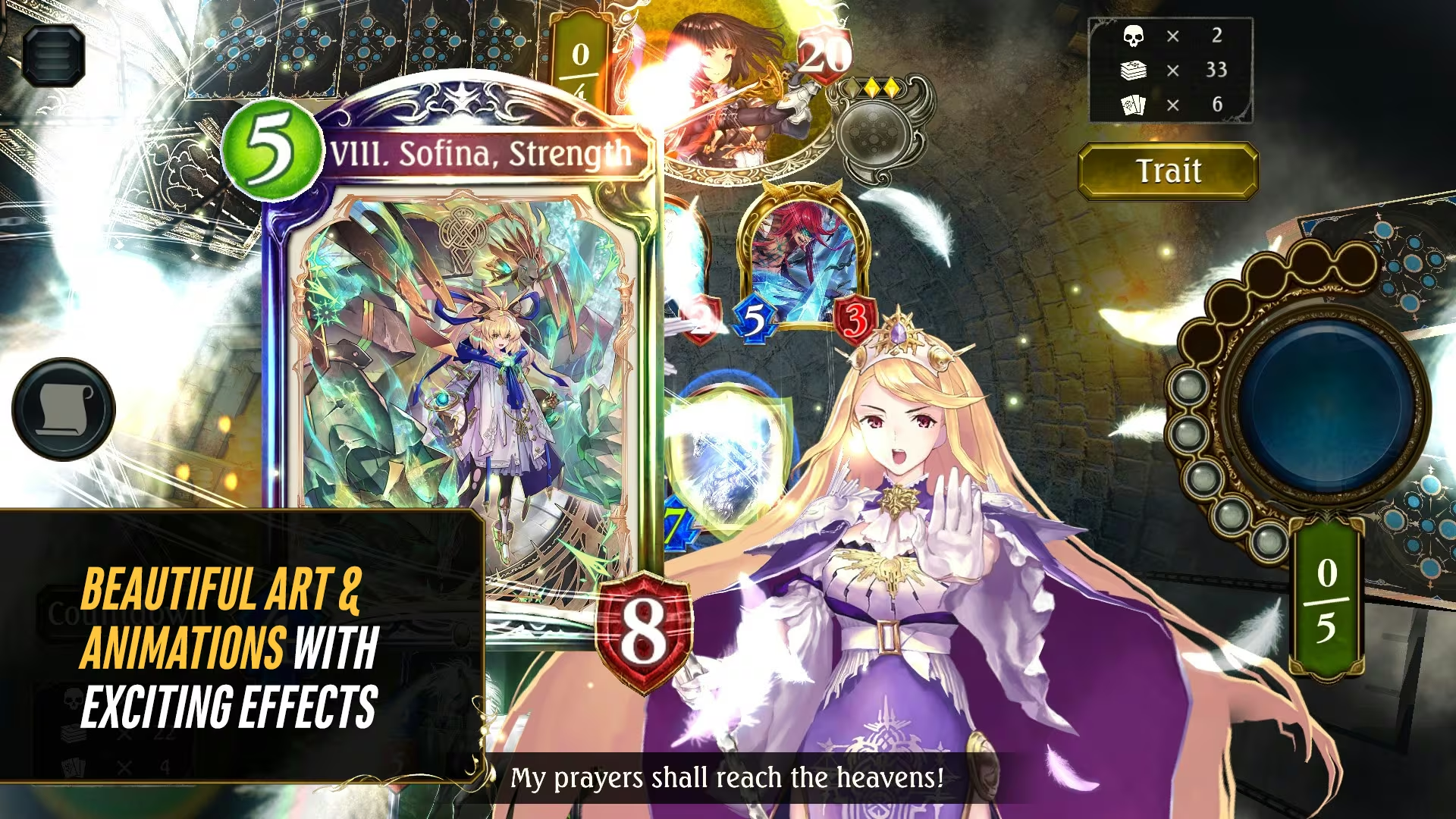
Four million battles every day. One Shadowverse. Japan's #1 strategic card game. Made by card gamers for card gamers. 

Global score

74/100

Genres

Strategy, Free To Play, Turn-based strategy (TBS), Role-playing (RPG), Card & Board Game

Similar games

    Pros

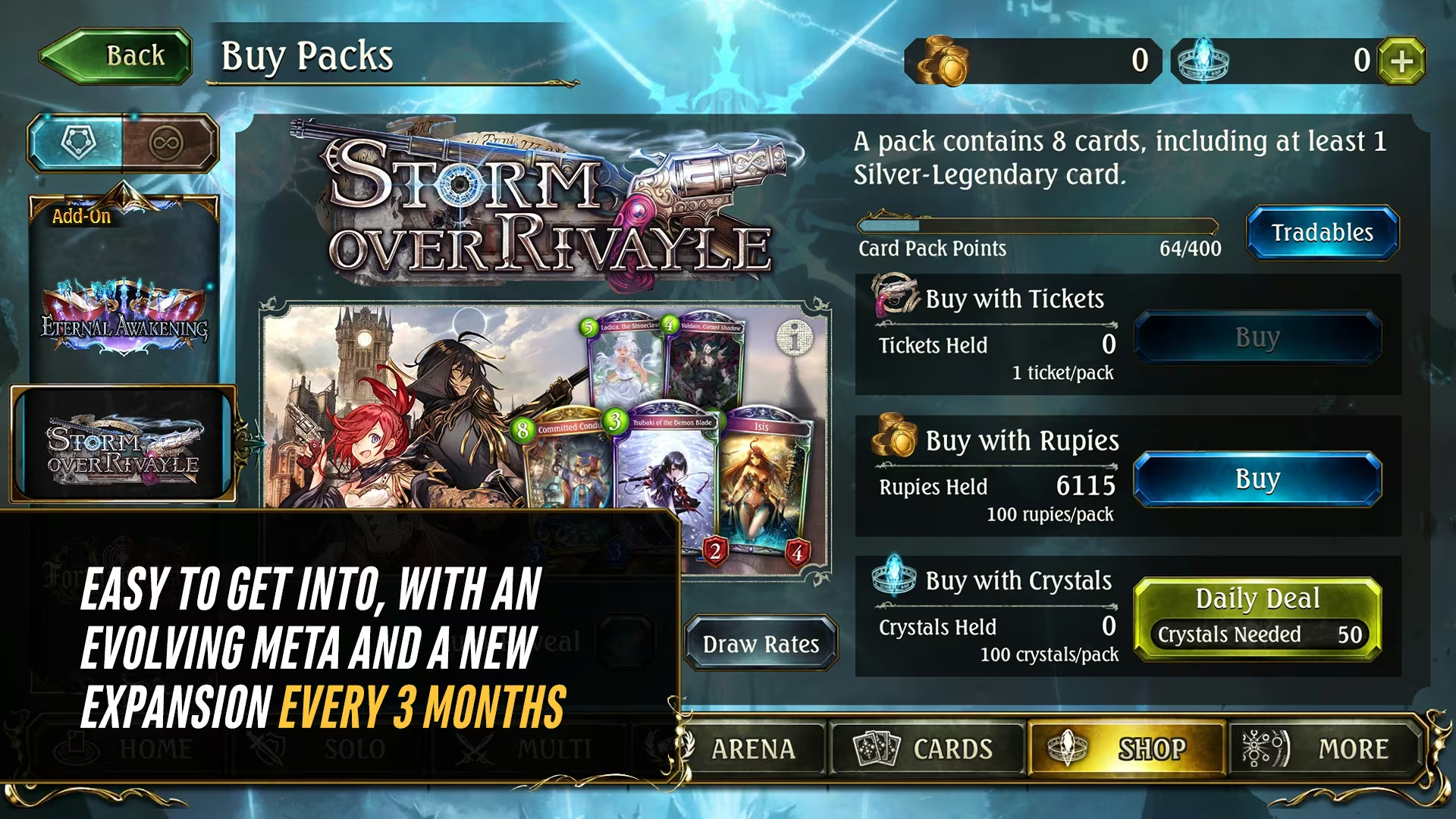
    • Generous free card packs and rewards
    • Unique evolve mechanic adds strategic depth
    • Diverse classes with distinct playstyles
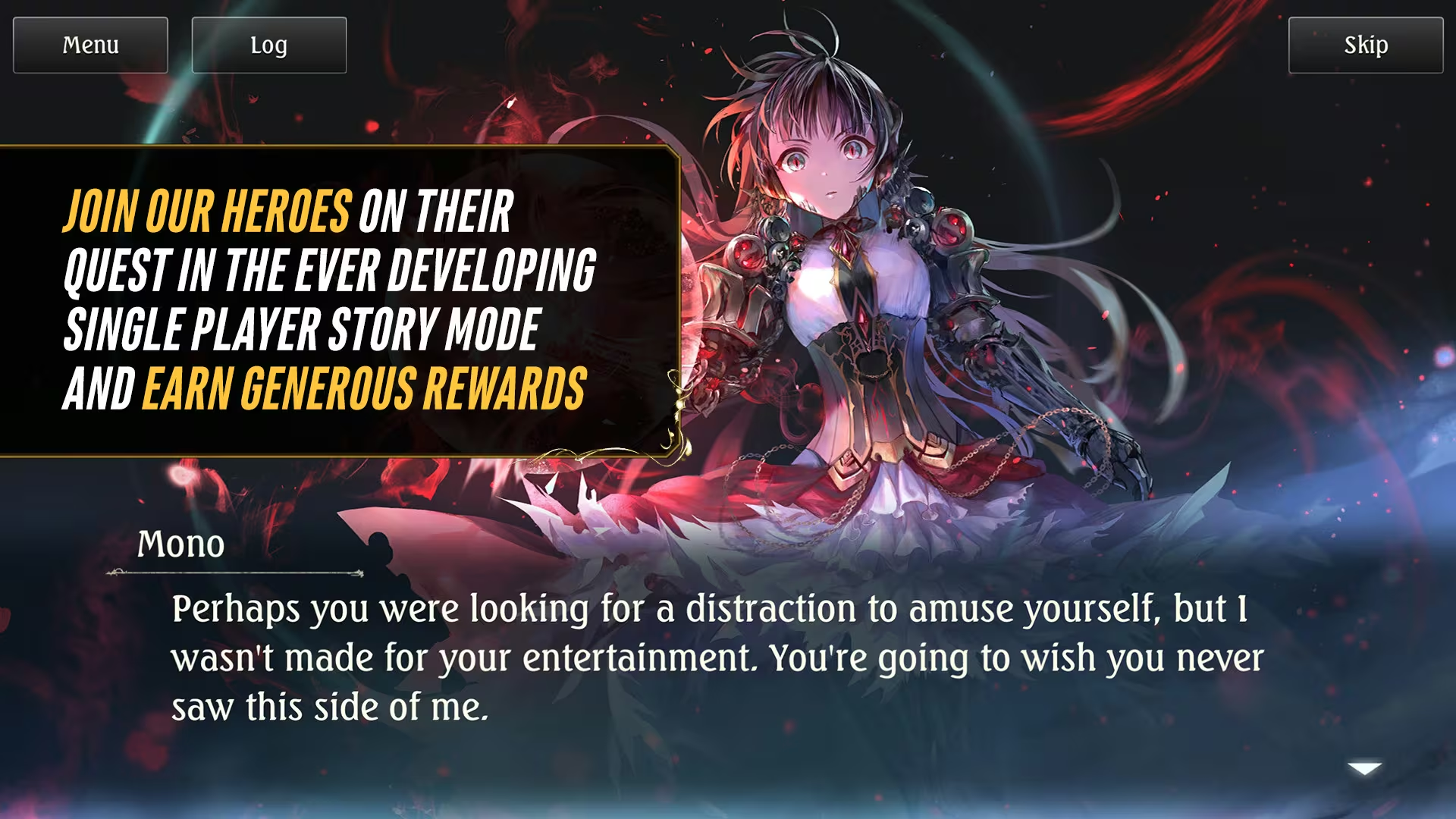
    • Engaging story mode with voice acting
    • Good balance and frequent updates

    Cons

    • Limited social and cooperative features
    • Some imbalance and power creep in meta
    • Steep learning curve for new players
    • Competitive modes can be stressful
    • Interface and localization issues

    Analysis

    A very typical example of its motivational profile. Motivations that often define this kind of title include Competition, Status, Story, Expression. Here, the score leans higher than usual among comparable games on Story, Fantasy. It leans lower than usual among comparable games on Fellowship.

    How to use the graph
    Similar games map

    Each dot is a game. They are arranged from the same motivation profile as in the “Motivations” section below. Closer dots usually mean more similar reasons to play (exploration, competition, relaxation, etc.)—not that one game is “better” than another.

    • Larger dot with a light outline: the game you are viewing.
    • Colour: groups of games with comparable motivation patterns (statistical clusters).
    • Hover a dot to see the game name; click to open its page.
    • Scroll or double-click the chart to zoom out and see more games.

    Why don’t the axes read like a score? This view uses t-SNE: it only keeps who is close to whom. The scales are not “good to bad” or hours played—they separate groups on the map. Read distance between dots, not the axis numbers.

    Motivations

    • Autonomy
      4

      "Players have freedom to build decks, choose classes, and experiment with various strategies and mechanics like evolve points."

    • Competence
      3

      "Game offers skill-based play with strategic deck building and in-match decisions; some randomness but less than Hearthstone."

    • Competition
      4

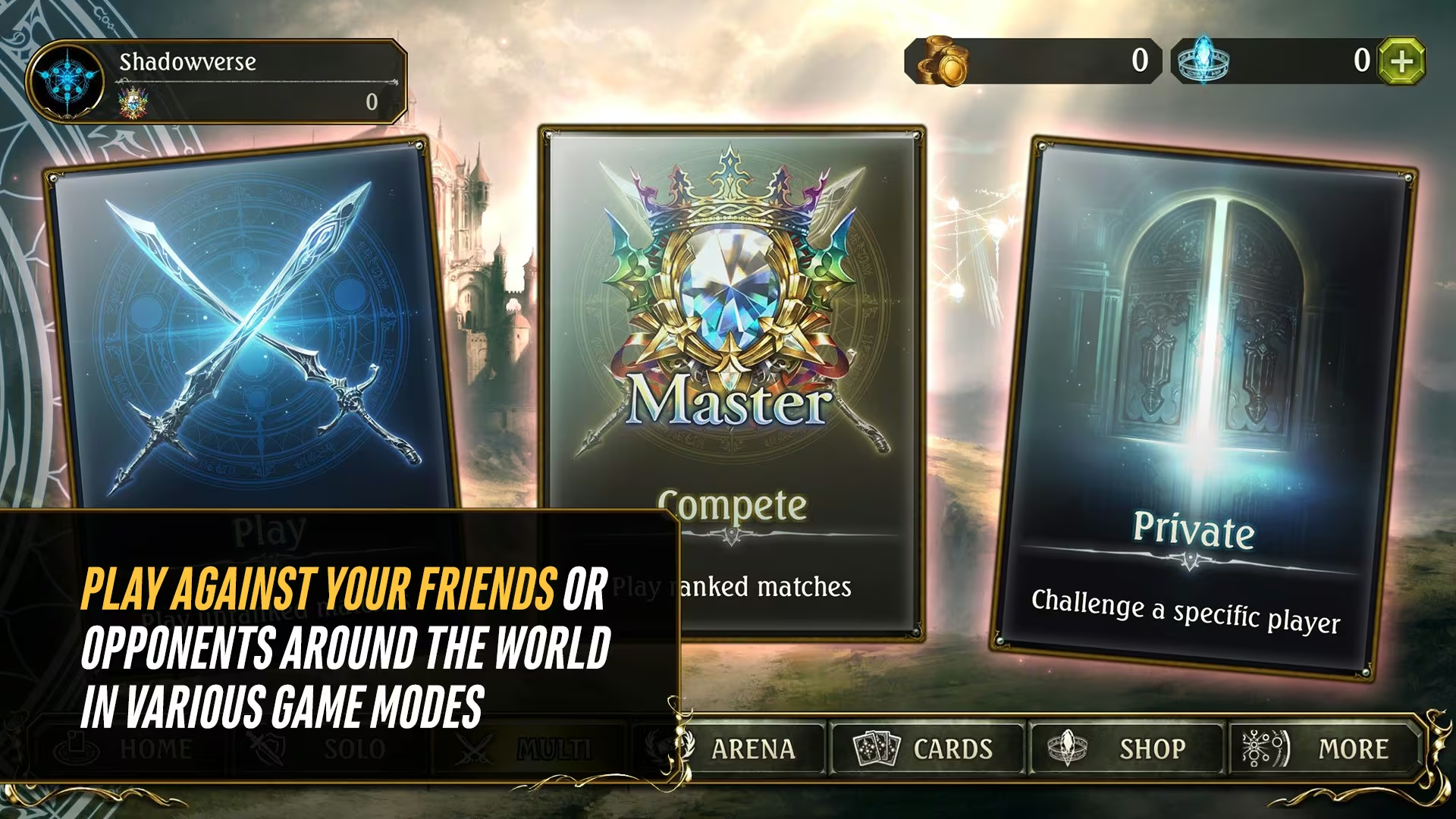
      "Ranked ladder, tournaments, and arena modes encourage competition and comparison with others."

    • Continuation
      4

      "Players report long playtimes, habitual daily quests, and ongoing engagement with frequent updates and events."

    • Cooperation
      -4

      "Game is primarily focused on 1v1 duels with limited social interaction; no chat or cooperative modes."

    • Creativity
      3

      "Deck building and card crafting allow creative customization and experimentation with many archetypes."

    • Domination
      -3

      "Community is described as respectful; no evidence of trash talk or dominance behavior."

    • Escapism
      4

      "Players use the game as a stress relief and distraction, enjoying the anime art and story mode."

    • Expectation
      -4

      "Players engage voluntarily for fun and personal interest, not out of obligation or pressure."

    • Experimenting
      4

      "Players try new decks, mechanics, and strategies; game encourages exploration of different classes and combos."

    • Exploration
      2

      "Story mode and new expansions provide some discovery, but mostly within known card game environments."

    • Expression
      3

      "Players can customize leaders with skins and card backs, and animated cards offer visual expression."

    • Fantasy
      4

      "Anime fantasy setting with imaginative characters, lore, and story mode."

    • Fellowship
      -3

      "Limited social features; mostly solo or 1v1 play with friends, no large community interaction in-game."

    • Growth
      4

      "Players learn deck building, card interactions, and improve skills through story and multiplayer."

    • Health
      -4

      "Typical sedentary card game with no physical activity involved."

    • Idle
      -3

      "Requires focused attention during matches and deck building; not a casual idle experience."

    • Intimacy
      -4

      "No evidence of close social relationships forming in-game; interactions are surface-level."

    • Leadership
      -3

      "No group management or leadership roles; players act independently in matches."

    • Progression
      4

      "Strong progression through card collection, crafting, rank advancement, and unlocking cosmetics."

    • Relaxation
      2

      "Some players find the game relaxing and enjoyable, but competitive modes can be stressful."

    • Sensation
      3

      "Enjoyable visual and audio effects, animations, and voice acting provide sensory stimulation."

    • Status
      3

      "Ranked rewards and leaderboards offer recognition and social status among players."

    • Story
      4

      "Story mode with voiced characters and plot provides narrative immersion."

    • Strategy
      4

      "High strategic depth in deck building, resource management, and in-game tactical decisions."

    • Thrill
      3

      "Tense matches with evolving board states and comeback potential create excitement and suspense."

    • Value
      4

      "Generous free packs and rewards provide good return on time invested; reasonable monetization."

    • Violence
      -3

      "Focus on card battles and strategy rather than combat or destruction; no graphic violence."

    • Survival
      2

      "Players manage resources and threats to avoid defeat; some risk but stable conditions overall."

    Last update: 29/04/2026