Sherlock Holmes: Crimes and Punishments Thumbnail

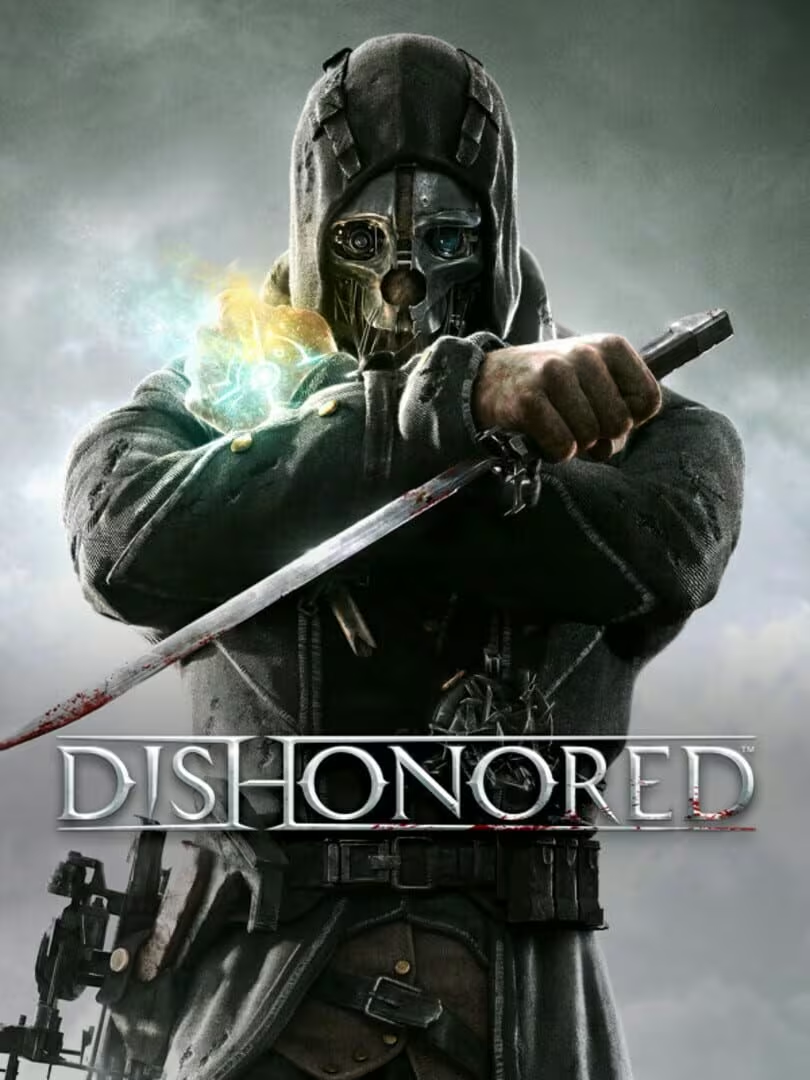
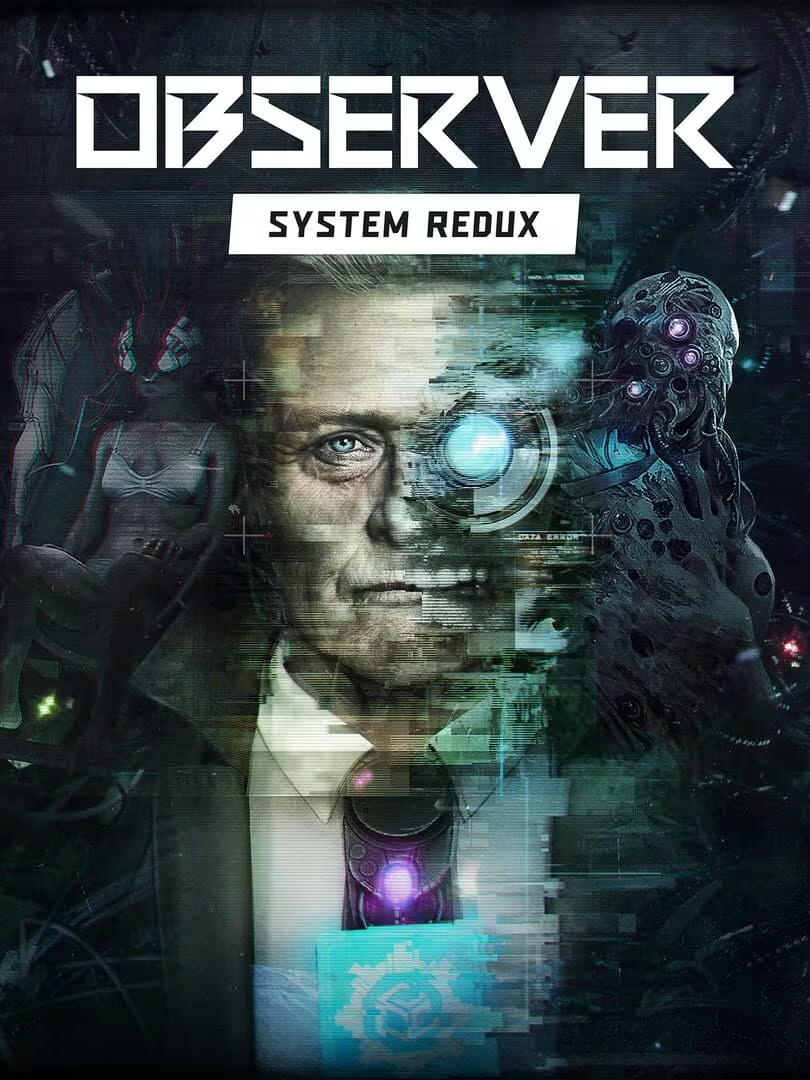
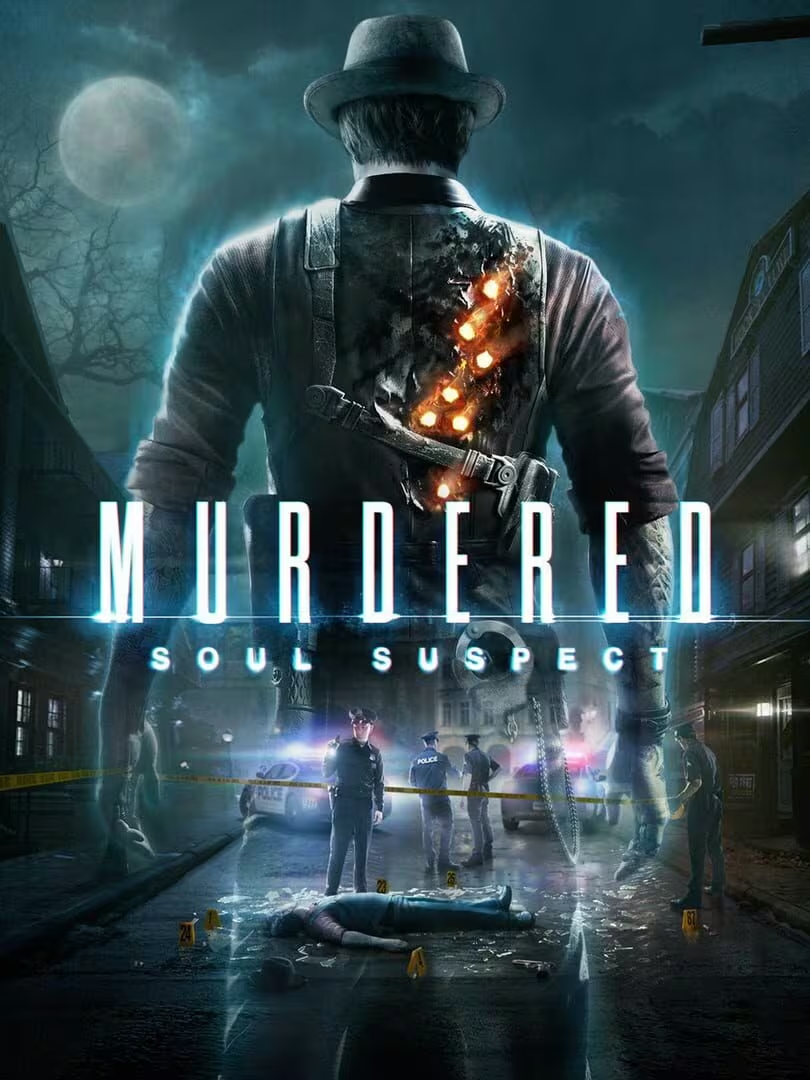
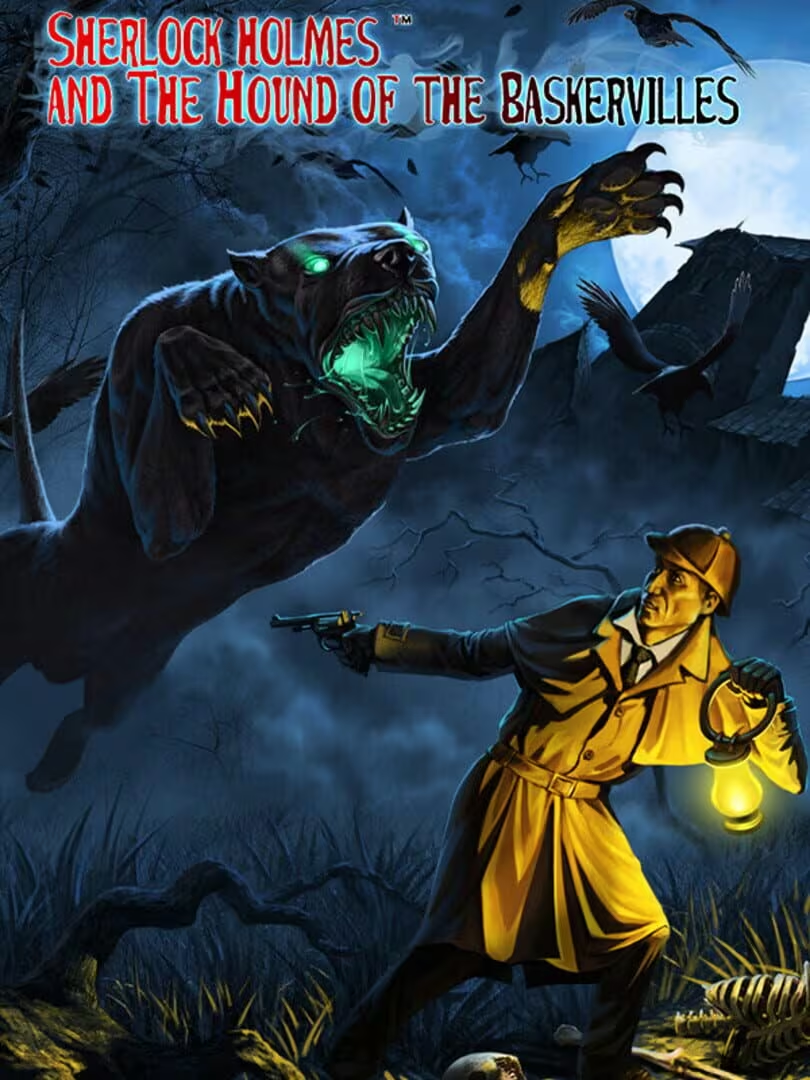
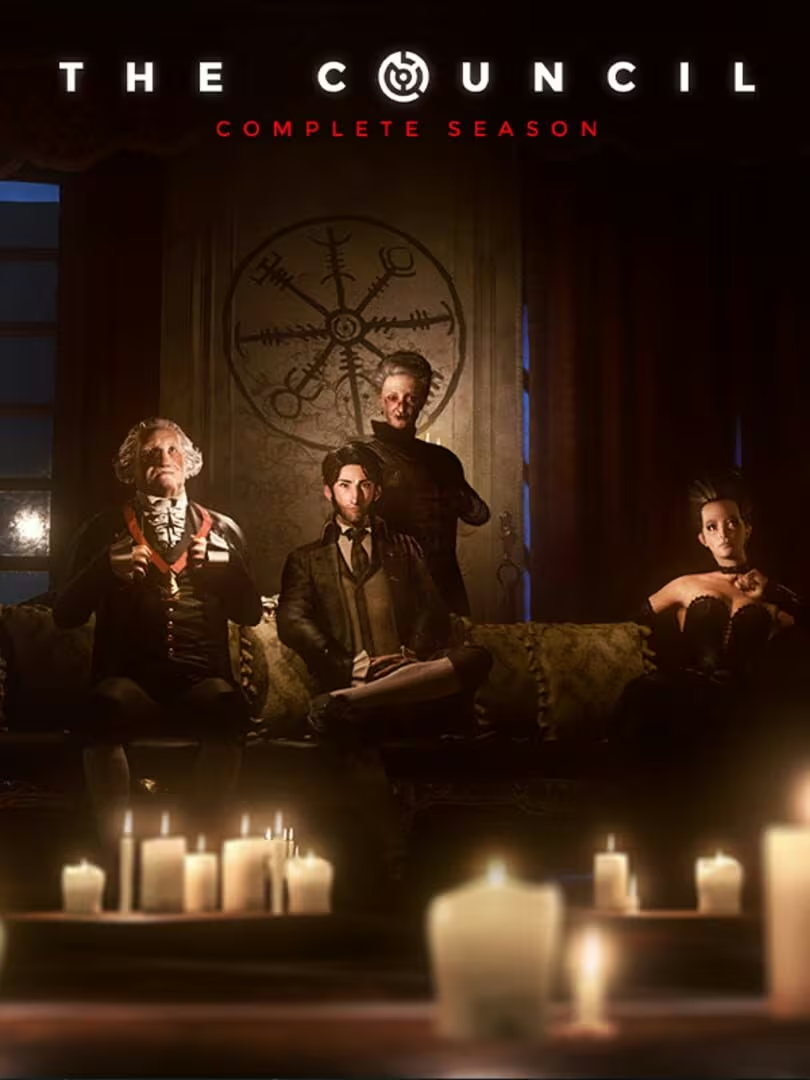
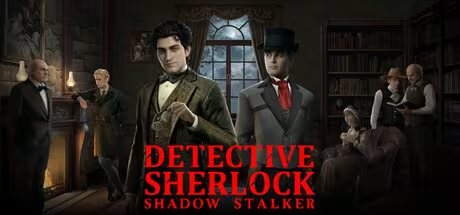
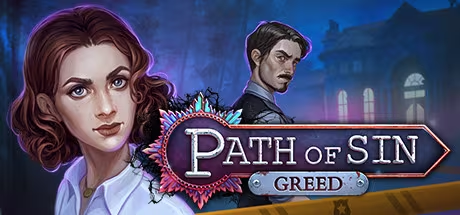
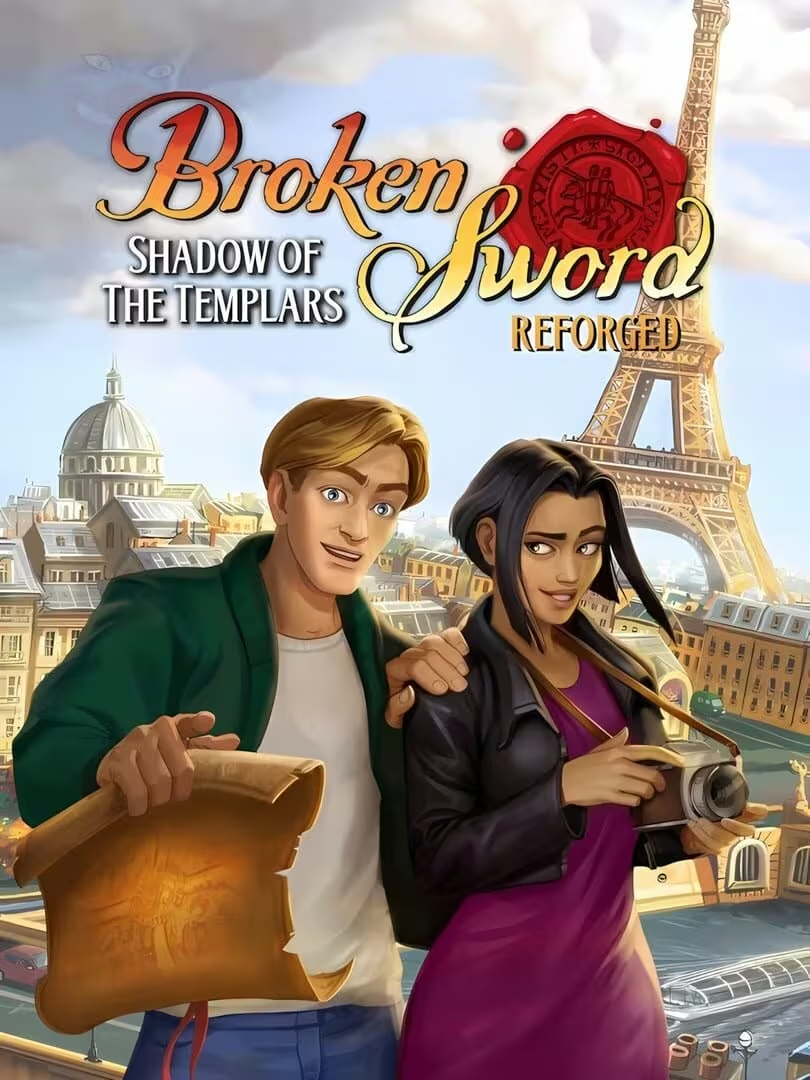
Sherlock Holmes: Crimes and Punishments similar games & best alternatives

Sherlock Holmes: Crimes and Punishments

PC (Microsoft Windows), PlayStation 4, Xbox 360, Xbox One, Nintendo Switch, PlayStation 3 • 2014

Related articles

Quick resume

Become the most celebrated detective of all time: Sherlock Holmes! Use your impressive talents as a detective to solve six thrilling and varied cases: murders, missing persons, spectacular thefts and numerous investigations that sometimes lead you into the realms of the fantastic.

Global score

89/100

Genres

Adventure, Puzzle

Similar games

    Pros

    • Immersive victorian london atmosphere
    • Multiple cases with varied outcomes
    • Engaging deduction and moral choice system
    • Well-written stories and characters
    • Good graphics and voice acting for its time

    Cons

    • Somewhat easy and hand-holding gameplay
    • Limited length with only six cases
    • Repetitive lockpicking minigames
    • Long loading times between scenes
    • Watson character underutilized

    Analysis

    A very typical example of its motivational profile. Motivations that often define this kind of title include Survival, Violence, Fellowship, Expression. Here, the score leans higher than usual among comparable games on Expression, Thrill. It leans lower than usual among comparable games on Fantasy.

    How to use the graph
    Similar games map

    Each dot is a game. They are arranged from the same motivation profile as in the “Motivations” section below. Closer dots usually mean more similar reasons to play (exploration, competition, relaxation, etc.)—not that one game is “better” than another.

    • Larger dot with a light outline: the game you are viewing.
    • Colour: groups of games with comparable motivation patterns (statistical clusters).
    • Hover a dot to see the game name; click to open its page.
    • Scroll or double-click the chart to zoom out and see more games.

    Why don’t the axes read like a score? This view uses t-SNE: it only keeps who is close to whom. The scales are not “good to bad” or hours played—they separate groups on the map. Read distance between dots, not the axis numbers.

    Motivations

    • Autonomy
      4

      "Players have freedom to investigate cases, choose deductions, and decide moral outcomes, reflecting high control over actions."

    • Competence
      3

      "Game involves solving puzzles, deduction, and investigation requiring skillful analysis, though puzzles are generally moderate in difficulty."

    • Competition
      -4

      "Focus is on individual investigation and personal deduction without competitive elements or player comparison."

    • Continuation
      2

      "Players often engage in multiple cases and replay to explore different endings, showing moderate habitual play."

    • Cooperation
      -5

      "Game is single-player focused with no cooperative or multiplayer elements."

    • Creativity
      3

      "Players create their own deductions and moral judgments, allowing creative problem solving within structured cases."

    • Domination
      -5

      "Interactions are balanced and respectful; no evidence of exerting control or superiority over others."

    • Escapism
      4

      "Immersive Victorian London setting and engaging mysteries provide strong escape from real life."

    • Expectation
      -4

      "Players engage voluntarily out of interest and enjoyment, not obligation or external pressure."

    • Experimenting
      3

      "Players try different deductions and moral choices, exploring multiple outcomes and testing hypotheses."

    • Exploration
      2

      "Players explore detailed crime scenes and environments, though locations are limited and mostly known."

    • Expression
      1

      "Some character customization (disguises) available but limited; mostly standardized presentation."

    • Fantasy
      1

      "Game is based on fictional detective stories with some imaginative reconstruction but grounded in realistic Victorian setting."

    • Fellowship
      -5

      "Single-player experience with minimal social interaction or community involvement."

    • Growth
      3

      "Players develop deductive reasoning and investigative skills through gameplay and case solving."

    • Health
      -5

      "Sedentary gameplay with no physical activity or health-related features."

    • Idle
      -3

      "Requires focused attention and active engagement; not suited for idle or background play."

    • Intimacy
      -4

      "Limited to scripted character interactions without forming close personal relationships."

    • Leadership
      -5

      "No leadership or group management elements; player acts independently."

    • Progression
      2

      "Progression through unlocking new cases, deductions, and story outcomes, but no item collection or upgrades."

    • Relaxation
      3

      "Generally relaxing and immersive gameplay with moderate challenge and flow."

    • Sensation
      2

      "Visual and auditory atmosphere is engaging but not intensely stimulating or thrilling."

    • Status
      -5

      "No social recognition or status systems; focus is on personal experience."

    • Story
      4

      "Strong narrative immersion with multiple well-written cases and character-driven plots."

    • Strategy
      3

      "Requires logical reasoning, planning, and problem solving to connect clues and solve cases."

    • Thrill
      1

      "Some suspense in mysteries but overall controlled and steady emotional experience."

    • Value
      3

      "Considered good value for money especially during sales; provides many hours of engaging content."

    • Violence
      -3

      "Violence is minimal and mostly implied; focus is on investigation rather than combat or destruction."

    • Survival
      -4

      "No survival or threat avoidance mechanics; stable and safe gameplay environment."

    Where to buy

    Last update: 29/04/2026